
Review · HISTORICAL TOURS
London: Official Natural History Museum Tour – Architecture
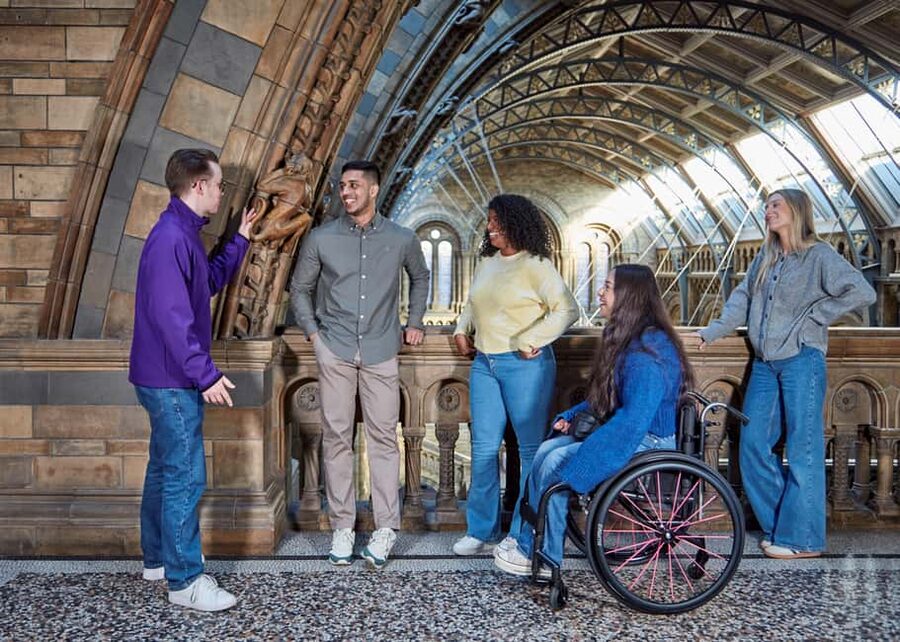
The Natural History Museum is more than a box for dinosaur bones and blue whales. Its Romanesque architecture is part of the collection, with gargoyles, carved animals, high ceilings, and a cheeky terracotta monkey whose human face resembles Charles Darwin. This one-hour tour shows you how to read the building instead of simply walking through it.
I like the compact format and the small group, which gives the guide room to point out details you would likely pass by. I also like that the tour connects the original Victorian design to the modern Darwin Centre, so you see both the old building and the museum’s newer direction.
The main drawback is time. One hour is enough for architecture, not for the museum’s major galleries, and the tour is in English. Also, the activity details state a maximum of seven people, while the highlights mention up to ten, so confirm the group limit when booking.
Key points to know before you book
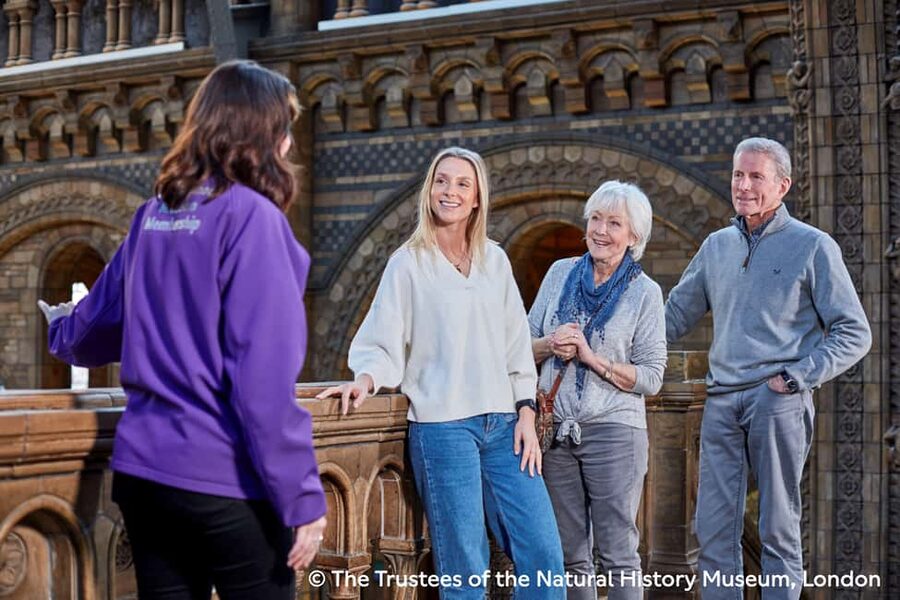
- The building is the subject: Focus on gargoyles, ceiling details, terracotta animals, carvings, and the museum’s Romanesque design.
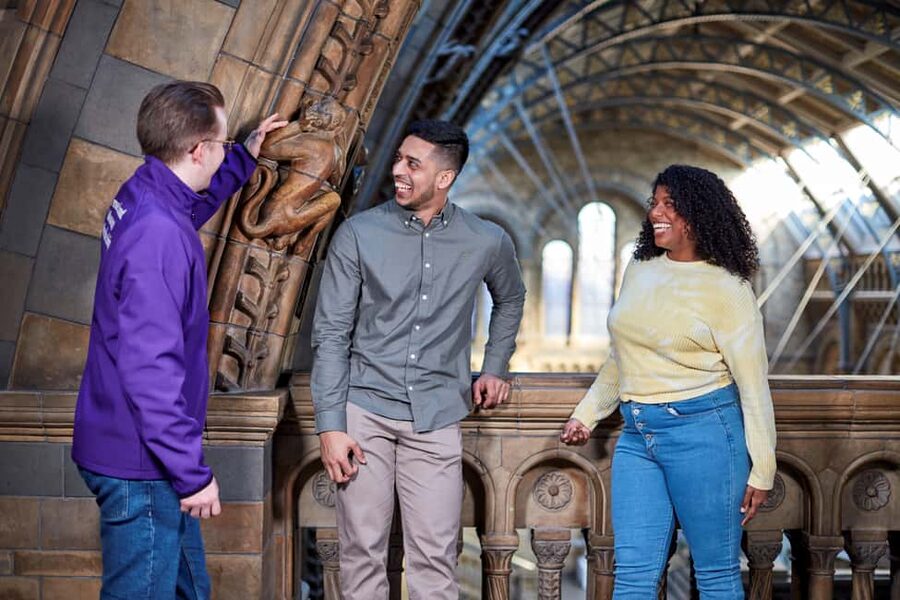
- The Darwin connection is literal: Look for the carved monkey with a face that recalls Charles Darwin.
- Original plans bring the past to life: Digital copies of early sketches, drawings, and building plans help explain the museum’s design.
- The route ends at the Darwin Centre: You finish in the modern section of the museum rather than returning to the starting point.
- The tour is short and focused: One hour works well as an introduction, but it does not replace time in the galleries.
- Meeting point matters: Start outside the staff and Flett Theatre entrance on Exhibition Road, not at the Cromwell Road entrance.
Why the Natural History Museum deserves an architecture tour
Many people enter this museum with their eyes fixed on the specimens. That is understandable. The Natural History Museum has famous animals, fossils, and scientific displays. But the building itself rewards a slower look.
Built in the late 1800s, the museum is one of Britain’s notable examples of Romanesque architecture. Its designers did not treat nature as a theme added to an otherwise plain building. They worked nature into the stone and terracotta, placing animals, plants, and decorative details across the structure.
That makes this tour useful even if you have visited before. You may have walked beneath the grand ceilings or admired the entrance hall without noticing the smaller carvings around you. A guide gives those details a purpose and helps you understand why they are there.
I especially like the idea of seeing the museum as a complete work of art. The walls are not just background. The gargoyles, animals, carvings, and decorative surfaces tell you what the building was meant to represent.
More Museum Visits in the world:
- Private Edo-Tokyo Open Air Architectural Museum Tour
★ 4.8 · 15 reviews - Chelsea Galleries and High Line; Art, Architecture and History
★ 5.0 · 14 reviews - Castle to Capitol: Museums of the National Mall Architecture Tour
★ 4.5 · 9 reviews
Starting on Exhibition Road
The tour begins outside the museum’s staff and Flett Theatre entrance on Exhibition Road. This is next to the public entrance on Exhibition Road and opposite the Victoria and Albert Museum.
That location is important. It is not the museum’s main entrance on Cromwell Road, which is reached through the gardens. You should allow a little time to find the correct doorway, especially if you are approaching from South Kensington station or coming from one of the nearby museums.
The supplied what3words location is ///bunny.moment.seated, which can help if you use that system. The clearest traditional instruction is to look for the staff and Flett Theatre entrance on Exhibition Road, beside the public museum entrance.
The tour includes general museum entry and skip-the-line access. That gives you a practical benefit before the commentary even begins. You can get inside without spending time in the standard ticket queue, then focus on the building rather than on entry arrangements.
Reading the Victorian design
The opening part of the tour sets the building in its late nineteenth-century setting. You see digital copies of the original sketches, detailed drawings, and plans that shaped the museum.
This is one of the strongest parts of the experience because plans make architecture easier to understand. Instead of only seeing a finished wall or ceiling, you get a sense of the choices behind it. The drawings show that the building was planned with care, from its grand structure to its smaller decorative elements.
You will also hear how the design pays homage to nature. That idea appears throughout the museum, not just in the display cases. The decoration ties the building to the scientific purpose of the institution, giving the exterior and interior a shared theme.
The guide’s job here is more than naming architectural styles. A good explanation helps you notice how the building’s shapes, carvings, and animal forms work together. Glenn Harper received particularly strong praise for guiding people through every corner and pointing out things that are easy to miss without help.
You should expect the tour to focus on observation rather than a long list of dates. The most useful moments are likely to be the ones that make you stop, look upward, and compare the design with what you had noticed on earlier visits.
Gargoyles, carvings, and the animal details
The museum’s decoration is full of small surprises. Imposing gargoyles give the building a slightly theatrical edge, while intricate carvings and high decorative ceilings create a sense of scale.
The terracotta animals are a central part of the story. You will look beyond the museum’s specimens to the animals worked into the building itself. This is a good reminder that the museum’s theme begins before you reach a single gallery.
The carved monkey with a human-like face is one of the most memorable details. Its resemblance to Charles Darwin gives the tour a playful moment, but it also links the decorative program to one of the most important figures in natural history.
That detail is easy to miss when you are moving through the entrance with a busy day ahead. You may be watching the crowds or thinking about which gallery to visit first. With a guide, you have a reason to pause and look closely.
The best part is that the tour does not appear to depend on a single famous object. The monkey may be the detail you remember most, but the larger value comes from learning how many animals and nature references are built into the museum.
More History Walks in the world:
- Chicago in a Day: Food, History & Architecture Walking Tour
★ 5.0 · 1,153 reviews - Charleston’s Best Highlights: History, Culture & Architecture
★ 5.0 · 422 reviews - Palm Springs Modernism Architecture & History Bike Tour
★ 5.0 · 359 reviews - Charleston: History and Architecture Guided Walking Tour
★ 4.8 · 349 reviews
From original plans to the Darwin Centre
The route does not stop with the Victorian building. It continues toward the museum’s twenty-first-century additions and finishes inside the Darwin Centre.
This gives the tour a useful arc. You begin with the original ideas and plans, examine the decorative language of the nineteenth-century building, and then move to a newer part of the museum. You get to consider how a major scientific institution has changed while still remaining connected to its original purpose.
The Darwin Centre is also a fitting endpoint. The name brings the tour back to the natural history themes that appear in the building’s carvings and the Darwin-like monkey. The ending connects the architecture, the museum’s scientific work, and its modern facilities.
The route is not described as a full museum tour, so you should not expect to visit every major gallery. It is better understood as a guided architectural thread through the museum. Afterward, you can explore the general museum on your own with the entry included in the price.
What the one-hour format really gives you
One hour is short by museum standards, but that is also the point. A huge institution can be tiring and unfocused. This tour gives you a clear subject and a manageable time commitment.
I like the format for a first visit because it helps you get your bearings quickly. You learn what to look for, how the building relates to natural history, and where the modern additions fit into the story. You can then spend the rest of your visit in the galleries with a better sense of the building around you.
It also suits a repeat visit. The architecture is not usually the reason people return to the Natural History Museum, but a guide can show you details that were invisible during earlier trips. One participant specifically found it worthwhile even after visiting before, because the guide pointed out small features that had gone unnoticed.
The limitation is that one hour does not leave room for extended questions at every stop. If you like lingering over a design detail or discussing architectural history at length, the pace may feel brisk. The benefit is that the tour stays focused and does not consume your whole day.
Group size and the guide’s role
The experience is designed as a small-group tour. The activity details give a limit of seven participants, while the highlights describe groups of up to ten. Since those figures differ, check the final group size when you reserve.
Even a group of ten is modest for a large public museum. It should be easier to hear the guide and stay together than on a large general tour. During busy periods, headsets are provided, which helps with background noise and crowded public areas.
The guide matters a great deal here. Architecture can feel dry if it is reduced to dates and labels. The strongest feedback points to clear speech, steady engagement, and a real interest in the building. Glenn Harper was singled out by name for showing details that would be hard to find or understand without his guidance.
The tour is conducted in English. One useful sign is that the guide was praised for speaking clearly to a group made up of people from different countries. Still, you should choose this activity only if you are comfortable following spoken English for a full hour.
Price, inclusions, and overall value
At $20 per person, this is a reasonable add-on if you already plan to visit the museum. General admission is included, as is skip-the-line access, so you are not paying only for a short talk. The guide-led format gives you a structured introduction to a building that many people otherwise treat as a passageway.
The value is strongest for three types of visitors. First, it works well for a first-time visitor who wants a clear introduction before exploring alone. Second, it suits anyone with an interest in architecture or decorative arts. Third, it is a good choice for repeat visitors who feel they have already seen the museum’s main attractions.
The value is weaker if your only goal is to see dinosaurs, fossils, or other collections. You will have less than an hour for those subjects, and the tour is about the building rather than the displays. Paid temporary exhibitions are not included, so you would need a separate ticket if you want to visit one.
The $20 price also makes more sense if you use the included museum entry for additional independent time. The tour itself lasts one hour, but the museum access lets you continue looking around afterward. If your schedule is too tight to stay beyond the tour, the cost may feel less attractive.
Who should book this experience
I would recommend this tour to people who enjoy noticing details that are easy to walk past. It is also a good fit for anyone who has visited the Natural History Museum before and wants a fresh reason to return.
Families with older children may find the animal carvings and Darwin monkey appealing, but children under four are not suitable for the activity. The tour is wheelchair accessible, which is useful for visitors who want a guided way to experience the building.
You should also consider your preferred pace. This is not a free-form stroll. You follow a guide, stay with a small group, and spend an hour focused on architecture. That structure is helpful if you want context, but less suitable if you prefer to wander alone.
The activity is conducted in English only. If you need commentary in another language, this is not the right choice.
Practical tips for a smoother visit
Check your meeting point before leaving. The Exhibition Road staff and Flett Theatre entrance is not the Cromwell Road entrance, and arriving at the wrong side of the museum could cost you valuable time.
Keep your eyes moving during the tour. The famous entrance spaces may draw your attention first, but the smaller terracotta animals and carvings are part of the reward. Look above eye level and around the edges of the main architectural features.
If you have already visited the museum, resist the urge to rush toward the galleries. The point of this tour is to notice the building itself. You can return to the exhibits afterward, with general entry included.
During busy visitor periods, use the provided headset. The tour takes place in a working public museum, so background sound is part of the setting. Clear audio can make the difference between catching every explanation and missing the smaller points.
You can cancel up to 24 hours before the activity for a full refund, and the reserve-now, pay-later option keeps your plans flexible. Starting times vary, so check availability for your date.
Should you book the architecture tour?
Book it if you want to understand why the Natural History Museum looks the way it does. The tour brings together Victorian plans, Romanesque design, animal carvings, the Darwin connection, and the modern Darwin Centre in a neat one-hour route.
I would not book it as a replacement for a full museum visit. Think of it as a guided introduction that makes the rest of the building more interesting. At $20, it offers solid value when you have time to explore the museum afterward.
The best reason to go is simple: you will see details you might otherwise miss. If that sounds more appealing than racing straight to the specimens, this focused tour is a smart addition to your London plans.
FAQ
How long is the Natural History Museum architecture tour?
The tour lasts one hour.
What language is the tour conducted in?
The live tour is conducted in English.
Where does the tour begin?
It begins outside the museum’s staff and Flett Theatre entrance on Exhibition Road, opposite the Victoria and Albert Museum.
Is the Exhibition Road meeting point the same as the Cromwell Road entrance?
No. The meeting point is beside the public entrance on Exhibition Road. It is not the main entrance on Cromwell Road, which is accessed through the gardens.
Where does the tour finish?
The tour finishes inside the Darwin Centre, the museum’s newest section.
Is general admission to the museum included?
Yes. General museum entry is included with the tour.
Are temporary exhibitions included?
No. Entry to paid temporary exhibitions is not included.
Is the tour wheelchair accessible?
Yes, the activity is listed as wheelchair accessible.
Can children under four join the tour?
No. Children under four are not suitable for this activity.
Newly added in the world
- Washington, DC: Georgetown Architecture Walking Tour★ 5.0 · 8 reviews
- Washington DC: Dupont Circle & Embassy Row Architecture Tour★ 5.0 · 6 reviews
- New Orleans : Garden District Architecture Walking tour★ 4.8 · 5 reviews
- Wilmington History and Architecture Tour★ 4.8 · 18 reviews
- Vicenza: Palladian Architecture Private Walking Tour★ 3.3 · 3 reviews
- Walk & Discover KL’s Architectural and Heritage Gems★ 5.0 · 7 reviews
- Unveiling Brno: History, Culture & Architectural Delights★ 5.0 · 2 reviews
- Private Colonial Williamsburg Architectural Tour★ 5.0 · 5 reviews
Historical Tours, compared.
Chicago in a Day: Food, History & Architecture Walking Tour
Read our review →
Charleston’s Best Highlights: History, Culture & Architecture
Read our review →
Palm Springs Modernism Architecture & History Bike Tour
Read our review →
Historic Georgetown: History, Gossip, & Architecture Walking Tour
Read our review →
Charleston History, Homes, and Architecture Guided Walking Tour
Read our review →

Historical and Architectural Chicago Fireboat River & Lake Cruise
Read our review →Browse the lists this tour appears in