
Review · HISTORICAL TOURS
Oxford: 90 minute Architectural & Historical Highlights Tour
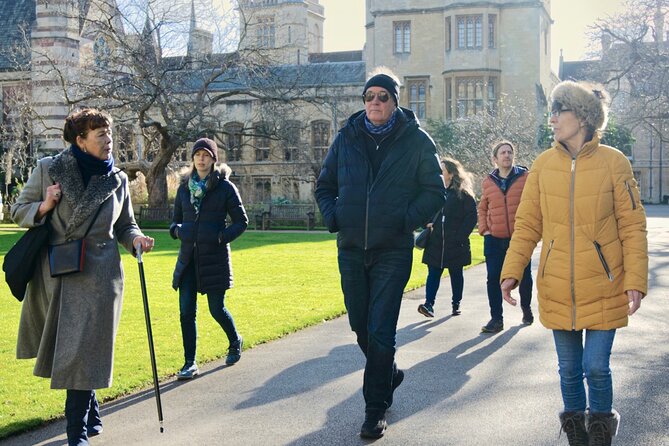
Oxford reveals its character through gates, courtyards, towers, and old stones that still serve a working university. This 90-minute walk with Sophie of Oxford History Tours connects those pieces well, from the Martyrs’ Memorial to the Bodleian Library and Radcliffe Camera. You get a medieval college visit and a brisk lesson in how religion, politics, science, and literature shaped the city.
I especially like the small group limit of 15, which gives Sophie room to answer questions and adjust the talk to the people in front of her. I also like the useful extras: a map, a guidebook, and personal tips on where to eat and drink. The main consideration is pace. Seventeen stops in 90 minutes means some places receive only a few minutes, and the tour is mainly an outside introduction rather than a long visit inside each college.
Key points to know before booking
- Sophie leads a lively, personal introduction: Her humor, clear explanations, and ability to guide in English and French suit mixed-age groups and families.
- You enter a medieval college: This adds real interior context to a walk that otherwise focuses on Oxford’s streets, gates, and façades.
- The route covers Oxford’s essential sights: Expect the Bodleian Library, Radcliffe Camera, Sheldonian Theatre, Bridge of Sighs, and several historic colleges.
- The stories range well beyond architecture: You’ll hear about Protestant martyrs, Tolkien, Philip Pullman, C. S. Lewis, Christopher Wren, and university traditions.
- The tour is compact but full: Seventeen listed stops fit into about 90 minutes, so wear comfortable shoes and expect a quick rhythm.
- The tour costs $0 per person as listed: That gives it excellent apparent value, though Balliol College entry is not included and the booking terms are strict.
Why this short Oxford walk works so well
Many Oxford walks lean heavily on pretty buildings. This one tries to explain the city behind the stone. You move through the old university quarter while Sophie links the colleges to religious disputes, scientific progress, literature, politics, and everyday city life.
That wider frame matters. Oxford is not just a collection of grand gates. It is a city where the university and the town have shared space, sometimes uneasily, for centuries. The route gives you enough background to make later visits more rewarding.
Sophie’s style is one of the strongest reasons to choose this experience. She has been praised for a good sense of humor, close attention to requests, and a clear way of explaining subjects to children, parents, and grandparents together. She also leads in French as well as English, which can help a mixed-language group.
You should expect a walking introduction, not a slow architectural seminar. The route stops often, but most pauses last between three and seven minutes. That format keeps the morning moving and gives you a useful first look before you decide which college or museum deserves more of your time.
More History Walks in the world:
- Chicago in a Day: Food, History & Architecture Walking Tour
★ 5.0 · 1,153 reviews - Charleston’s Best Highlights: History, Culture & Architecture
★ 5.0 · 422 reviews - Palm Springs Modernism Architecture & History Bike Tour
★ 5.0 · 359 reviews
From the Martyrs’ Memorial to Oxford’s oldest tower
The meeting point is outside the Weston Library on Broad Street. From there, the walk begins near the Martyrs’ Memorial, a Victorian monument recalling three Protestant churchmen executed in Oxford during the 16th century.
It is a useful first stop because Oxford’s religious past can otherwise get buried beneath the university’s academic reputation. Sophie uses the monument to introduce the political and religious conflicts that shaped England, and to remind you that these beautiful streets have witnessed serious danger as well as scholarship.
A few minutes later, you reach St Michael at the North Gate. Its Anglo-Saxon tower formed part of the medieval city gate and is described as probably the oldest surviving building in Oxford. The short stop cannot cover every story attached to the church, but it gives you a clear sense of the older city that existed before the university expanded.
This early section also shows the contrast that makes Oxford so appealing. A Victorian monument, a medieval gate, and university buildings sit close together, yet each belongs to a different period.
Exeter and Lincoln, where college life takes shape
Exeter College brings the first major college story. Its chapel reflects the Oxford Movement and was modeled on Paris’s Sainte-Chapelle. The college’s famous former students include Philip Pullman, J. R. R. Tolkien, and Alan Bennett.
That combination gives you three good ways into Oxford. You can look at the chapel as architecture, discuss the religious movement behind its design, or connect the college to modern British literature. The stop is brief, so you will not receive a full chapel visit, but the connection between building and alumni gives the place personality.
At Lincoln College, the route turns toward the university’s relationship with the city. The original front on Turn Street helps explain how the colleges developed within Oxford rather than apart from it.
Lincoln’s later associations add a modern political note. Former Prime Minister Rishi Sunak studied there, while the Wesley brothers also had links to the college. The stop works best if you enjoy seeing how one institution can connect medieval foundations with recent public life.
University Church, Oriel, and Corpus Christi
The University Church of St. Mary the Virgin was the university’s first building and is recorded in the Domesday Book. You admire its stained glass and hear about its connection to C. S. Lewis. The church’s spire can be climbed, but that climb is not part of this 90-minute route.
The church is one of the places where the tour’s fast pace may leave you wanting more. Seven minutes gives Sophie time to explain the building and point out major details, but not enough for a long look at the interior or a climb. I would note it as a strong candidate for a return visit.
Oriel College follows. It is one of Oxford’s oldest colleges, and its front quadrangle is particularly striking for its Oriel windows. The college is also associated with rowing, while nearby Corpus Christi hosts an annual tortoise race. That odd little detail is exactly the kind of human touch that keeps a college walk from becoming a string of dates and names.
At Corpus Christi, look for early 16th-century architectural details featuring animals, including a pelican. The college sits on a cobbled street listed as a national treasure. This is a small stop, but it rewards anyone who enjoys carved details and the odd symbols tucked into old buildings.
You also pass east of Christ Church. The route points out the Christ Church Picture Gallery as a place to return to, though the gallery is not presented as part of the included tour visit. That suggestion is useful because the gallery can easily be missed behind the college’s imposing eastern entrance.
A few more architecture walks in the world worth a look
- Chicago Architecture River Cruise
★ 5.0 · 15,756 reviews - Chicago River 90-Minute Architecture Tour
★ 4.5 · 9,629 reviews - Chicago River: 1.5-Hour Guided Architecture Cruise
★ 4.8 · 8,046 reviews - Chicago Architecture Center River Cruise aboard First Lady
★ 5.0 · 5,536 reviews
Merton College and the story over its gatehouse
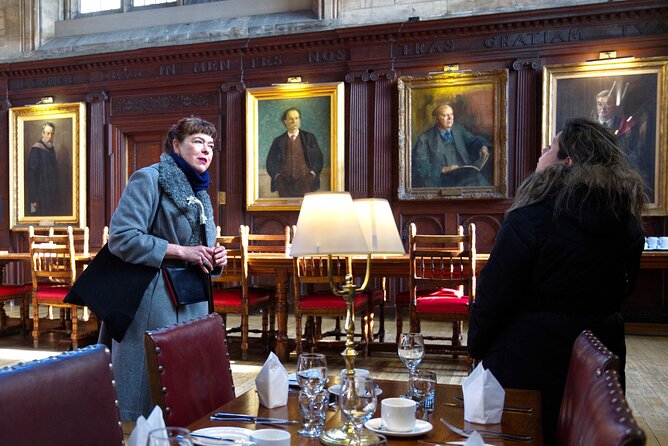
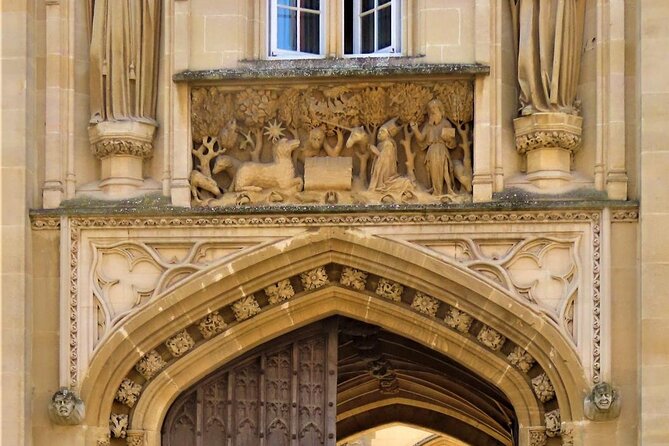
Merton is Oxford’s third college and one of the most rewarding architectural stops on the walk. Sophie draws attention to the 15th-century frieze above the gatehouse, which tells a story about the early founding of university colleges.
The details here help you read Oxford rather than simply photograph it. A gatehouse is not just an entrance. Its decoration can explain who founded a college, whom it served, and how the institution wanted to present itself.
Merton’s chapel has richly decorated flying buttresses, another reminder that practical stonework could also be expressive. The college is linked to Thomas Bodley, founder of the Bodleian Library, and its library is described as the oldest continuously surviving library in Oxford.
Do not expect to tour that library on this walk. The value lies in learning why it matters and then seeing how it fits into the wider story of Oxford’s books, learning, and buildings.
Examination Schools and Queen’s College
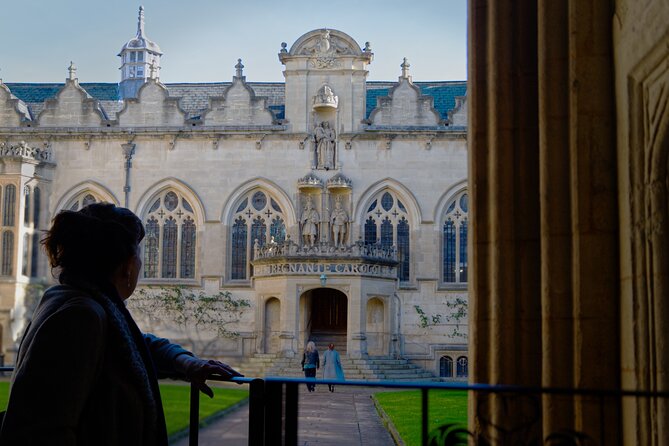
The Examination Schools offer a change of mood. Oxford held its first written examination in the early 19th century, and this later Victorian building reflects Jacobean and Tudor styles. In the 1870s, it represented modern ideas about organizing education and making it more widely available.
That context is helpful because the building can look like an old palace at first glance. Sophie gives you the reason behind its creation, turning a grand façade into part of the university’s changing approach to education.
Queen’s College adds another layer. It was founded for poor scholars from northern England. One of those scholars later became wealthy enough to fund an 18th-century rebuilding, with designs contributed by Christopher Wren and Nicholas Hawksmoor.
The college also has a popular modern association through comedian Rowan Atkinson. That mix of charity, wealth, architecture, and celebrity keeps the history grounded in people rather than dates alone.
The walk along the High Street gives you a glimpse of Oxford outside the colleges. This was the road to London, and it has changed considerably over time. Frank Cooper’s marmalade was first made here and later became an international product.
The street also connects to the story of England’s early coffee houses and the return of Jewish people to the country after their exclusion during the 13th century and later political changes. The subject is complicated, and the short timing means you will receive an outline rather than a full social history, but it is a welcome reminder that Oxford’s story includes commerce, migration, and public life.
New College and the surprisingly modern Bridge of Sighs
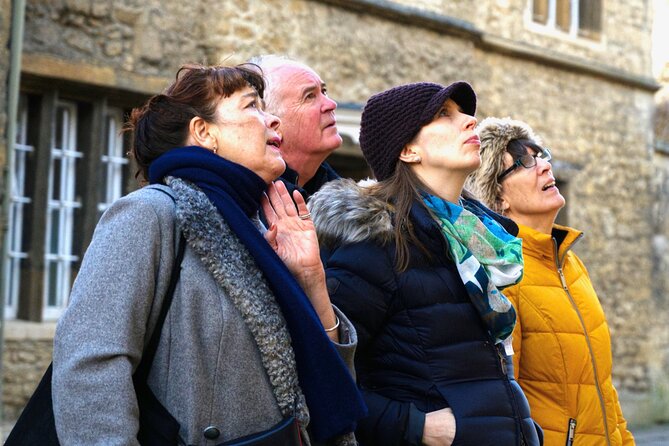
New College’s gatehouse tells the story of its foundation after the plague outbreaks of the 14th century. Its setting has also appeared in several films, which gives you a useful reason to look beyond the most famous college names.
The stop is short, but New College often rewards a return visit if you want courtyards, gardens, and more time with its medieval fabric. On this tour, you mainly get orientation and a sense of why the site has such visual appeal.
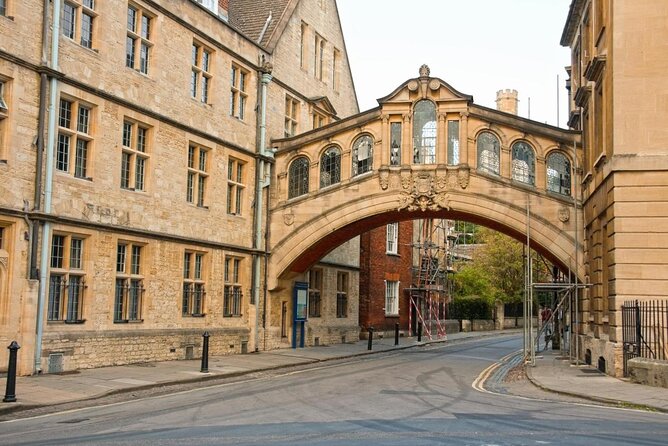
Next comes the Bridge of Sighs, one of Oxford’s most photographed structures. It resembles a Venetian bridge, yet it was built in the 20th century. That contrast is a good reminder not to assume every old-looking Oxford feature is medieval.
The bridge is connected to Hertford College and sits near the former home of Edmund Halley, the astronomer whose name is attached to Halley’s Comet. This is a compact stop, but it combines architecture, science, and a little myth-busting in just a few minutes.
The Sheldonian, Divinity School, and Bodleian Library
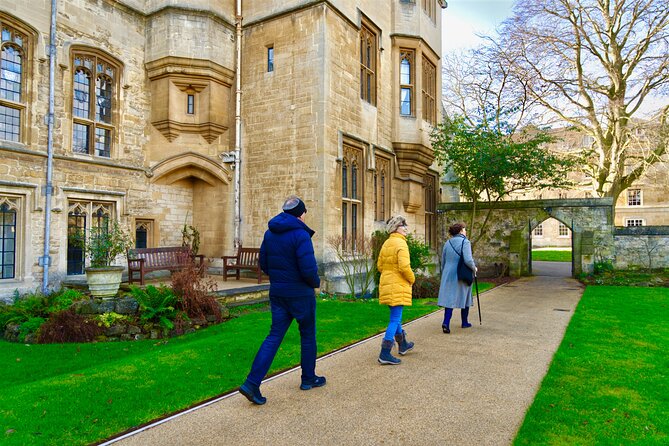
The Sheldonian Theatre is the university’s 17th-century ceremonial building and is widely associated with Christopher Wren. Wren later designed St. Paul’s Cathedral in London, and he also served at Oxford as an astronomer.
Sophie gives you the building’s institutional role, not just its appearance. This is where ceremonies take place, so the theatre helps explain how the university presents itself to students and the public.
The next stops are especially appealing to anyone who knows the Harry Potter films. The medieval Divinity School and the Duke Humphrey’s Library above it were selected by J. K. Rowling for film scenes. The Duke Humphrey’s Library was built in the 15th century to house a gift of more than 200 books from the king’s brother.
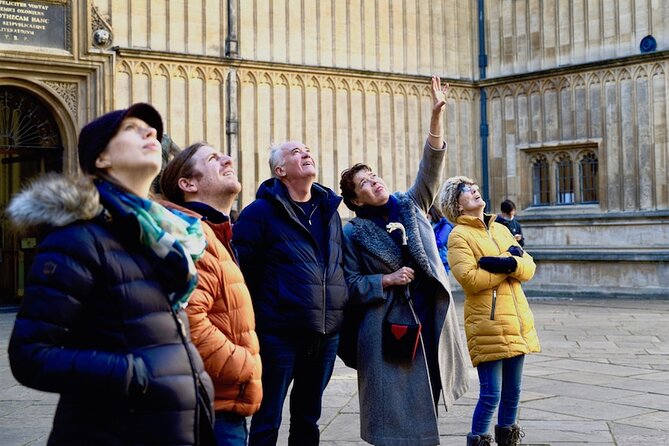
Today, the nearby Bodleian Library holds more than 13 million books. You learn about its origins and how the library still works, while admiring the 17th-century buildings from outside. This is an important distinction: the tour gives you the story and the view, but it does not promise a full Bodleian interior tour.
The Divinity School and library section can be a highlight for film fans, readers, and anyone interested in the physical history of books. It also helps explain why Oxford’s libraries are not simply storage rooms. They are part of the university’s identity and daily work.
Radcliffe Camera, Balliol College, and the final stretch
The Radcliffe Camera was Oxford’s first science library. Its circular form is one of the city’s most recognizable views, but the story of its funding adds more meaning to the building. Sophie introduces Sir John Radcliffe, a royal physician and an unusually generous benefactor.
This stop works well near the end because you have already seen the university’s religious, literary, and educational sides. The Radcliffe Camera adds science and patronage to the picture.
The final listed stop is Balliol College. The supplied description points to the time when undergraduates began gaining access to the university and its colleges, an important shift in how academic life developed.
Entry to Balliol is not included, so you should treat this as the outside end of the route rather than a guaranteed interior visit. The official end point is at the Golden Cross on Oxford’s central streets, a convenient place to continue exploring or follow Sophie’s suggestions for food and drink.
Is the $0 price good value?
At the listed price of $0 per person, this is an unusually strong value if the booking terms apply as shown. You receive 90 minutes with a named guide, a college entry, a map, a guidebook, and local food and drink advice.
The value is strongest for a first visit. Instead of spending your limited time guessing which college gate matters or trying to piece together dates from plaques, you get a route with a clear story. The small group cap also makes the experience feel more personal than a large city walk.
Still, price should not hide the tour’s limits. The route covers a lot of ground, and several stops last only three to five minutes. If you want long interior visits, quiet time for photography, or a detailed look at one college, you will need separate visits afterward.
Who should book this Oxford experience?
I would choose this tour if you are visiting Oxford for the first time, making a day trip from London, or traveling with a group that wants history presented in an accessible way. It also suits families because Sophie has experience keeping children, parents, and grandparents involved.
The tour is a good match for fans of Tolkien, C. S. Lewis, Harry Potter, British politics, architecture, and university traditions. It is also useful for English and French speakers because Sophie can guide in both languages.
You should think twice if your main goal is a long college interior tour or a slow photographic walk. The route is active and information-packed. Good weather matters, and the experience may be canceled in poor weather, with another date or a full refund offered. The booking is non-refundable and cannot be changed for another reason, so make your plans carefully.
Should you book it?
Yes, if you want a fast, friendly first reading of Oxford rather than a single-site visit. Sophie’s humor, flexibility, and broad knowledge give the tour a human feel, while the route covers the city’s essential university sights.
Book it with the right expectation: this is an orientation walk. Use the map and guidebook to mark the places you want to revisit, then return to the church, libraries, galleries, or colleges that catch your interest. At the listed $0 price, the tour offers an excellent way to get your bearings and make better use of the rest of your Oxford day.
FAQ
How long is the Oxford architectural and historical tour?
The tour lasts approximately 90 minutes.
Where does the tour begin?
It begins at the Weston Library on Broad Street, Oxford OX1 3BG, United Kingdom.
Where does the tour end?
The tour ends at the Golden Cross in Oxford, OX1 3EU, United Kingdom.
Is college entry included?
Entry to a medieval college is included. Balliol College admission is specifically not included.
What language is the tour offered in?
The listed tour language is English. Sophie has also guided groups in French and English.
How large is the group?
The activity has a maximum of 15 participants.
What happens if bad weather cancels the tour?
If poor weather causes the experience to be canceled, you will be offered a different date or a full refund. The booking itself is otherwise non-refundable and cannot be changed for another reason.
Newly added in the world
- Venice Art and Architecture Private Walking Tour★ 4.5 · 11 reviews
- Basilica San Marco and the Pala d’Oro with Architect Guide★ 4.5 · 19 reviews
- Walking tour in Venice with an architect★ 5.0 · 16 reviews
- Paris: Discover the hidden architecture gems of Le Marais★ 3.8 · 4 reviews
- Porto Tour: Street Art & Architecture Experience 3h★ 5.0 · 4 reviews
- Faro Private Walking Tour: Uncovering its Architectural Legacy★ 5.0 · 8 reviews
- Private Walking Tour of Old Gdańsk with an architect-guide★ 5.0 · 7 reviews
- Sopot Private City Walking or Bike Tour with a local architect★ 5.0 · 19 reviews
Historical Tours, compared.
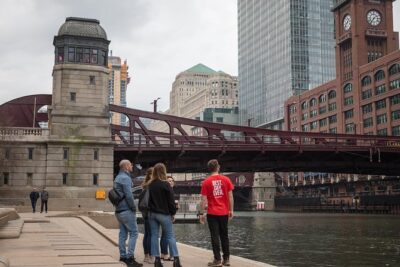
Chicago in a Day: Food, History & Architecture Walking Tour
Read our review →
Charleston’s Best Highlights: History, Culture & Architecture
Read our review →
Palm Springs Modernism Architecture & History Bike Tour
Read our review →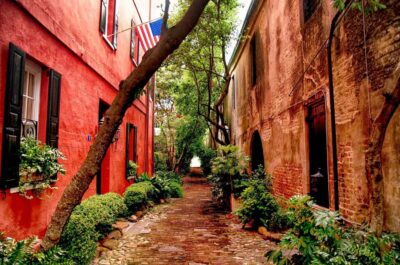
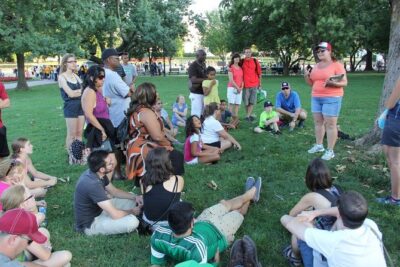
Historic Georgetown: History, Gossip, & Architecture Walking Tour
Read our review →
Charleston History, Homes, and Architecture Guided Walking Tour
Read our review →

Historical and Architectural Chicago Fireboat River & Lake Cruise
Read our review →Browse the lists this tour appears in