
Review · HISTORICAL TOURS
Queretaro: colonial architecture and history
Querétaro’s old center makes far more sense when someone connects its churches, convents, aqueduct, and plazas to the country’s larger story. This is not just a stroll past pretty facades. With Armando Magaña, you follow the city from its early foundations through independence, religious change, silver, civil conflict, and the expulsion of the French.
I like the small maximum of six people, which gives you room to ask questions. I also like the broad sweep of the tour: you get the aqueduct and colonial architecture, but you also hear why Querétaro mattered to Mexico. The main caution is that the tour leans more toward history, religion, and storytelling than close architectural analysis, so say clearly if buildings are your main interest.
Key points before you book
- Armando’s historical storytelling: He links Querétaro’s local events to Mexican and world history rather than treating each monument as an isolated stop.
- Seven central sights: The route includes the aqueduct, an illustrious cemetery, churches, convents, Plaza de Armas, and the city museum area.
- English-language walking tour: The experience is offered in English and begins at 9:00 a.m.
- Small-group format: A maximum of six people makes it easier to hear, ask questions, and shape the discussion.
- Plan for a half day: The stated duration is three to four hours, but some outings have lasted longer when questions and explanations continued.
- Best for history-minded visitors: You will get the most from it if you enjoy listening, walking, and placing Mexican events in a wider context.
Why Querétaro is worth a morning
Querétaro can look easy to skim. You see a long aqueduct, a grand square, several churches, and handsome colonial streets. Then the dates and connections start to pile up. The city was tied to Spanish expansion, silver routes, religious orders, independence, the French intervention, and the creation of modern Mexico.
That is the real value of this experience. Armando does not simply identify a building and move on. He uses each place as a doorway into a larger subject. The aqueduct opens the story of the city’s foundation and the love story connected with its construction. A convent becomes a way to discuss Franciscan influence and national events. A plaza becomes a stage for political change.
The format suits you best if you want context before exploring on your own. One person described wishing this had been the first activity of a Querétaro visit, a sensible suggestion. After three or four hours with the city’s basic story in place, later walks become easier because you know what you are looking at and why it matters.
More History Walks in the world:
- Chicago in a Day: Food, History & Architecture Walking Tour
★ 5.0 · 1,153 reviews - Charleston’s Best Highlights: History, Culture & Architecture
★ 5.0 · 422 reviews - Palm Springs Modernism Architecture & History Bike Tour
★ 5.0 · 359 reviews
Starting beneath the aqueduct
The meeting point is the Mirador de los Arcos, at Ejército Republicano 47 in the La Santa Cruz area. The tour begins at 9:00 a.m., and the first stop is El Acueducto de Querétaro.
You spend about 15 minutes here. Admission is free, and the point is not a long technical study of the structure. Instead, Armando explains the city’s foundation and the love story associated with the aqueduct’s construction. That human detail gives the monument an immediate hook.
The aqueduct is also a useful opening because it introduces a basic theme of the morning: Querétaro’s growth depended on more than attractive colonial buildings. Water, settlement, religious institutions, trade, and political power all shaped the city. If you want detailed information about engineering, materials, or architectural style, ask directly. The tour’s strength is the story around the monument, not a specialist lecture on masonry.
The high starting point also means you should be ready to walk downhill and through the historic center. The route is not presented as strenuous, but a moderate level of fitness is requested. Wear shoes you can comfortably use for several hours.
Remembering the city at the Panteón de los Queretanos Ilustres
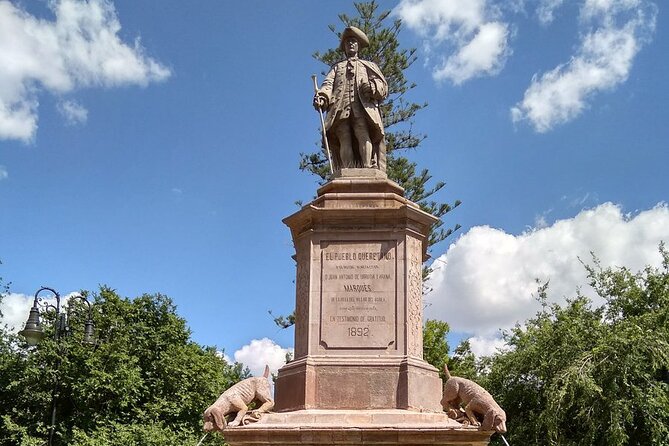
The second stop is the Panteón de los Queretanos Ilustres, or Pantheon of Illustrious Queretans. The visit lasts about 15 minutes and has no admission charge.
Here, the focus turns to people buried in the cemetery and the actions that affected Querétaro and Mexico. This gives the tour a human center. Instead of discussing history as a list of dates, you hear about individuals who shaped events and institutions.
The stop is fairly short, so think of it as a compact introduction rather than a full cemetery tour. If you are interested in specific figures, this is a good point to ask Armando questions. His willingness to spend time on questions is one reason the experience can stretch beyond the stated three to four hours.
The hill, the Franciscans, and Santa Cruz
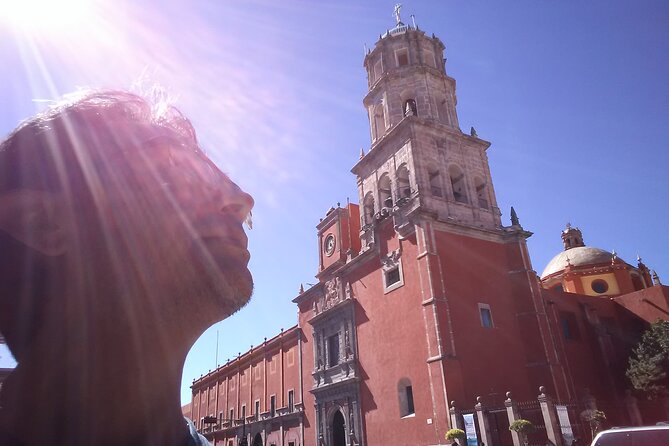
At the Templo y ex-convento de la Santa Cruz de los Milagros, you spend about 40 minutes. This is one of the longer stops, and it gives the morning a strong religious and historical center.
The convent sits at the top of the hill where Querétaro was founded for the second time. Armando explains legends tied to the place and the national events in which the Franciscan convent played a part. You will hear about the role of religious orders in the formation of the city, along with the way local institutions were drawn into Mexico’s larger story.
This is also where the tour’s emphasis becomes clear. You will see colonial religious architecture, but the main subject is what happened inside and around these buildings. The experience is especially useful if you want to understand how churches and convents functioned as centers of education, community life, power, and political change.
Some parents may find the three to four hours of walking and listening too much for younger children. The tour is better suited to older children who already enjoy history or can manage a long morning on foot.
A few more architecture walks in the world worth a look
- Chicago Architecture River Cruise
★ 5.0 · 15,756 reviews - Chicago River 90-Minute Architecture Tour
★ 4.5 · 9,629 reviews - Chicago River: 1.5-Hour Guided Architecture Cruise
★ 4.8 · 8,046 reviews - Chicago Architecture Center River Cruise aboard First Lady
★ 5.0 · 5,536 reviews
Plaza de Armas and the city’s public face
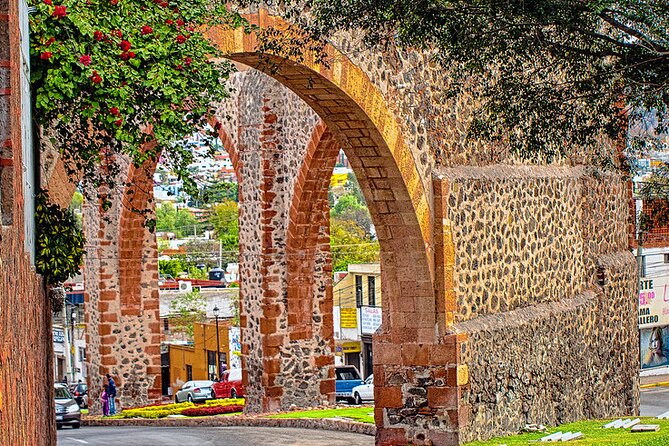
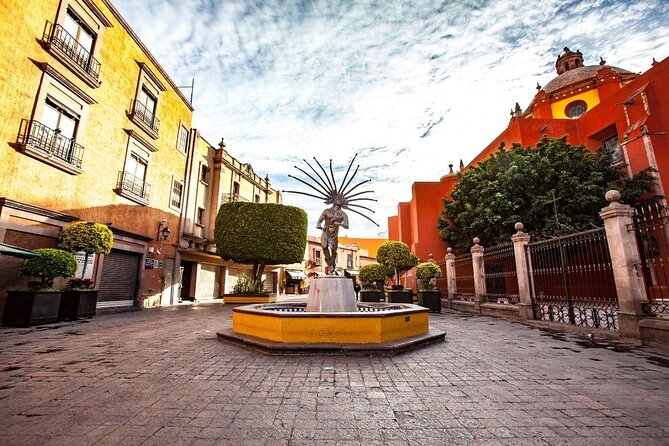
The route continues to Plaza de Armas for about 35 minutes. Before reaching the square, you see a couple of Neoclassical examples. Then the plaza provides a natural pause and a setting for more stories about the city.
A main square is often where a city’s public life becomes easiest to read. Government, religion, commerce, and social life meet here. In Querétaro, the square also helps connect the earlier religious stops with the political history discussed throughout the tour.
The tour does not treat Plaza de Armas as a quick photo stop. You have time to hear historical accounts and ask how the square fits into the city’s development. This is one of the places where Armando’s wide time frame helps. He covers events from before the Spanish arrival through the independence period and later national conflicts.
The square is also a practical place to regain your bearings. The final stops are close to the old center, and the tour gradually leads you toward the city museum.
Guadalupe and the work of a builder
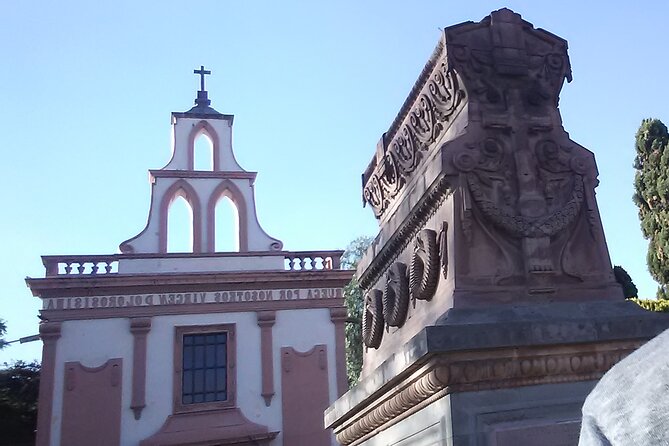
At the Santuario de la Congregación de Nuestra Señora de Guadalupe, you spend about 15 minutes. The stop centers on the temple of the Virgin of Guadalupe, the importance of this religious figure in Mexico, and the builder responsible for the temple.
This is a short visit, but it adds another layer to the tour’s religious theme. Rather than seeing one church as interchangeable with the next, you learn why this particular dedication mattered and who shaped the building.
If you booked the experience expecting a dedicated architecture tour, this stop is a useful example of what to expect. The building itself matters, but the explanation is tied closely to religion, history, and the people behind the site. Ask Armando to point out architectural features if that is a priority for you.
San Francisco and the old inner-land road
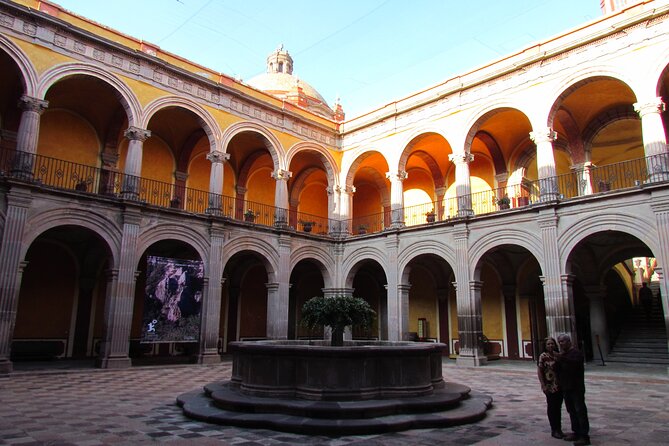
The Templo y Exconvento de San Francisco de Asís de Querétaro is another 15-minute stop. From inside the old convent premises, you learn how the building changed as Mexico passed through different historical periods.
The stop also identifies the place where the ancient inner-land road began. That detail broadens the tour beyond local sightseeing. Roads explain how places connect, and this one helps show Querétaro’s role in movement through the region.
Armando’s approach works well here because he uses the building as evidence of change. A convent is not frozen in the colonial period. Its use, appearance, and meaning shifted as the country changed. You get a better sense of how Mexican history left marks on physical spaces.
Santa Clara and one packed historic corner
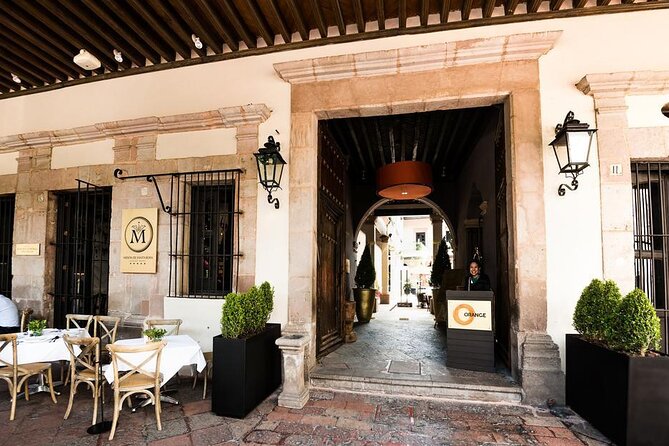
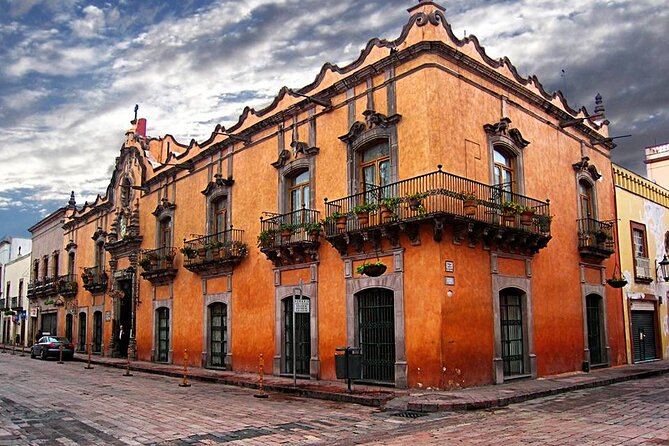
The Convento de Santa Clara is scheduled for about 20 minutes. It is described as the first and largest female convent in the city. At the same corner, you also encounter the city’s former hospital, a notable Neoclassical fountain, and what is described as the finest example of Baroque private-house architecture.
That concentration makes this one of the most rewarding parts of the route for architecture-minded visitors, even though the overall tour is not built as a technical architecture course. Several types of building and several functions share one small area: female religious life, medical care, public water, and private wealth.
Take your time looking from one structure to another. The value is in comparing them. You can see how different needs produced different forms, and how the same city supported convents, hospitals, grand houses, and public spaces side by side.
What the guide does best
Armando Magaña is the central reason to choose this tour. His strongest skill is not just knowing dates. He builds a narrative that moves from local details to national and world events, then returns to the street in front of you.
That approach helps when Mexican history feels unfamiliar. You do not need to arrive with a long list of names or dates. Armando explains the background and answers questions patiently. His English is described as excellent, and the tour is conducted in English.
The experience is also flexible in practice. The planned stops have set time estimates, but several outings ran longer than four hours because Armando continued explaining and responding to questions. That is good news if you like a generous, unhurried tour. It is less helpful if you have a fixed lunch, transport, or afternoon schedule.
One important point is worth making plainly: the guide’s historical explanations receive the strongest praise, while one account found the architecture coverage lighter than expected. If you want a building-by-building study of styles, tell Armando at the start. He has acknowledged that it helps to know whether you want history or architecture to receive more attention.
Price, group size, and practical value
At $50 per person, the tour is not the cheapest way to walk through Querétaro. Yet the price is easier to justify with a group of no more than six, an English-speaking specialist guide, and several hours of connected interpretation.
Every listed stop has free admission, so you are paying for the guide rather than entrance fees. That is exactly what makes the experience valuable or unnecessary, depending on your travel style. If you are comfortable reading signs, researching monuments, and building the city’s story yourself, you may prefer a self-guided walk. If you want someone to explain why these places matter and answer questions as you go, the fee is reasonable.
The activity is booked about 10 days ahead on average, so avoid leaving it until the last moment if your schedule is firm. Confirmation arrives at booking. Service animals are allowed, and a moderate level of physical fitness is requested.
The tour starts at the Mirador de los Arcos and finishes at Museo de la Ciudad, in the former Capuchin convent on Calle Vicente Guerrero Norte. That ending is useful. You are left in the central old town, where you can walk, take a taxi back to your hotel, rest, or find dinner.
The stated cancellation rule allows a full refund if you cancel at least 24 hours before the 9:00 a.m. start. Cancellations or changes made later are not accepted for a refund.
Who should book this walk?
I would book it if you enjoy history, religious architecture, and stories that connect a city to national events. It is particularly useful at the beginning of your time in Querétaro, when you want a framework for the old town before exploring independently.
It also suits solo visitors and couples who prefer discussion to a large group lecture. A maximum of six people creates a more personal setting, and Armando’s patience with questions adds real value.
I would hesitate if you want a fast sightseeing circuit, a children’s activity, or a highly technical architecture tour. The morning asks you to walk and listen for several hours. It can be rewarding, but it is not designed as a quick checklist of photo stops.
Should you book it?
Book this tour if you want Querétaro to become more than a collection of churches and colonial facades. Armando Magaña gives the city a clear historical shape, from the aqueduct and its founding story to convents, independence, French intervention, and the people who helped form Mexico.
Choose it early in your visit, wear comfortable shoes, and tell the guide whether history or architecture matters more to you. If your main goal is understanding why Querétaro matters, the small group, English narration, and generous question time make this a strong choice.
FAQ
Where does the tour begin?
The tour begins at the Mirador de los Arcos, Ejército Republicano 47, La Santa Cruz, La Pastora, 76025 Santiago de Querétaro, Querétaro, Mexico.
What time does the tour start?
The scheduled start time is 9:00 a.m.
Where does the tour finish?
The tour ends at Museo de la Ciudad, Calle Vicente Guerrero Norte 27, in Querétaro’s historic center.
How long does the experience last?
The stated duration is approximately three to four hours. Some outings have lasted longer because of extended explanations and questions.
Is the tour offered in English?
Yes. The experience is offered in English.
How large is the group?
The maximum group size is six people.
Are entrance tickets included?
All seven listed stops show free admission, so there are no listed entrance charges for the itinerary.
What level of fitness is needed?
A moderate level of physical fitness is recommended. The experience involves walking and listening for several hours, and it may not suit children who are not used to a long half-day outing.
Newly added in the world
- Venice Art and Architecture Private Walking Tour★ 4.5 · 11 reviews
- Basilica San Marco and the Pala d’Oro with Architect Guide★ 4.5 · 19 reviews
- Walking tour in Venice with an architect★ 5.0 · 16 reviews
- Porto Tour: Street Art & Architecture Experience 3h★ 5.0 · 4 reviews
- Faro Private Walking Tour: Uncovering its Architectural Legacy★ 5.0 · 8 reviews
- Private Walking Tour of Old Gdańsk with an architect-guide★ 5.0 · 7 reviews
- Sopot Private City Walking or Bike Tour with a local architect★ 5.0 · 19 reviews
- Lesser Poland Wooden Architecture Trail UNESCO Private Tour from Krakow★ 5.0 · 15 reviews
Historical Tours, compared.
Chicago in a Day: Food, History & Architecture Walking Tour
Read our review →
Charleston’s Best Highlights: History, Culture & Architecture
Read our review →
Palm Springs Modernism Architecture & History Bike Tour
Read our review →
Historic Georgetown: History, Gossip, & Architecture Walking Tour
Read our review →
Charleston History, Homes, and Architecture Guided Walking Tour
Read our review →

Historical and Architectural Chicago Fireboat River & Lake Cruise
Read our review →Browse the lists this tour appears in