

Review · ROTTERDAM ARCHITECTURE TOURS
Rotterdam Architecture: Centre and South Bank with watertaxi
Rotterdam’s best sightseeing trick is to see it at street level, then cross the Maas by watertaxi. This three-hour tour links the city’s postwar shopping district, bold new buildings, market hall, Cube Houses, and South Bank in one tidy route, with an architect guiding the story.
I like the clear architectural focus, which gives meaning to buildings you might otherwise photograph and pass. I also like the ride beneath the Erasmus Bridge, a quick, practical crossing that doubles as one of the city’s finest views. The catch is the four-kilometer walk, so this is not an easy outing for anyone with mobility or vision limitations.
Key points
- Architecture from Central Station to the Maas: Follow a carefully chosen route through Rotterdam’s modern center.
- A guide who works in architecture: Learn how the city rebuilt, expanded, and plans its next chapter.
- The watertaxi is part of the sightseeing: Cross the river at speed rather than treating the boat as a simple transfer.
- A strong mix of old and new: See St. Laurens Church beside the Markthal, Timmerhuis, and Cube Houses.
- The South Bank gets proper attention: Visit the former harbor zone around Hotel New York, Fenixloods, and Fenix Food Factory.
- A compact introduction to Rotterdam: Three hours gives you a useful first look, but not time for long stops inside every building.
Starting beneath Rotterdam Central Station’s clock
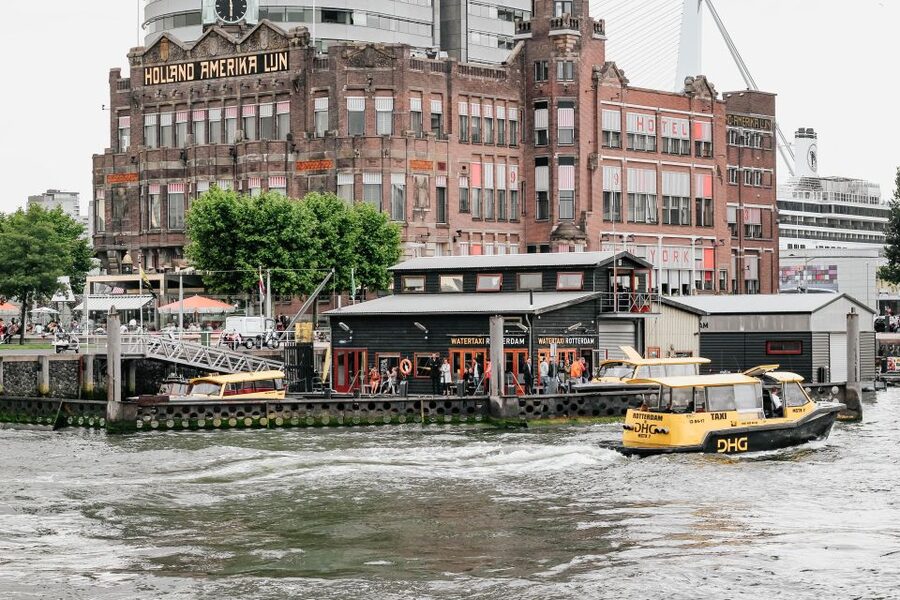
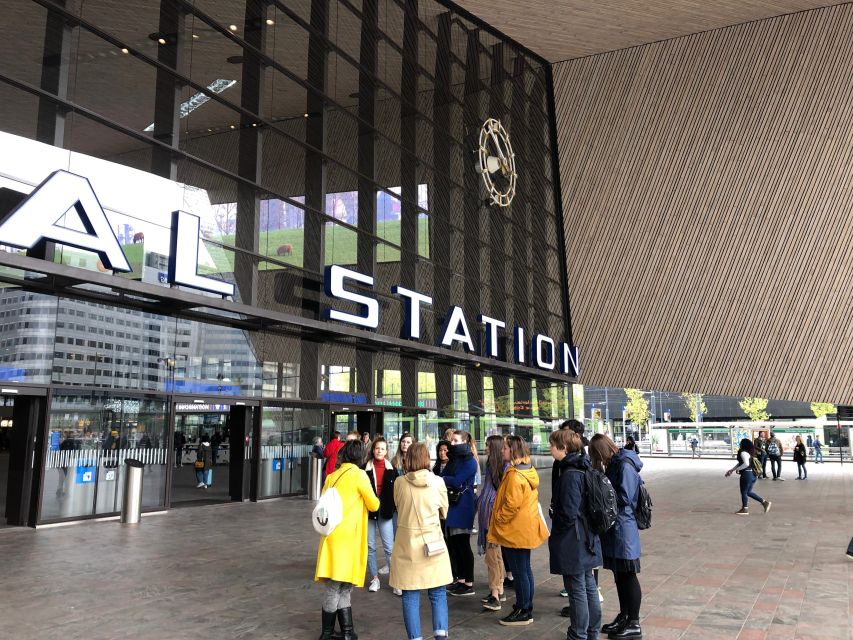
The meeting point is under the station clock, beside the main entrance on the outside. That detail matters. Rotterdam Central is large and busy, so go outside before searching for your guide rather than wandering through the station halls.
The tour begins in a city that feels very different from Amsterdam, Delft, or Leiden. Rotterdam is a port city shaped by trade, modern planning, and wartime destruction. Much of its center was rebuilt in the postwar years, and the result is a mix of practical modernism, daring experiments, and a few older survivors.
Your English-speaking architect guide helps you read that mix. You are not simply told that a building is famous. You learn how it fits into Rotterdam’s changing identity, how the city uses public space, and how new construction continues to reshape the center.
The guide matters here more than on a basic city walk. Rotterdam’s architecture can look random if you do not know the story behind it. With an architect explaining the choices, the sharp angles, broad plazas, and unusual towers begin to make sense.
One guide named Tania has led the walk and is especially good at connecting current buildings with future development plans. She also offers practical sightseeing suggestions for the rest of your time in Rotterdam. If you are booking this experience in hopes of getting ideas for the rest of your visit, that is a useful extra.
A few more architecture walks in Netherlands worth a look
- Rotterdam: Architectural Highlights Guided Walking Tour
★ 4.8 · 215 reviews - Rotterdam: Highlights, Gems, Architecture & History Walk
★ 5.0 · 191 reviews - Rotterdam Walk: Hilights, Gems, Architecture & WWII | 2 or 3hrs
★ 5.0 · 149 reviews
Lijnbaan and the city’s postwar reset
One of the first important stops is the Lijnbaan, Rotterdam’s famous postwar modernist shopping area. It is not just a place to browse shops. It represents a major change in how European cities thought about shopping and pedestrian space after the war.
The area gives you a useful introduction to Rotterdam’s planning. Instead of treating the street as a simple route for cars, the Lijnbaan was designed around people on foot. Your guide can point out how the district reflects the optimism and practical thinking of the postwar period.
This is one of the tour’s quieter strengths. A casual visitor might see an ordinary retail street. An architect guide shows you why the layout matters and how Rotterdam’s rebuilding produced a city center unlike the historic cores found elsewhere in the Netherlands.
The drawback is that the Lijnbaan may feel less dramatic than the Markthal or Cube Houses. It is valuable for context rather than instant visual impact. I would pay close attention here, because the tour’s later buildings make more sense once you understand this early rebuilding effort.
Timmerhuis and Rotterdam’s modern working city
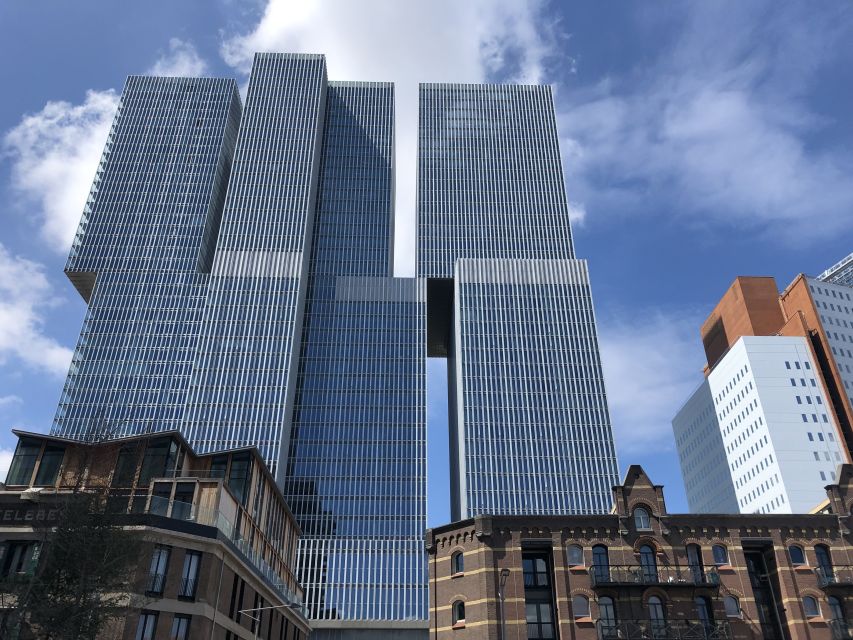
The route continues to Timmerhuis, a striking building designed by OMA, the Rotterdam-based architectural firm known around the world. The structure is a good example of the city’s habit of putting bold new forms into the middle of everyday urban life.
Timmerhuis is not presented as an isolated piece of sculpture. It belongs to the working center, close to shops, civic buildings, and public routes. That connection between architecture and daily use is central to Rotterdam’s appeal.
Your guide can explain how the building fits into the city’s changing plans. The focus is not only on how Timmerhuis looks, but also on why a city chooses this kind of building and what it says about Rotterdam’s ambitions.
I like this part for readers who want more than a photo stop. You get a short lesson in how contemporary architecture operates at city scale. If you prefer historic interiors and long visits inside monuments, though, this tour may feel fast and outward-looking.
St. Laurens Church, the Markthal, and the Cube Houses
St. Laurens Church brings an older note to the route. It is an important reminder that Rotterdam was not built entirely from scratch after the war. The church gives you a point of comparison: traditional masonry and historic religious architecture set against the city’s newer glass, steel, and concrete forms.
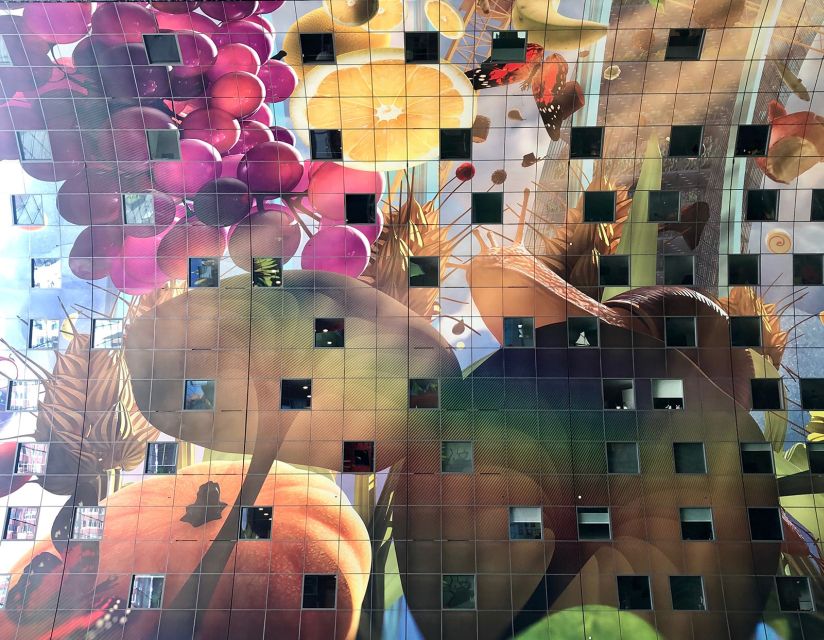
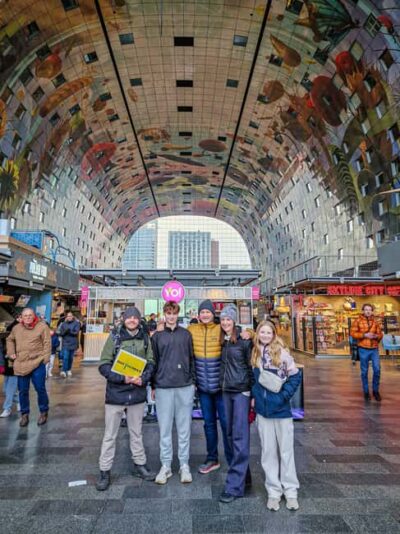
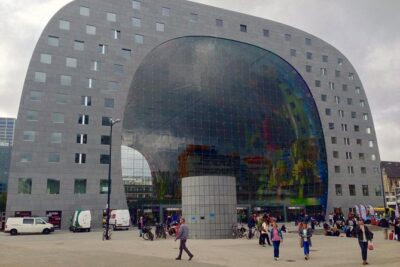
From there, the route reaches the Markthal, one of Rotterdam’s most recognizable buildings. The indoor market is known for its huge arched form and colorful interior artwork. You can expect a lively visual change from the open streets and modernist blocks outside.
The Markthal is also useful as a lesson in how Rotterdam combines food, housing, and public space. It is not simply a market building. Its design makes the structure part of the city’s daily life, and the tour uses it to show how newer Rotterdam projects mix functions in a single place.
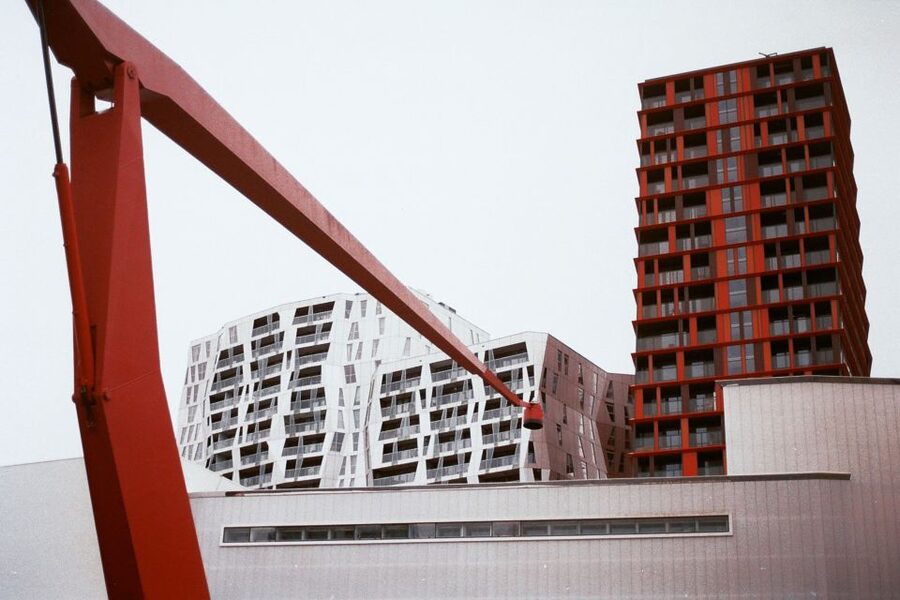
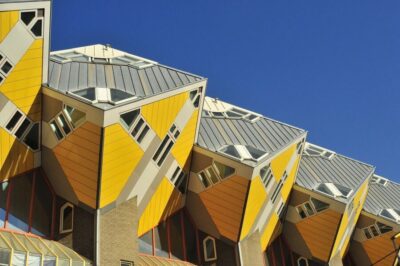
The Cube Houses are the next major highlight. Their tilted forms are playful, strange, and easy to remember. They are also easier to understand when an architect explains the idea behind them rather than leaving you to wonder why anyone would build a house at an angle.
I would not expect a long interior visit at each stop. This is a walking tour with a broad route, not an architectural museum tour. You see the buildings, hear the design story, and keep moving. That works well if you want orientation across the city, but less well if you want time for detailed photography or a careful look inside.
Same city, a different facade:
- Rotterdam Architecture Highlights Walking Tour
★ 5.0 · 66 reviews - The rise of Haarlem: Culture, History, Art and Architecture Walking Tour
★ 5.0 · 59 reviews - Rotterdam Must Do Tour: Highlights, History, WW2 and Architecture
★ 5.0 · 20 reviews - Rotterdam: Architecture Highlights Tour including the Depot
★ 4.6 · 17 reviews
The watertaxi across the Maas
At the riverside, the tour changes pace. You board a watertaxi and cross to Rotterdam’s South Bank. The boat fee is included, so this is not an extra expense waiting for you at the pier.
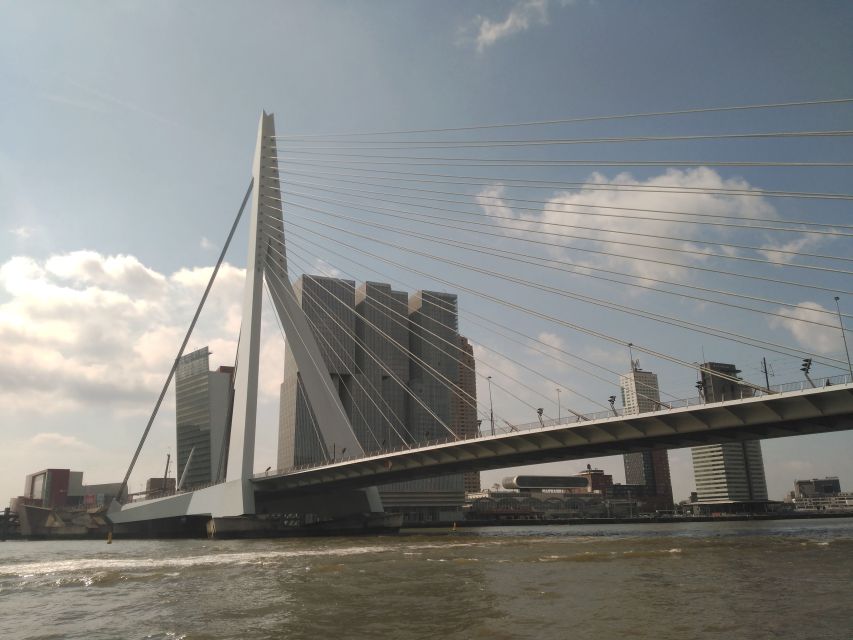
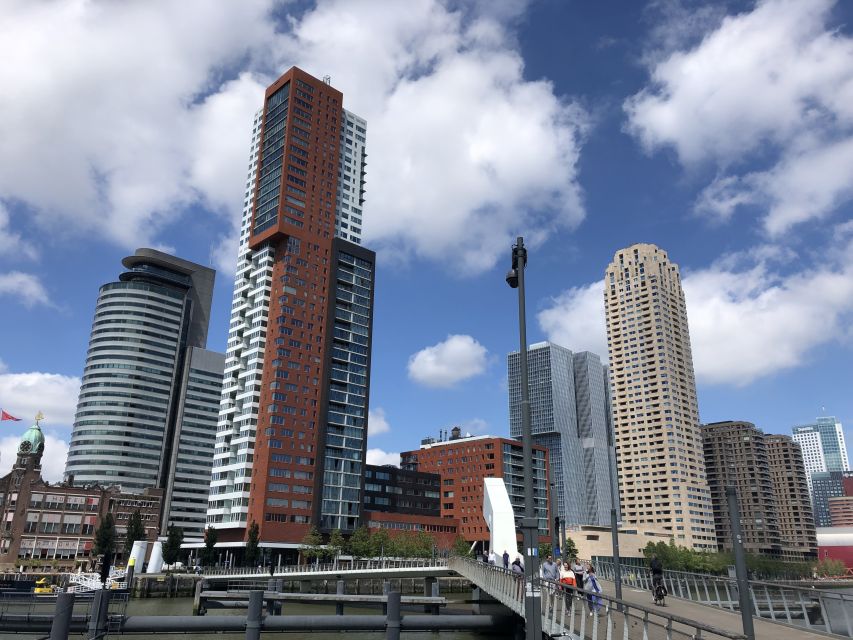
The ride is short, but it adds something a tram or bridge crossing cannot. You get a low view of the river, the waterfront, and Rotterdam’s skyline. Passing beneath the Erasmus Bridge gives you a memorable look at one of the city’s defining structures from an unusual angle.
This is more than a transport shortcut. It helps you understand Rotterdam as a river city and a port. After walking through the center, you see how the Maas separates and connects the city’s districts.
A speedboat ride can be breezy and lively, so keep your belongings secure and dress for the conditions. Large bags and luggage are not allowed, and that is sensible on a small boat. Bring only what you need for the walk and crossing.
The watertaxi is one of the best reasons to choose this tour over an ordinary architecture walk. You get a genuine piece of local transport folded into the sightseeing, rather than a vehicle ride added simply to fill time.
South Bank, Hotel New York, and the old harbor zone
The South Bank section focuses on a former harbor area that has taken on a new life. Your guide explains how the district changed from working port space into one of Rotterdam’s most popular areas for architecture, food, and leisure.
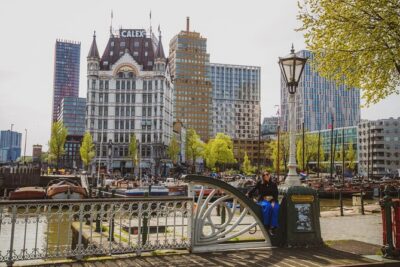
The contrast with the city center is useful. In the center, you see postwar rebuilding and major contemporary projects. On the South Bank, old harbor buildings and newer high-end architecture share the same setting.
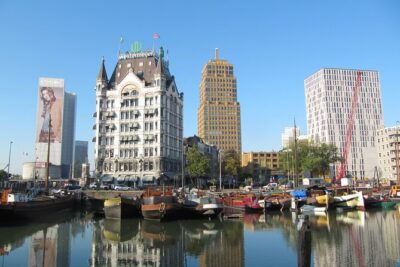
Hotel New York is one of the key sights. Its historic role gives the waterfront a strong connection to Rotterdam’s port and international character. The building helps you see that the South Bank is not merely a new development district. It carries reminders of the city’s older maritime life.
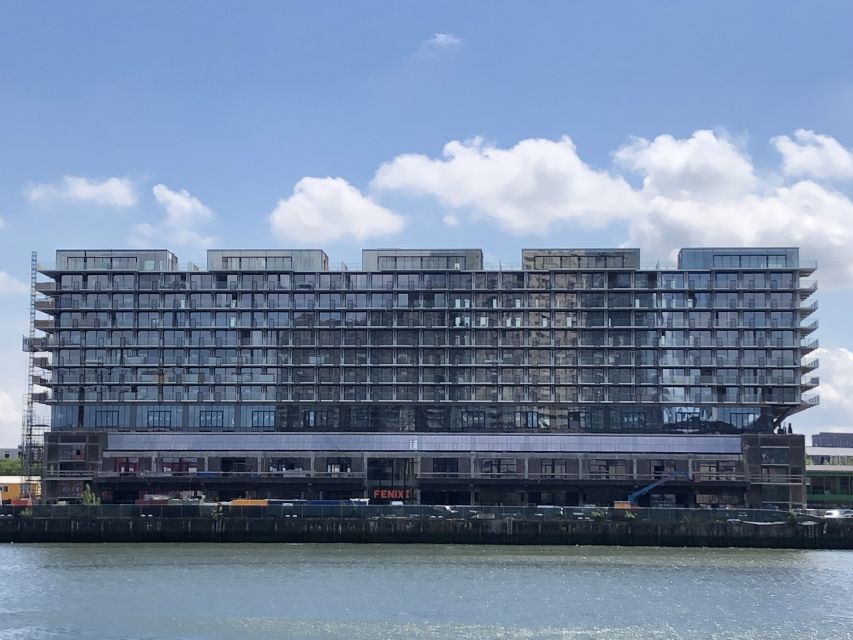
You also see Fenixloods and Fenix Food Factory. These places add a more informal, food-centered side to the route. The area has cafes and restaurants, so it is a sensible place to continue your afternoon after the tour.
Do not assume you will have a long meal break during the three-hour experience. The itinerary is designed to cover many sights, and drinks are not included. If you want to eat at Fenix Food Factory or stop for coffee, plan that for after the tour unless your guide’s timing allows otherwise.
How much ground does four kilometers cover?
The total walking distance is about four kilometers. That is manageable for many people, but the tour is still an active three-hour outing. You will spend much of the time outdoors, moving between stops rather than sitting in one place.
Wear comfortable shoes. This is the most important preparation advice, especially because the route combines a long city walk with a boat transfer and several outdoor explanations.
The activity is described as wheelchair accessible, but the same information also says it is not suitable for people with mobility impairments or visual impairments. Because of that conflict, I would contact the provider before booking if you need step-free access, assistance, or detailed visual guidance. The walking distance and watertaxi boarding arrangements may affect your comfort.
Children under 12 can take part free of charge. The listed child price covers only the speedboat fee. That makes the tour more appealing for families, though parents should still consider the four-kilometer distance and the need to keep children close around the waterfront.
Large luggage is not allowed. Leave suitcases at your accommodation or storage facility, and bring a small day bag only if it fits the provider’s rules.
The $82 price and what you receive
At $82 per person, this is not the cheapest way to see Rotterdam’s center. You are paying for a three-hour guided walk led by an architect, plus the watertaxi crossing. The value depends on how much you want interpretation rather than simple transportation.
If you already enjoy studying buildings on your own, you could walk many of these areas without paying a guide. You would not, however, get the same organized route or the architectural explanation linking the Lijnbaan, Timmerhuis, Markthal, Cube Houses, and South Bank.
The price makes the most sense early in your Rotterdam visit. You get a city orientation, several major sights, a river crossing, and ideas for later meals and sightseeing. The advice from guides such as Tania can also help you use the rest of your stay more efficiently.
It is less useful if you have only one specific building in mind or want long stops at each site. This tour covers a lot of ground. Think of it as a well-planned introduction, not a slow study visit.
The booking terms are traveler-friendly. You can reserve now and pay later, and cancellation is free up to 24 hours before the start for a full refund. Starting times vary, so check availability when choosing your date.
Who will get the most from this walk?
I would recommend this tour to first-time visitors who want Rotterdam explained by someone who understands design. It suits you especially well if you like modern architecture, city planning, urban change, and unusual public spaces.
It also works for visitors who want to combine sightseeing with a practical introduction to neighborhoods beyond the central station. The South Bank is not treated as an afterthought, and the watertaxi makes the shift across the river memorable.
Families can consider it because children under 12 join free apart from the speedboat fee. Still, the route is long enough that very young children may need patience, especially during the architectural explanations.
You may want a different plan if you dislike walking, require extensive mobility support, or prefer indoor attractions. The tour is conducted in English, so you should also be comfortable following a detailed explanation in English.
Should you book Rotterdam Architecture: Centre and South Bank?
Book it if you want a smart first look at Rotterdam rather than a checklist of isolated sights. The combination of an architect guide, the city’s best-known modern buildings, and a watertaxi ride gives the three hours a clear shape.
I especially like the balance between famous places and the ideas behind them. The Lijnbaan explains the postwar city, Timmerhuis shows current architectural thinking, the Markthal and Cube Houses bring the fun, and the South Bank shows how an old harbor district is changing.
Skip it if four kilometers sounds tiring or if you need a slow, highly accessible route. For most architecture-minded visitors, though, the tour offers a useful and enjoyable way to get oriented, with the boat crossing providing the memorable flourish.
FAQ
Where does the tour meet?
Meet your English-speaking guide under the station clock next to the main entrance of Rotterdam Central Station, on the outside.
How long is the experience?
The tour lasts three hours and includes about four kilometers of walking.
Is the watertaxi included in the price?
Yes. The water taxi fee is included.
What language is the tour conducted in?
The live tour guide speaks English.
Can children join the tour?
Yes. Children under 12 can participate free of charge. The listed price for them covers the speedboat fee only.
What should I bring, and what is not allowed?
Bring comfortable shoes. Luggage and large bags are not allowed.
Newly added in Netherlands
- Rotterdam Must Do Tour: Highlights, History, WW2 and Architecture★ 5.0 · 20 reviews
- Private Rotterdam Walking Tour – guided by Architects★ 5.0 · 2 reviews
- Rotterdam Architecture and Highlights Walking Tour (TOP RATED)★ 4.5 · 14 reviews
- Maastricht Highlights, Architecture & Heritage Tour★ 5.0 · 7 reviews
- Gouda Private Walking Tour: History, Architecture & Cheese★ 4.5 · 8 reviews
- Rotterdam: Art and Architecture Highlights Walking Tour★ 4.9 · 10 reviews
- Rotterdam: Architecture Highlights Tour including the Depot★ 4.6 · 17 reviews
- Rotterdam: Wilhelminapier, High-rise & floating architecture★ 4.0 · 3 reviews
Rotterdam Architecture Tours, compared.
Rotterdam Walk: Hilights, Gems, Architecture & WWII | 2 or 3hrs
Read our review →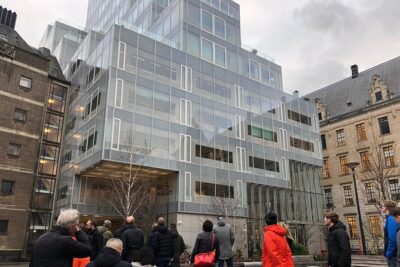
Rotterdam Must Do Tour: Highlights, History, WW2 and Architecture
Read our review →
Rotterdam Architecture and Highlights Walking Tour (TOP RATED)
Read our review →
Browse the lists this tour appears in