
Review · WALKING TOURS
The rise of Haarlem: Culture, History, Art and Architecture Walking Tour
Haarlem reveals itself best on foot, and this tour gets quickly beyond the postcard center. From Grote Markt, you’ll follow medieval lanes, quiet courtyards, grand façades, and stories of artists, merchants, wartime resistance, and the city’s famous residents. The small group, capped at six, gives the walk a personal feel.
I like the wide mix of subjects, from Dutch architecture and art to World War II history. I also like the practical local advice, including places to eat, have a beer, and continue exploring, plus tips such as booking Huis Barnaart on your own.
The main consideration is the walking: about 4 kilometers over two and a half hours. Also check your timing carefully. Hofjes close at 5pm and are closed to public viewing on Sundays, so some departures cannot include their courtyards.
Key points to know before you book
- James gives the tour a strong architecture and history focus, using photographs and historical images on a tablet to explain what you see.
- The group maximum is six people, so you should have room to ask questions and hear the guide clearly.
- The route begins at Grote Markt, then moves through Haarlem’s central streets, courtyards, museums, churches, and historic buildings.
- Hofje access depends on the day and time, with all hofjes closed on Sundays and daily closures at 5pm.
- The tour covers about 4 kilometers, on a generally flat urban route, but it is not a good fit if walking is difficult.
- The $55 price buys a guided city orientation, not museum admission or a cathedral interior visit.
Why Haarlem makes such a good walking-tour city
Haarlem is compact enough to cross on foot, yet it carries several different versions of Dutch history within a small area. It began as a medieval town and North Sea trading port, later prospered during the Dutch Golden Age, and developed a strong artistic and architectural identity.
That mix is what makes this walk useful. You are not simply ticking off a church, a square, and a windmill. You are learning how the city changed over time and how those changes remain visible in its streets.
I especially like tours that explain the ordinary spaces between headline sights. A narrow lane, a stepped façade, or a quiet courtyard can tell you as much about Haarlem as a major museum, provided someone points out what you are seeing. This route is built around that idea.
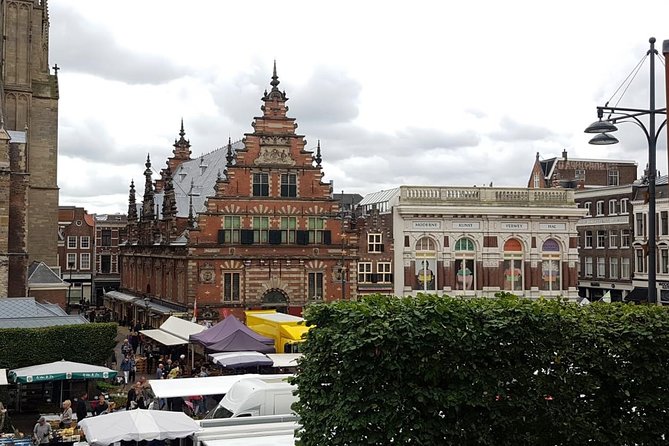
The tour begins at Grote Markt 17, in the city’s main historic square. It is a sensible meeting point because the square places you beside some of Haarlem’s most important buildings from the start. It also gives you an immediate sense of the city’s scale. Haarlem feels urban, but not overwhelming.
More Walking Tours in the world:
- Lecce: Baroque Architecture and Underground Walking Tour
★ 4.6 · 1,248 reviews - Chicago in a Day: Food, History & Architecture Walking Tour
★ 5.0 · 1,153 reviews - Ramblas, Old Town, Gothic and Gaudi Architecture Walking Tour
★ 5.0 · 723 reviews
Starting with Grote Markt and Sint Bavo
Grote Markt is the natural opening chapter. The square gathers civic, religious, and commercial power in one place, making it easier to understand how a medieval town functioned.
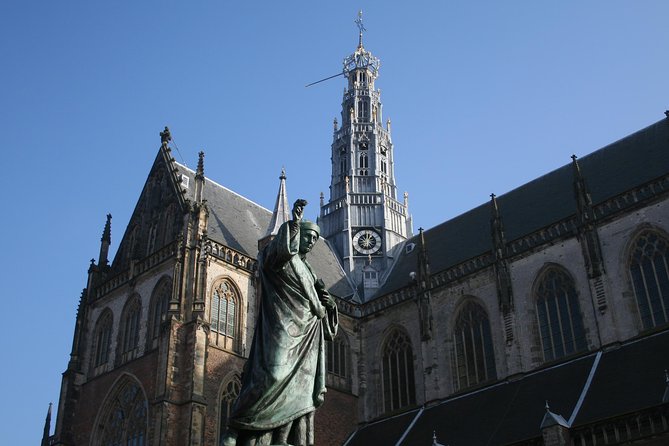
The Grote Kerk of Sint Bavo dominates the scene. You’ll hear about its place in Haarlem’s religious and architectural story, but the walking tour does not include an interior visit. That is important if you want to see the church inside. You’ll need to plan that separately and allow time beyond the tour.
The square also puts the Town Hall and its Gravenzaal into the conversation. These buildings help show how Haarlem’s civic life developed alongside its church life. The guide’s focus is not just on dates. You can expect attention to architectural styles, historic uses, and the people connected with the buildings.
This is one of the strongest parts of the experience for photographers. Grote Markt offers a concentrated view of towers, façades, rooflines, and changing perspectives as you move around the square. I would bring a camera or keep your phone ready, but listen first. The details make more sense once you know what they represent.
Medieval streets, Dutch architecture, and city stories
From the market square, the route leads into Haarlem’s older streets. The walk is designed to show how the city developed, rather than treating each building as an isolated object.
The architecture focus is a major reason to choose this tour. James explains styles and points out details that are easy to miss when you walk alone. One useful feature is his use of a tablet with photographs and historical material. Seeing an old image beside the present-day building can make changes in the city much easier to understand.
You’ll hear about the medieval town, the Golden Age, and Haarlem’s best-known residents and visitors. The subject range is broad, but the walk’s central thread remains clear: Haarlem’s culture grew from its trade, civic life, faith, art, and built environment.
I would choose this tour early in a Haarlem stay. The route helps you recognize places you might otherwise pass without a second look. It also gives you a better basis for choosing what to visit afterward, instead of trying to see every museum and historic building at once.
Hofjes and the quiet side of Haarlem
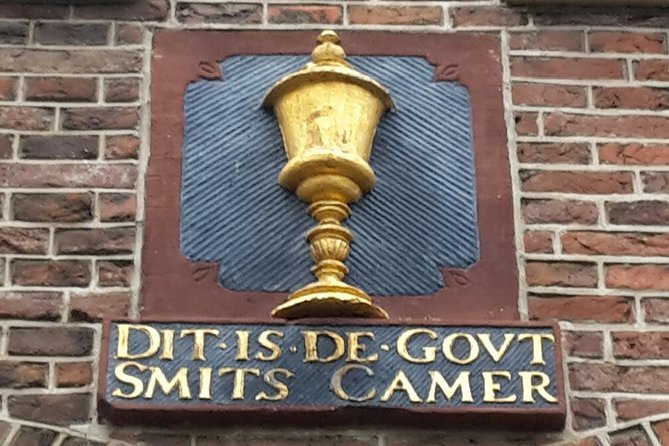
The hofje is one of the most distinctive parts of Haarlem’s urban character. These almshouse courtyards offer a sharp contrast to the open market square and grand civic buildings.
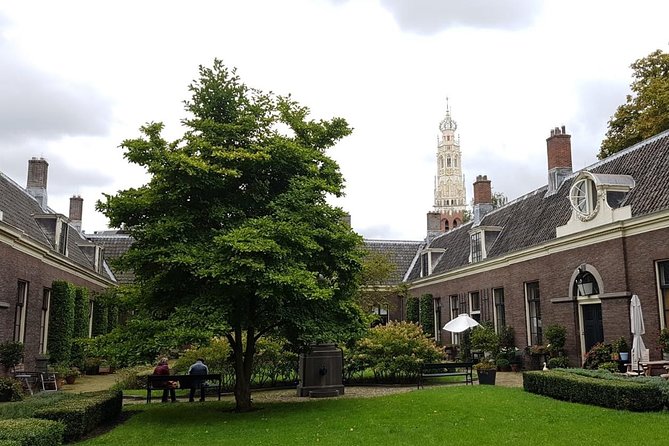
The tour visits a beautiful hofje with a walled garden, where the atmosphere is quieter and more enclosed. These courtyards are valuable not because they are large, but because they reveal a different side of city life. They connect architecture with charity, housing, privacy, and community.
There are two timing rules you need to take seriously. Hofjes are closed to public viewing on Sundays, and they close every day at 5pm. The summer departure starting at 5pm does not enter them. If seeing a hofje matters to you, choose a weekday or Saturday departure before the daily closing time.
That limitation is not a flaw in the guide’s presentation, but it does affect the experience you receive. On a Sunday, you can still learn about Haarlem’s hofjes and view the surrounding streets, but you should not expect to go inside the courtyards.
More History Walks in the world:
- Charleston’s Best Highlights: History, Culture & Architecture
★ 5.0 · 422 reviews - Palm Springs Modernism Architecture & History Bike Tour
★ 5.0 · 359 reviews - Charleston: History and Architecture Guided Walking Tour
★ 4.8 · 349 reviews - Historic Georgetown: History, Gossip, & Architecture Walking Tour
★ 5.0 · 321 reviews
Art, museums, and what the tour does not include
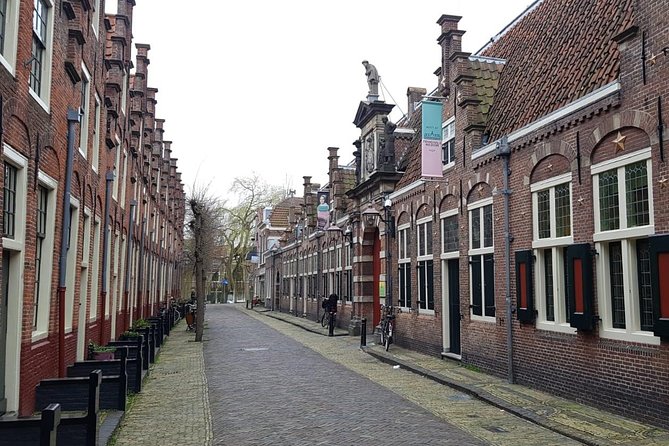
Haarlem has a strong art story, and the tour gives you context for it. The city is linked with Dutch painters, local collections, and a long tradition of craftsmanship and culture.
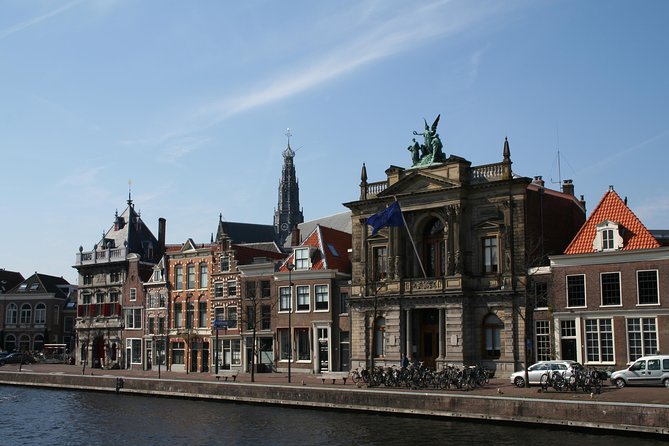
The route includes discussion of the Teylers Museum and the Hals Museum, along with other cultural landmarks. The focus is on the city around these institutions and the role they play in Haarlem’s identity. The tour is not a museum visit, so you should not expect time to study galleries or collections in detail.
The interior of the Grote Kerk and the Hals Museum are not included. I see that as a sensible choice for a short walking tour, but it means you should plan another visit if those are priorities. The walking tour gives you a useful introduction, then lets you decide where to spend your independent time.
One practical tip from James is to consider Huis Barnaart, a nineteenth-century canal house in Empire style. You need to reserve a time. It is the kind of follow-up visit that fits well after a city walk because you already have some context for Haarlem’s architecture.
The same advice applies to Huis Bartolotti in Amsterdam, which was also recommended as a separate canal-house visit. That suggestion is especially useful if Haarlem is part of a wider Netherlands trip.
Haarlem during World War II
The wartime section gives the tour more weight than a standard architecture walk. Haarlem’s story does not stop with medieval trade or Golden Age art.
You’ll hear about the impact of Nazism on local people and the Dutch resistance. The route also brings in Corrie ten Boom, whose home and story are closely tied to Haarlem. Historical photographs of the Dutch resistance help connect the events to real places and people.
I appreciate this part because it shows how historic streets can carry difficult memories as well as attractive façades. The guide’s use of images is useful here. A photograph can make a wartime story more immediate than a list of dates.
The treatment appears to be part of a broad city tour rather than a separate resistance museum visit. If you want a full museum experience or an extended examination of Corrie ten Boom’s home, you should set aside additional time and check the separate opening arrangements.
A small group changes the feel of the walk
The tour allows a maximum of six people. That is a real advantage in Haarlem’s narrower streets and smaller courtyards.
With a large group, it can be hard to hear a guide or ask a question without holding everyone up. Here, you should have a better chance to pause, look closely, and ask about architecture, art, or local history. James is described as clear, friendly, patient, and willing to handle detailed questions.
The group may be even smaller than the stated maximum. Some departures have operated with only two people, effectively creating a private walk while keeping the regular booking structure. That can make the experience feel more flexible, though you should book for the advertised small-group format rather than assume you will receive a private tour.
This is also a good setting for people who enjoy asking questions. If you want a fast, silent march from landmark to landmark, this may feel too talkative. If you like connecting a building to its political, artistic, or social setting, the pace should suit you.
Pace, route, and practical comfort
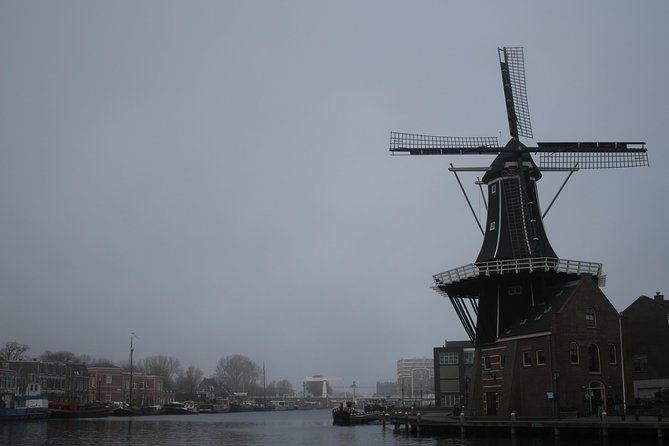
The tour lasts about two and a half hours and covers roughly 4 kilometers, or 2.5 miles. The route is generally easy and flat, but the distance still matters. Comfortable shoes are essential on cobbled streets.
The experience is not recommended for people who have difficulty walking. There may be pauses while the guide explains a site, but this remains a city walking tour, not a vehicle-supported sightseeing trip.
You can choose among several departure times. That makes it easier to fit the walk around a train arrival, museum visit, or meal. Still, do not choose only by convenience. The departure time can determine if you enter a hofje, especially in summer when a 5pm start misses the courtyards.
The meeting point is Grote Markt 17, 2011 RG Haarlem. The activity ends at a different location, so plan for the fact that you will not return to the starting point. The exact finish point should be checked when booking.
A mobile ticket keeps the arrival process simple. Confirmation is provided at booking, and service animals are allowed. The tour is near public transportation, and most people can participate if they are comfortable walking the full route.
Is $55 a fair price?
At $55, this is not a bargain-priced orientation walk, but the small group changes the calculation. You are paying for two and a half hours with a certified English-speaking guide, with no more than six people in the group.
The value is strongest if you want interpretation rather than a list of sights. James adds architecture, historical images, wartime context, and practical suggestions for the rest of your stay. The advice about Huis Barnaart and places to have a beer can save you some research later.
The price does not include museum admissions, a cathedral interior visit, or a tip. You should budget separately for any attraction you choose to enter. A tip for the guide is also not included.
I would consider the cost reasonable for a first afternoon in Haarlem, especially if you are staying in Amsterdam and want a focused trip outside the capital. The tour can help you decide if Haarlem deserves a longer visit, and it gives you a map in your head before you explore alone.
Who will enjoy this Haarlem walk most?
I would recommend it to you if architecture, art, local stories, and photography matter more than simply seeing famous sights. The route has enough range to suit a first visit, yet enough detail to reward someone who already knows a little about Dutch cities.
It is especially useful for:
- First-time visitors who want a clear orientation
- Visitors staying in Amsterdam who want to understand Haarlem in a half day
- People who enjoy architecture and historic town planning
- Travelers interested in Dutch resistance history and Corrie ten Boom
- Photographers looking for courtyards, façades, churches, and market-square views
- Anyone who prefers a small group and plenty of time for questions
I would think twice if you cannot comfortably walk 4 kilometers, need step-free access throughout, or mainly want extended time inside museums. The tour introduces those subjects, but it does not replace a museum visit.
Booking advice and cancellation terms
The best practical choice is a start time before 5pm if you want to enter a hofje. Avoid Sunday if the courtyards are a priority.
Free cancellation is available up to 24 hours before the experience begins. Cancellations made within 24 hours are not refunded, and changes inside that period are not accepted. Cutoff times follow local time.
Should you book it?
I would book this tour if you want Haarlem to make sense, not just look pretty. Its strongest feature is the connection between buildings, art, city life, and wartime memory. James brings a clear architecture focus, uses visual material to support his explanations, and leaves you with useful ideas for the rest of your visit.
Book an earlier weekday or Saturday departure if you want to see a hofje inside. Choose it early in your stay so you can follow up with the Hals Museum, Teylers Museum, Grote Kerk, Huis Barnaart, or other places that catch your interest.
Skip it only if a 4-kilometer walk is too much or if you want a tour built around museum interiors. For most curious visitors, the $55 fee buys a thoughtful introduction to Haarlem and a much better sense of what to do after the guide says goodbye.
FAQ
Where does the Haarlem walking tour begin?
The tour begins at Grote Markt 17, 2011 RG Haarlem, Netherlands.
How long does the tour last?
The tour lasts approximately 2 hours and 30 minutes.
How far does the tour walk?
The route covers about 4 kilometers, or 2.5 miles.
How many people can join the tour?
The maximum group size is six travelers.
Is the tour conducted in English?
Yes. The experience includes a certified English-speaking guide.
Does the tour enter Haarlem’s hofjes?
The tour includes a hofje with a walled garden when access is available. Hofjes are closed to public viewing on Sundays and close daily at 5pm. The summer tour beginning at 5pm does not enter them.
Are museum admissions included?
No. The walking tour does not include museum admission. The interior of the Grote Kerk and the Hals Museum are not included.
Is the tour suitable for people with walking difficulties?
No. The experience is not recommended for people who have difficulty walking because the route covers about 4 kilometers.
What is the cancellation policy?
You can cancel up to 24 hours before the start time for a full refund. Cancellations or changes made less than 24 hours before the start time are not accepted and are not refunded.
Newly added in the world
- Venice Art and Architecture Private Walking Tour★ 4.5 · 11 reviews
- Basilica San Marco and the Pala d’Oro with Architect Guide★ 4.5 · 19 reviews
- Walking tour in Venice with an architect★ 5.0 · 16 reviews
- Private Munich Tour for History Buffs with Architectural Gems and WWII sites★ 5.0 · 3 reviews
- Neoclassical Paris Architecture 2-Hour Private Walking Tour★ 5.0 · 7 reviews
- Street Art and Architecture:Porto Speaks Through Its Streets★ 3.0 · 2 reviews
- Wrocław Architecture Cruise by Catamaran★ 4.7 · 25 reviews
- Paris: Discover the hidden architecture gems of Le Marais★ 3.8 · 4 reviews
Walking Tours, compared.

The Official Art Deco Walking Tour by The Miami Design Preservation League
Read our review →
Baroque Architecture and Underground Walking Tour
Read our review →
Chicago in a Day: Food, History & Architecture Walking Tour
Read our review →

Ramblas, Old Town, Gothic and Gaudi Architecture Walking Tour
Read our review →
Chicago’s Secret Interiors Architectural Walking Tour
Read our review →
Browse the lists this tour appears in