
Review · WALKING TOURS
Rotterdam: Art and Architecture Highlights Walking Tour
Rotterdam’s best sightseeing lesson is written in concrete, glass, steel, and bright color. This 2.5-hour walk links the city’s boldest buildings, from the sharp lines of Central Station to the tilted Cube Houses and the giant indoor artwork of the Markthal.
I like that the tour explains how Rotterdam rebuilt after wartime destruction, not just where to point your camera. I also like the mix of famous buildings and open-air art, including works connected with Henry Moore, Rodin, Picasso, and Joep van Lieshout.
The main drawback is simple: you stay outside. Entry tickets, food, drinks, and transportation are not included, and the tour runs rain or shine. Bring good shoes and clothing for the season.
Key points at a glance
- Central Station sets the theme: Begin with Rotterdam’s modern gateway and the city’s postwar rebuilding story.
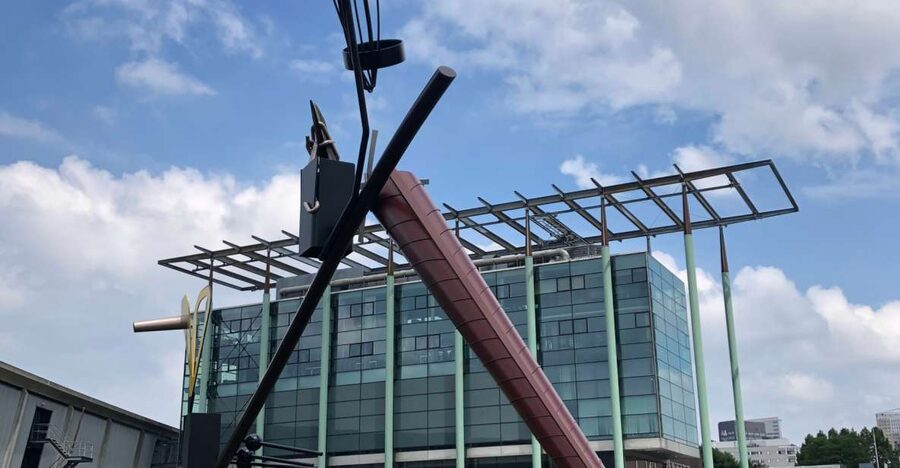
- The Museum Quarter packs in design: See the Kunsthal, the New Institute, and Depot Boijmans Van Beuningen.
- Public art gives the walk emotional weight: Art along the route addresses the bombing and rebuilding of Rotterdam.
- Witte de Withstraat adds street life: Walk through one of the city’s best-known arts and nightlife streets.
- Cube Houses and Markthal make a strong finish: End with Rotterdam’s most playful architecture and a spectacular indoor market hall.
- The tour is built around explanation: An English-speaking guide helps you understand why Rotterdam looks so different from other Dutch cities.
Why Rotterdam makes such a good architecture walk
Rotterdam is not the Netherlands of canals, narrow brick houses, and postcard bridges. Its center was heavily damaged during the Second World War, and the city rebuilt with a much freer hand. That decision produced a place where experimental architecture sits right beside reminders of loss.
This tour gives you a useful way to read that change. Instead of seeing one odd building after another, you follow a story: destruction, planning, reconstruction, public art, and a city willing to try something new.
That context matters. Central Station is not only a place to catch a train. The Calypso building is not merely a colorful block of apartments. The Cube Houses are not just a good photo stop. Each one reflects a different idea about how a modern city should work.
The strongest part of this experience is the guide’s role. A good explanation turns Rotterdam’s unusual shapes into something you can understand. One guide named in the tour feedback is Diana, who was praised for explaining the city’s postwar planning and architecture from the new station onward. Guide assignments can vary, but the tour is clearly designed around that kind of city reading.
The route also suits a first visit. A 2022 participant described it as a good way to gain the keys for looking at Rotterdam properly, and that is exactly the value here. You leave with a framework for exploring more of the city on your own.
More Walking Tours in Netherlands:
- Rotterdam: Architectural Highlights Guided Walking Tour
★ 4.8 · 215 reviews - Rotterdam: Highlights, Gems, Architecture & History Walk
★ 5.0 · 191 reviews - Rotterdam Walk: Hilights, Gems, Architecture & WWII | 2 or 3hrs
★ 5.0 · 149 reviews
Starting under the clock at Central Station
The meeting point is next to the main entrance of Rotterdam Central Station, under the station’s clock. This is a sensible place to begin. It is easy to identify, central, and tied directly to the subject of the walk.
Central Station gives you the first big architectural statement. Its angular roof and broad entrance reflect a city that wants to look forward. The building also shows how transportation, urban planning, and civic identity come together in modern Rotterdam.
Your guide begins the tour here and uses the station to introduce the city’s postwar development. That opening is important because the rest of the walk makes more sense once you know why so much of the center feels new and deliberately planned.
Allow time to find the meeting point before the start. The station is large, and the instruction is specific: look for the main entrance and the clock. You should also arrive ready to walk, since there is no included transportation during the tour.
Calypso, Theater Square, and the city rebuilt
From the station, the route follows several architecture icons, including the Calypso building and Theater Square. These stops show a different side of Rotterdam from the big civic projects. Here, the guide can point out how apartments, cultural spaces, and public areas fit into the rebuilt center.
The Calypso building is one of the city’s more noticeable modern forms. Theater Square adds another layer, with architecture shaped around performance and public gathering. You may find that these places are most interesting when viewed as part of the larger plan rather than as isolated monuments.
This is also where the tour’s balance helps. The walk does not treat every building as a masterpiece. Instead, it gives you a sense of Rotterdam’s willingness to experiment, including the rough edges that come with trying new designs.
For some people, this section may feel less immediately spectacular than the Cube Houses or Markthal. That is normal. Its value is in showing the city as a working urban center, not a string of photo backdrops.
The Museum Quarter: Kunsthal, New Institute, and Depot
The route then reaches Rotterdam’s Museum Quarter, where architecture and art become tightly linked. You see the Kunsthal, the New Institute, and Depot Boijmans Van Beuningen.
The Kunsthal is known for its striking modern design and changing exhibitions, though this walking tour does not include an entry ticket. You see the building as part of the city’s cultural district and hear how it fits into Rotterdam’s design-minded identity.
The New Institute continues that theme. Its focus on design, architecture, and digital culture makes it a natural stop on a tour that asks how cities are shaped and imagined.
The most unusual building here is Depot Boijmans Van Beuningen. It is described as the first accessible museum depot in the world, and its mirrored, bowl-like exterior quickly became one of Rotterdam’s newer icons. The key point for you is practical: the tour presents the building from the outside, but an entry ticket is not included.
This section is a good reason to book the walk if you are curious about architecture but do not want a museum-heavy itinerary. You can see the cultural district, understand its purpose, and decide later if you want to return to one of the institutions.
A few more architecture walks in Netherlands worth a look
- Rotterdam Architecture Highlights Walking Tour
★ 5.0 · 66 reviews - The rise of Haarlem: Culture, History, Art and Architecture Walking Tour
★ 5.0 · 59 reviews - Rotterdam Must Do Tour: Highlights, History, WW2 and Architecture
★ 5.0 · 20 reviews - Rotterdam: Architecture Highlights Tour including the Depot
★ 4.6 · 17 reviews
Public art and memories of the bombing
Rotterdam’s open-air art collection gives the walk more feeling than a standard architecture circuit. The route includes works linked to the drama of the bombarded city, along with public pieces by well-known artists such as Henry Moore, Rodin, Picasso, and Joep van Lieshout.
That combination matters. Rotterdam’s modern appearance can seem cheerful, playful, and even a little showy. The public art reminds you that the city’s clean modern center came out of trauma and hard choices.
You should expect art to be discussed in relation to its setting. A sculpture is not treated as a decorative object dropped onto a pavement. The guide connects it with rebuilding, civic space, and the city’s changing ideas about public life.
The exact order of art stops can depend on the walking route and the guide’s presentation. Still, the inclusion of public art is one of the tour’s strongest features. You do not need to pay for a gallery ticket to see meaningful work, and the art gives you a break from looking only at facades and floor plans.
Witte de Withstraat brings the artsy city into view
The walk continues along Witte de Withstraat, described as Rotterdam’s most vivid and arts-focused street. This is where the city’s cultural side feels most immediate.
The street is a useful contrast to the large architectural projects. Instead of monumental stations and museum buildings, you get a more intimate urban setting tied to art, food, and nightlife. The tour presents it as a popular arts venue, so it is a good place to note for a later return.
I like this part because it shows that Rotterdam’s creativity is not limited to official cultural buildings. It also lives in streets where galleries, creative businesses, and evening activity meet.
Do not expect a long stop inside a venue. The tour is a walking overview, and food and drinks are not included. If you want to eat or browse somewhere along Witte de Withstraat afterward, plan that separately.
Cube Houses: architecture you can feel in your body
The Cube Houses complex is one of Rotterdam’s essential stops. The tilted yellow homes seem to challenge the basic idea of what a house should be. Their design is playful, but it also raises practical questions about windows, rooms, privacy, and daily life.
This is a place where a guide adds real value. You can take a good photograph in seconds, but an explanation helps you understand the design idea behind the cluster. The buildings turn ordinary housing into a piece of urban sculpture, while still needing to function as homes.
The tour does not promise entry to a Cube House museum or any other interior attraction. You should treat this as an exterior visit unless your guide tells you otherwise. That is not a major weakness, but it is worth knowing if you want to see how the unusual spaces work inside.
The Cube Houses also make a strong contrast with Central Station. At the start, Rotterdam’s architecture feels large, civic, and engineered for movement. Here, it feels personal, tilted, and deliberately strange.
Finishing inside the Markthal
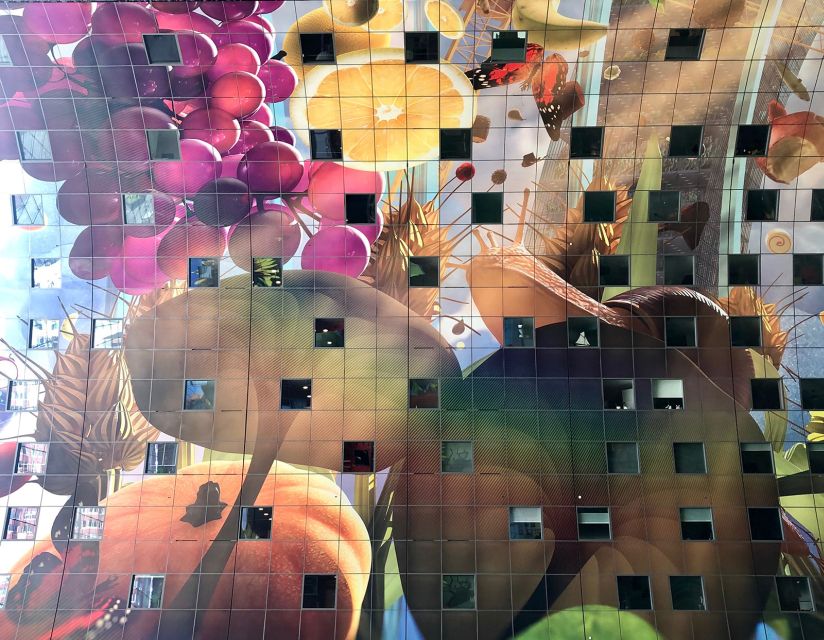
The final stop is the Markthal, where art and architecture meet under one enormous roof. The building is both a market hall and a piece of public art, with a spectacular interior image spread across the curved ceiling and walls.
Ending here works well. After a route filled with facades, squares, and sculptures, the Markthal brings you inside a lively public space. You can look up, study the building’s form, and see how Rotterdam turns everyday commerce into a design statement.
The tour ends in the Markthal, but food and drinks are not included. That gives you freedom to stay and choose something afterward, though you should budget separately for it.
The Markthal is also near the Cube Houses, so the final section brings together two of Rotterdam’s most recognizable architectural ideas. One bends homes into a geometric neighborhood. The other wraps a market in a giant decorated arch.
What the $65 price includes
At $65 per person, this is not the cheapest way to walk around Rotterdam. You are paying for a live English-speaking guide and 2.5 hours of interpretation, not for admissions or transport.
I think the value depends on your interest. If you already know Rotterdam’s architecture and enjoy exploring independently, you can see many of these buildings from public streets without paying. If you want the city’s postwar story explained in a logical order, the fee is easier to justify.
The tour includes Central Station, the Museum Quarter, public art, Witte de Withstraat, the Cube Houses, and the Markthal. That is a strong spread for one short walk, especially on a first day when you want to get your bearings quickly.
Remember the costs that are not covered:
- Museum and attraction entry tickets
- Food and drinks
- Transportation
- Hotel pickup and drop-off
A private group is available, which may make the price more worthwhile for families or friends who want a more personal pace. The standard experience is still a walking tour, so the main product is the guide’s explanation and the route through the center.
Who will enjoy this walk most
I would choose this tour for a first visit to Rotterdam, especially if you are interested in architecture, urban planning, modern art, or postwar European cities. It also suits anyone who wants a clear introduction before deciding which museums or neighborhoods deserve more time.
The tour works well for adults and older children who can manage a 2.5-hour city walk. Comfortable shoes are essential, and you should dress for the season because the walk takes place outdoors in all weather.
It is wheelchair accessible, but the tour is not suitable for people with visual or hearing impairments according to the supplied activity information. If you have mobility questions beyond that, confirm the route details before booking.
This is not the right choice if you want a museum tour with lots of indoor time, a food tour, or a ride between sights. It also may not suit anyone carrying large luggage, since oversized luggage is not allowed.
Practical advice before you book
Wear shoes that can handle city pavement and bring a rain layer. Rotterdam’s weather can change quickly, and the walk goes ahead rain or shine.
Keep the day flexible around the tour if you want to visit the Kunsthal, the New Institute, or another museum. Since entry is not included, you can choose your own ticket and return at a pace that suits you.
The tour is conducted in English. A guide such as Diana may bring the postwar planning story to life with particular skill, but you should not book expecting one named guide unless that is confirmed for your date.
The activity offers free cancellation up to 24 hours before the start and allows you to reserve now and pay later. That is useful if your Dutch itinerary is still shifting.
Should you book the Rotterdam architecture walk?
Book it if you want Rotterdam explained, not merely photographed. The strongest parts are the postwar city story, the mix of architecture and public art, and the steady progression from Central Station to the Markthal.
Skip it if you prefer to explore at your own pace, need extensive indoor visits, or want admissions and meals bundled into the price. For most first-time visitors who are curious about why Rotterdam looks the way it does, $65 buys a focused introduction and a useful map of places to revisit.
The high overall score of 4.9 from 10 ratings fits the tour’s purpose: it is a pleasant, informative walk with a strong overview of the city. Just bring sensible shoes, accept the weather, and remember that Rotterdam’s best lesson is often found outside the ticket booth.
FAQ
Where does the Rotterdam architecture tour meet?
The meeting point is next to the main entrance of Rotterdam Central Station, under the station’s clock.
How long does the tour last?
The tour lasts 2.5 hours.
What language is the tour in?
The live tour guide conducts the experience in English.
Is the tour wheelchair accessible?
Yes, the activity is listed as wheelchair accessible. It is not suitable for people with visual or hearing impairments.
Are museum tickets, food, or transportation included?
No. Entry tickets, food and drinks, transportation, and hotel pickup and drop-off are not included.
Can I cancel the tour or pay later?
Yes. You can cancel up to 24 hours in advance for a full refund, and you can reserve now and pay later.
Newly added in Netherlands
- Rotterdam Must Do Tour: Highlights, History, WW2 and Architecture★ 5.0 · 20 reviews
- Private Rotterdam Walking Tour – guided by Architects★ 5.0 · 2 reviews
- Rotterdam Architecture and Highlights Walking Tour (TOP RATED)★ 4.5 · 14 reviews
- Maastricht Highlights, Architecture & Heritage Tour★ 5.0 · 7 reviews
- Gouda Private Walking Tour: History, Architecture & Cheese★ 4.5 · 8 reviews
- Rotterdam: Architecture Highlights Tour including the Depot★ 4.6 · 17 reviews
- Rotterdam Architecture: Centre and South Bank with watertaxi★ 5.0 · 4 reviews
- Rotterdam: Wilhelminapier, High-rise & floating architecture★ 4.0 · 3 reviews
Walking Tours, compared.
The Official Art Deco Walking Tour by The Miami Design Preservation League
Read our review →
Baroque Architecture and Underground Walking Tour
Read our review →
Chicago in a Day: Food, History & Architecture Walking Tour
Read our review →

Ramblas, Old Town, Gothic and Gaudi Architecture Walking Tour
Read our review →
Chicago’s Secret Interiors Architectural Walking Tour
Read our review →
Browse the lists this tour appears in