

Review · SKYSCRAPER TOURS
The Story Behind NY’s Evolving Skyline An Architectural Journey Through History
New York’s skyline is not just a collection of tall buildings. It is a timeline in stone, iron, brick, glass, and steel. Kitt Garrett’s on-demand architecture tour shows how the city grew from a small Dutch settlement into a major center of trade, housing, transport, and finance. It also explains why some neighborhoods rise high while others remain low.
I like two things right away: the tour makes complicated subjects such as zoning and air rights easier to grasp, and the downloadable document gives you addresses and visual reminders to use while walking around the city. The nearly two-hour format also gives Garrett room to connect architecture with politics, transportation, commerce, and daily life.
The main consideration is that this is not a live, in-person walk with a guide beside you. You watch the video on demand, then explore independently if you are in New York. That flexibility is useful, but you need to bring your own sense of direction and make your own way between places.
Key Points
- A history lesson told through buildings: Follow New York’s changing styles from Georgian and Federal designs to modern skyscrapers.
- A flexible video format: Watch from home before your trip, or use it as a companion while exploring the city.
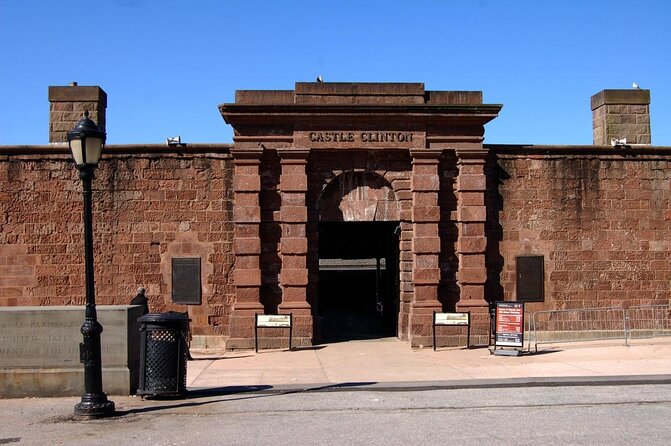
- A route from Castle Clinton to Hudson Yards: The experience links the historic waterfront with one of Manhattan’s newest districts.
- Practical architectural skills: Learn to notice building materials, decorative details, rooflines, and design periods.
- Useful for locals and first-time visitors: Garrett’s organized presentation gives familiar streets a fresh context.
- Good value for a group: The $25 price covers up to 15 people, making it inexpensive when shared.
New York’s Skyline as a Citywide Timeline
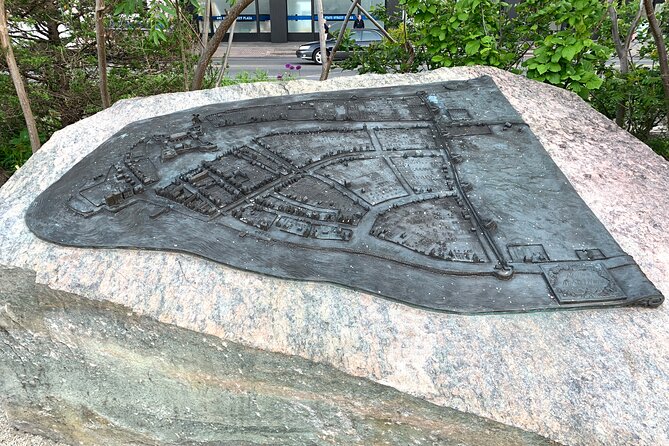
The best idea here is simple: buildings tell you what New York needed at different points in its growth. A church, townhouse, train station, warehouse, public park, and office tower each reveal something about the city that built them.
Garrett connects architectural styles to the events and pressures behind them. You hear about the city’s early Dutch beginnings, its growth as a port, the spread of commerce, changing building technology, and the arrival of taller structures. The tour moves through styles including Georgian, Federal, Greek Revival, Romanesque Revival, Italianate, Renaissance Revival, Gothic Revival, Queen Anne, Neo-Classical, and modern design.
That list may sound like an architecture exam. It need not be. The useful part is learning what to look for. Once you understand how materials, windows, columns, arches, ornament, and proportions change from one period to another, a walk down an ordinary Manhattan street becomes much more interesting.
I especially like the way this format treats architecture as evidence. You are not simply asked to admire attractive façades. You are encouraged to ask why a building looks the way it does, who used it, what technology made it possible, and how the surrounding neighborhood changed.
More Skyscraper Tours in New York City:
- Chicago Premium Driving Tour with River Boat Cruise and Sky Deck
★ 4.5 · 165 reviews - Chicago Walking Tour: Art Deco Skyscrapers Loop
★ 5.0 · 138 reviews - Chicago Walking Tour: Art Deco Skyscrapers Riverfront
★ 5.0 · 53 reviews
Castle Clinton and New York’s Waterfront Beginnings
The tour begins at Castle Clinton National Monument in Lower Manhattan. Admission to the site is free, and the location gives the story a fitting starting point. New York’s waterfront was the reason the settlement grew, first as a place of trade and then as a major commercial center.
From here, the presentation sets up the city’s long architectural story. Henry Hudson’s arrival in New York Harbor is part of the opening historical frame, followed by the transformation of the city over roughly four centuries. The harbor is not just scenery in this story. It explains why trade, shipping, immigration, industry, and later recreation shaped the city’s buildings and streets.
You should expect this opening to be more historical than a standard sightseeing stop. Castle Clinton itself is important, but the larger purpose is to place New York’s architecture in time. The city did not plan its skyline all at once. It grew in layers, with each period leaving behind its own materials, styles, and building traditions.
The waterfront theme also carries through to the modern city. Garrett explains how former industrial areas have been changing into public and recreational districts, neighborhood by neighborhood. That is a useful way to understand New York today, since many of the city’s newest destinations occupy land that once served ships, factories, rail lines, or warehouses.
From Georgian Townhouses to Gothic Revival Towers
A strong part of the presentation is its range. You are not getting a narrow tour of one famous building type. Instead, you receive a broad look at the styles that shaped New York.
The early periods introduce the formal order of Georgian and Federal design. Greek Revival adds another layer, followed by the decorative confidence of Italianate architecture. Romanesque Revival brings heavy masonry and rounded arches, while Gothic Revival uses pointed forms and an unmistakable vertical emphasis.
Renaissance Revival and Neo-Classical design look back to earlier European models, but they were used for modern American purposes. Queen Anne architecture adds more variety, with irregular shapes and lively ornament. Later, steel construction and changing business needs help explain the rise of the modern skyscraper.
You will not become a professional architectural historian in two hours, but you can come away with a useful visual vocabulary. The goal is not to memorize every term. It is to look up and recognize patterns.
That skill matters because New York often puts several centuries within one block. A modern tower may rise behind a nineteenth-century church. A historic neighborhood may sit beside a new residential complex. The contrast is not a flaw in the city’s design. It is part of its story.
Why the Details Matter
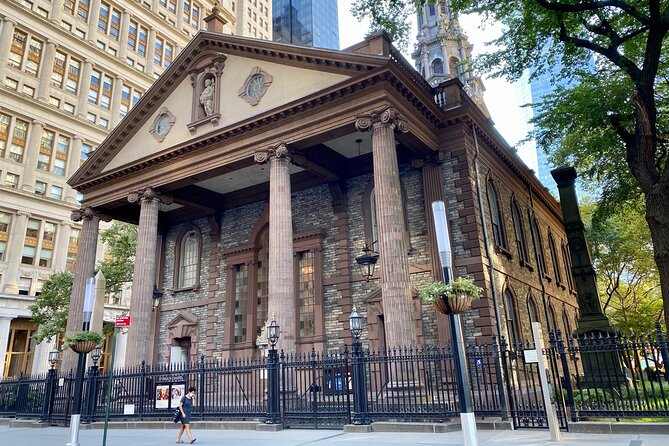
Garrett’s method focuses on details that are easy to miss when you hurry through Manhattan. Small features can identify a building’s period, purpose, or designer. Materials can show what was practical at a certain time. Decorative choices can reveal what a builder wanted the public to think about a structure.
The presentation also places architects in the story. Instead of treating buildings as anonymous objects, it considers the people and ideas behind them. That makes the city feel less like a row of façades and more like a record of ambition, invention, taste, and debate.
I like this approach for repeat visitors. You may already know the major landmarks, but you may not know when they were built, why a certain style was selected, or what was happening in New York at the time. The tour helps you return to familiar streets with better questions.
The pacing appears to be one of its strengths. The material is organized and methodical rather than scattered. That matters because the subject could easily become a long list of dates and building names. Garrett’s presentation keeps returning to the central idea: New York’s physical form changes because the city’s needs change.
More History Walks in New York City:
- Tribeca Architecture And History Walking Tour
★ 5.0 · 141 reviews - New York City: Flatiron Food, History, and Architecture Tour
★ 4.8 · 43 reviews - TriBeCa Architecture & History Walking Tour
★ 5.0 · 37 reviews - Chelsea Galleries and High Line; Art, Architecture and History
★ 5.0 · 14 reviews
Zoning, Air Rights, and the Shape of the City
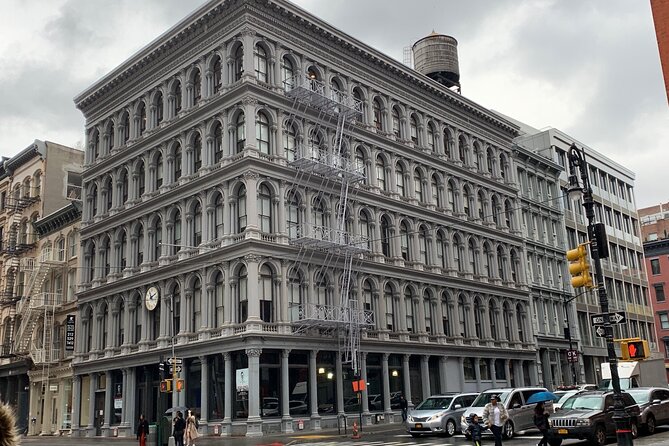
The tour goes beyond façades and historic styles. It also explains urban planning, zoning, public transportation, parks, and the relationship between people who work in New York and those who live there.
This is where the experience becomes especially useful for understanding the present-day skyline. Tall buildings are not simply placed wherever a developer wants them. Rules about height, density, use, and air rights influence what can be built and where.
Air rights are an important example. In simple terms, they concern the ability to build above or transfer unused development capacity from one property to another. You do not need a planning degree to follow the idea, but learning about it helps explain why some parts of Manhattan grow upward and why other districts remain protected.
Zoning also affects neighborhood character. It can preserve historic streets, shape the size of new buildings, guide commercial growth, and influence where housing and offices appear. Public transportation adds another layer, since subway and rail access can support dense development and make certain sites more valuable.
This part may appeal most to people who want more than landmark trivia. You begin to see the city as a set of decisions about land, movement, housing, commerce, preservation, and public space. New York’s skyline is shaped by architecture, but also by rules and competing needs.
From Industrial Waterfront to Hudson Yards
The tour ends at 20 Hudson Yards, a practical place to finish because it offers shopping, restaurants, and restrooms. More important, Hudson Yards represents the kind of new development that the tour asks you to consider.
The route from Castle Clinton to Hudson Yards links two very different waterfront stories. Castle Clinton points toward the city’s earlier harbor economy. Hudson Yards reflects a newer phase of development, with large-scale construction, commercial activity, public spaces, and a reworked former industrial area.
You should not treat the ending as just a convenient place to stop. It brings the main theme into the present. New York continues to build, reuse, preserve, and argue about space. Public and private partnerships are helping create new destinations, but those projects also raise questions about who benefits, how neighborhoods change, and how much of the older city remains visible.
The Hudson Yards ending also gives you a clear practical advantage. After watching the tour, you can pause at a place with places to eat and sit. If you use the video as preparation for a city walk, this is an easy point to finish your own outing.
A Tour You Can Watch Before or During Your Trip

The on-demand format gives you several ways to use the experience. You can watch it at home before visiting New York, use it as a planning tool, or view it as a virtual tour without being in the city at all.
The downloadable document is one of the most useful features. You can save it to your device and refer to it while walking through New York. It is meant to help you remember the locations, stories, and architectural points covered in the video.
This format suits independent explorers. You choose when to watch, pause, rewind, or revisit a section. You also avoid the fixed departure time and group pace of a traditional walking tour.
The trade-off is obvious. You do not have a live guide to answer a question at the exact moment you see a building. You also need to manage your own route, transportation, weather, and timing if you turn the video into a physical walk. Since the stated duration is about 1 hour and 58 minutes, plan enough time if you want to pause often or stop to study buildings.
The experience is private for your group, with a limit of up to 15 people. At $25 per group, the price is particularly good for a family, school group, or group of friends. Even for one person, it costs less than many live city tours, though the value depends on how much you enjoy learning independently.
Who Will Get the Most From It
First-time visitors can use the tour as a city primer. It gives you a framework for understanding why Lower Manhattan looks different from newer districts and why historic buildings appear beside modern towers.
Local New Yorkers may get just as much from it. Familiar streets often become invisible through repetition. Garrett’s careful attention to dates, styles, designers, and neighborhood change can help you notice details you pass every day.
It is also a good fit for anyone who likes history and architecture but does not want a technical lecture. The presentation includes serious research, yet the aim is to make the material engaging and usable on the street.
Families and small groups should appreciate the low group price. The private format means you can watch together and later discuss what you notice in the city. School groups and architecture students may also find the wide range of styles helpful, though the tour is not presented as a formal class.
You should choose something else if you want a lively guide leading you through crowded streets, spontaneous conversation, or access to interiors. This experience is built around a recorded presentation and self-guided exploration.
Practical Details Before You Buy
The price is $25 per group of up to 15 people. That makes the math favorable for groups, especially if several people watch together. You receive a mobile ticket, and confirmation is provided when you book.
The starting point is Castle Clinton National Monument in New York, New York 10004. The endpoint is 20 Hudson Yards in New York, New York 10001. The experience is near public transportation, and service animals are allowed.
Most people can participate, but remember that the product is primarily an on-demand video and self-guided experience. If you plan to walk the route physically, you will need to handle your own transportation and breaks.
The activity is non-refundable and cannot be changed after purchase. I would watch it soon after booking if possible, especially if you are buying it as trip preparation.
The experience has a 5 out of 5 rating from 18 published ratings, with 100 percent recommending it. The repeated praise centers on organization, enthusiasm, careful research, useful detail, and the way the presentation helps people see New York with fresh eyes. Those strengths fit the format well: this is a prepared, information-heavy tour designed to reward attention.
Should You Book New York’s Evolving Skyline?
Book it if you want to understand New York through its buildings rather than simply collect landmark photos. Kitt Garrett’s presentation offers a clear route through four centuries of change, from Castle Clinton and the harbor to Hudson Yards and the modern city.
I would especially recommend it to repeat visitors, local residents, architecture fans, history lovers, and independent explorers who like to pause and follow their own interests. The $25 group price is hard to fault if several people watch together.
Skip it if you need a live walking guide or prefer a short, casual introduction. Nearly two hours is a serious commitment, and the material rewards concentration.
For the right audience, this is a useful companion to New York itself. Watch the video, download the document, then walk outside and look up. The city’s buildings will begin to speak in dates, styles, materials, and stories.
FAQ
Where does the experience begin?
It begins at Castle Clinton National Monument in New York, New York 10004.
Where does the experience end?
It ends at 20 Hudson Yards in New York, New York 10001. The location has shopping, restaurants, and restrooms.
How long does the tour last?
The tour lasts approximately 1 hour and 58 minutes.
Is this a live walking tour?
No. It is an on-demand video and self-guided walking tour. You can watch it without physically being in New York, then explore independently if you are in the city.
How much does the tour cost?
The price is $25 per group, with up to 15 people included.
Who presents the tour?
The tour is presented by Kitt Garrett of Kitt Garrett New York Sites & Insights.
What architectural styles does the tour cover?
It covers Georgian, Federal, Greek Revival, Romanesque Revival, Italianate, Renaissance Revival, Gothic Revival, Queen Anne, Neo-Classical, and modern architecture.
Is the tour accessible by public transportation?
The experience is near public transportation. Service animals are allowed, and most people can participate.
Newly added in New York City
- Race to the Sky: NYC Architecture Tour With SUMMIT One Ticket★ 5.0 · 3 reviews
- New York Upper East Side Art and Architecture Tour★ 5.0 · 3 reviews
- New York Upper West Side Art and Architecture Tour★ 5.0 · 4 reviews
- Private Flatiron Food, History and Architecture Tour★ 5.0 · 8 reviews
- Chelsea and the High Line NYC Architecture Walking Tour★ 5.0 · 6 reviews
- New York Soho and the Village Art and Architecture Tour★ 5.0 · 4 reviews
- New York Midtown South Art and Architecture Tour★ 5.0 · 2 reviews
- Chelsea Galleries and High Line; Art, Architecture and History★ 5.0 · 14 reviews
Skyscraper Tours, compared.

Chicago Premium Driving Tour with River Boat Cruise and Sky Deck
Read our review →
Chicago Walking Tour: Art Deco Skyscrapers Loop
Read our review →
Chicago Walking Tour: Art Deco Skyscrapers Riverfront
Read our review →
Browse the lists this tour appears in