
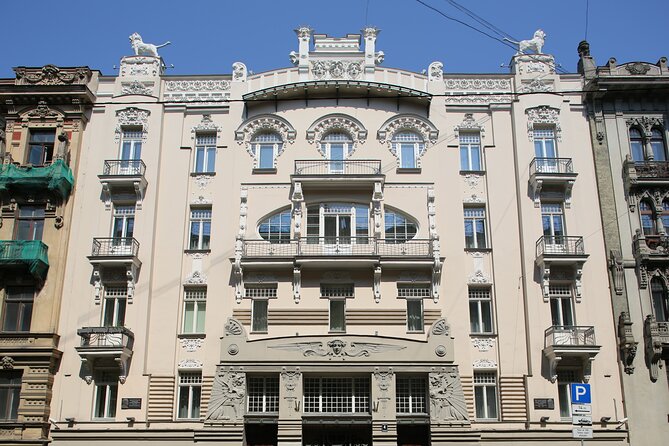
Review · ART NOUVEAU TOURS
Riga’s Architecture: A self-guided audio tour of the city’s art nouveau history
Riga has more than 800 Art Nouveau buildings, and this short walk takes you straight into the city’s grandest concentration of them. You’ll see elaborate façades by Mikhail Eisenstein, follow the story behind Riga’s National Romantic style, and finish along Alberta Street, where the architecture comes almost too fast to absorb.
I like the clear, compact storytelling, which gives you enough history to understand the buildings without burying you in dates. I also like the offline VoiceMap access, since you can walk without relying on a live guide, mobile signal, or a group’s pace. The main drawback is simple: this is an audio walk, not a guided conversation, so you cannot ask questions or adjust the route.
Key points
- Riga’s Art Nouveau core: See a concentrated run of landmark buildings around Elizabetes and Alberta streets.
- Mikhail Eisenstein’s façades: Learn how one architect used decoration, color, and strong visual detail.
- National Romanticism: Hear how Latvian architects shaped a local version of Art Nouveau.
- Useful short format: The route takes about 30 to 45 minutes, making it easy to fit into a busy day.
- Offline navigation: The app includes audio, maps, and location data for use without an internet connection.
- Flexible private experience: Only your group takes part, and you set the walking pace.
Why Riga Is Made for an Art Nouveau Walk
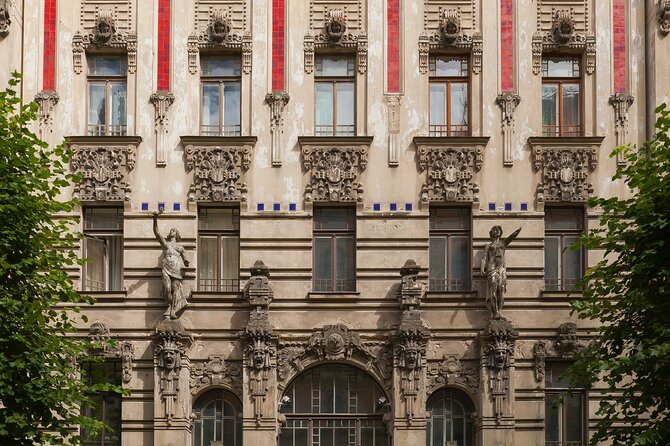
Riga is one of Europe’s great Art Nouveau cities. More than 800 buildings use the style, giving the city an unusually dense collection of decorative architecture. You do not need to cross town from one isolated landmark to another. The main reward comes from seeing several important façades close together and noticing how their designs differ.
Art Nouveau arrived in Riga during a period of rapid growth. Architects were designing large apartment buildings for a changing city, and they had plenty of room to experiment with ornament, form, and materials. On this walk, the buildings are not treated as pretty backdrops alone. The audio explains how to identify the style and why certain details matter.
That makes the tour useful even if you know little about architecture. Instead of simply hearing that a building is beautiful, you learn to look for the features that make it Art Nouveau. The route also moves beyond a single architect or a single visual formula by introducing National Romanticism, a Latvian interpretation of the broader movement.
The tone is designed for a short city walk. You get history, architecture, and some political context in a measured amount. That balance matters. A long lecture would be hard to enjoy while looking upward at façades and finding the next stop.
More Art Nouveau Tours in the world:
- Walking Tour of Riga’s Beautiful Art Nouveau Architecture
★ 4.8 · 20 reviews - Mexico City origins and architecture: Art Nouveau, Deco,Eclectic
★ 3.0 · 2 reviews - Barcelona: Art Nouveau & Gaudí Tour
★ 5.0 · 39 reviews
Starting at the Latvian National Museum of Art
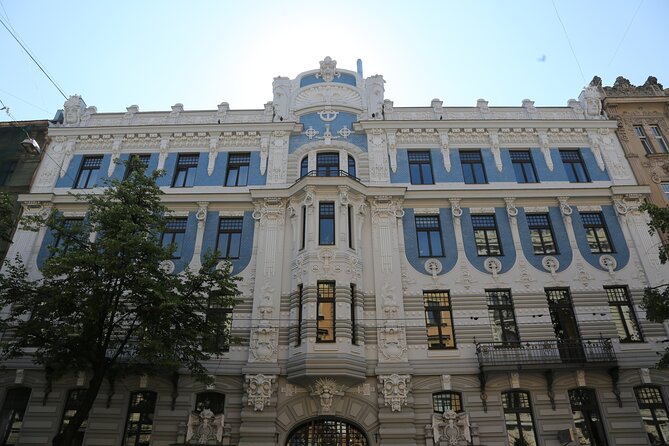
The walk begins at the Latvian National Museum of Art on Jaņa Rozentāla laukums. This is a sensible meeting point because it places you near Riga’s central Art Nouveau district, while also giving you a clear landmark for starting the app.
You do not enter the museum as part of the experience. Museum admission is not included, and the route is focused on the buildings outside. If you want to visit the museum separately, plan that as an extra stop rather than expecting it to form part of the audio tour.
Before setting off, download the VoiceMap app and the tour material. The package includes lifetime access in English, along with offline audio, maps, and geodata. That is one of the strongest practical features. Once the tour is stored on your phone, you do not need to depend on a live connection as you walk.
You will need to bring your own smartphone and headphones. Neither is included. The tour is available every day at all hours, so you can start when it suits your schedule. Still, daylight is likely the better choice for looking closely at architectural details, since the route depends on seeing the façades as you listen.
Elizabetes 10b and the First Lessons in Art Nouveau
The first listed stop is Elizabetes 10b. This gives the route an early chance to show you how Riga’s Art Nouveau buildings work as complete compositions. Look at the façade as a whole, then let the audio guide your attention toward the smaller elements.
The point here is not just to photograph an ornate building. You are learning a visual language. Art Nouveau often plays with flowing forms, strong lines, decorative patterns, and nature-inspired details, but Riga’s architects did not all use those ideas in the same way.
The walk’s short format works well at this stage. You get enough explanation to begin spotting patterns on your own, then move on before the information becomes too heavy. If you are new to architecture tours, this first stop helps you get your bearings quickly.
Keep your phone ready and your volume at a level that lets you hear street sounds around you. The tour is self-guided, so you are responsible for pausing when you need a better look or replaying a section if a detail catches your attention.
Alberta 2a and the Decorative Work of Mikhail Eisenstein
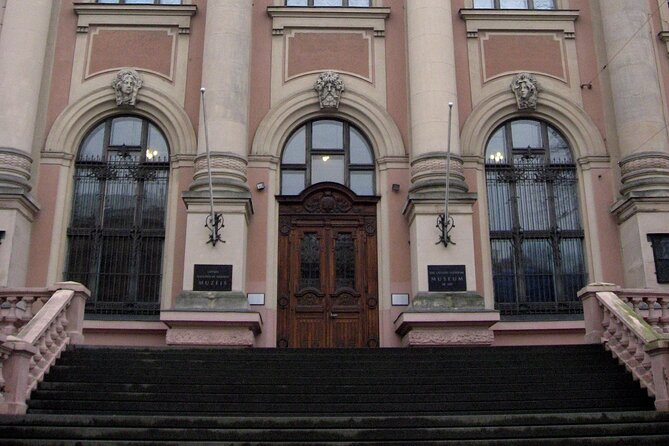
The route then reaches Alberta 2a, one of several Alberta Street stops. This is where the story of Mikhail Eisenstein becomes especially important. Eisenstein is known for highly decorative buildings, and the audio focuses on the visual choices that make his work so memorable.
You will also hear the surprising family connection involving his son, Sergei Eisenstein, who became a legendary Soviet filmmaker. That detail adds a human thread to what could otherwise be a purely architectural walk. It connects Riga’s buildings to a wider story of art, cinema, and political culture.
Eisenstein’s façades reward close attention. Rather than rushing past, take time to look upward and compare the balance of ornament with the basic structure of the building. A useful part of this stop is the reminder that decoration is not random. The shapes, faces, lines, and repeated motifs help create a deliberate visual effect.
This is also a good point to remember that the tour is designed for looking, not only listening. The app supplies the explanation, but your experience improves when you pause, scan the façade, and compare what you hear with what you see.
More Self-Guided Audio Tours in the world:
- Self-Guided Tour of Ísafjörður: Art, History, and Architecture
★ 5.0 · 23 reviews - Bastille’s Architecture & Artisans Self-Guided Walking Tour
★ 4.5 · 18 reviews - Gaudi and La Sagrada Familia Exterior Self-Guided Audio Tour
★ 3.5 · 25 reviews
Alberta 4 and Riga’s Residential Architecture
At Alberta 4, the route continues its close look at the city’s residential architecture. These buildings were not built as isolated monuments. They formed part of the everyday city, with apartments, entrances, courtyards, and street-facing façades designed for urban life.
That practical setting gives Riga’s Art Nouveau a different character from a museum collection. You are looking at buildings that still belong to the street. Their scale, entrances, windows, and decorative fronts show how style was folded into ordinary residential development.
The audio also helps explain why Riga is often described as an Art Nouveau metropolis. The value is in the concentration. Within a short walk, you can move from one strong example to another and begin to see variations rather than treating every ornate façade as the same.
Because the tour lasts only 30 to 45 minutes, Alberta 4 arrives as part of a focused sequence rather than a long architectural survey. You will not see every important Art Nouveau building in Riga, and that is worth keeping in mind. This route is a compact introduction to one especially rewarding district.
Alberta 11 and the Move Toward National Romanticism
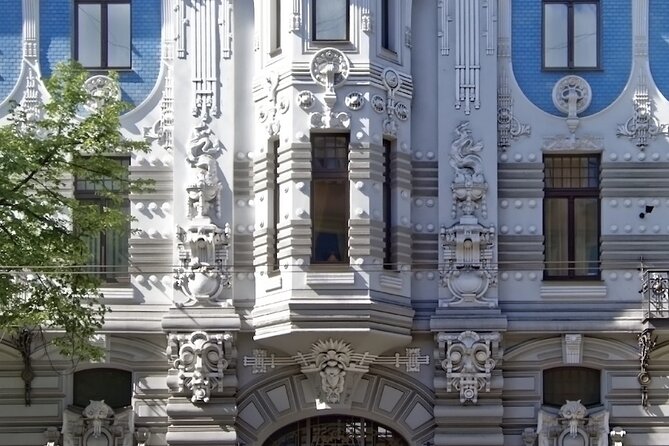
Alberta 11 brings the route closer to the architectural ideas that make Riga more than a display of imported European fashion. Here, the focus turns toward National Romanticism, a local style developed by Latvian architects.
National Romanticism is important because it shows architects searching for a regional identity. Instead of copying one international look, they adapted Art Nouveau ideas to create something that felt more connected to Latvia. The audio explains this development in accessible terms, so you can listen for the difference as you continue.
This is one of the most useful parts of the tour for anyone who wants context. Riga’s architecture becomes easier to understand when you see it as a conversation between international trends and local identity. The buildings are decorative, but they also reflect a city working out how it wanted to present itself.
You may find that this stop changes the way you view the earlier buildings. Once you know to look for a local interpretation, the route feels less like a parade of fancy façades and more like a lesson in how architectural ideas travel and change.
Alberta 13 and One of Riga’s Finest Stretches
At Alberta 13, the route stays within the city’s best-known Art Nouveau cluster. This is the sort of stop where the close spacing of major buildings becomes the main advantage. You do not need public transport between points, and you are not spending the afternoon chasing scattered addresses.
The route gives you time to compare buildings by different architects and notice how design choices shift from one address to the next. Some façades may grab you with dense ornament, while others make their impression through proportion, structure, or a more restrained use of decoration.
That comparison is the real strength of a self-guided walk. You control the pauses. If one building interests you more than another, you can stop the audio briefly and take a closer look without holding up a group.
The experience remains firmly outdoors. There are no included museum entries or interior visits along the route. If you are hoping to see grand staircases, apartment interiors, or exhibitions, this will feel limited. If your priority is understanding the street façades, the route stays nicely focused.
Ending at Alberta 12 and the Residential Courtyard
The tour ends at Alberta 12, after stopping at the nearby Alberta Street buildings. This final section brings together several of the route’s themes: decorative design, residential architecture, and the way Riga’s Art Nouveau buildings work as part of a neighborhood.
The audio also includes the courtyard of one of Riga’s most impressive residential buildings. That detail matters because façades tell only part of the story. A courtyard can reveal how a building was organized beyond its street face and how decorative ambition continued into a more private part of the structure.
You should not assume every interior is open for casual entry. The tour does not include admission tickets or guaranteed access to attractions, so follow the audio’s instructions and respect building access rules. The courtyard reference adds useful depth, but this remains a self-guided outdoor experience rather than a formal building visit.
Finishing at Alberta 12 is convenient. You end in the center of the district rather than backtracking to the museum. From there, you can continue exploring Riga independently, stop for food, or use the area as a base for a second look at the buildings that caught your eye.
What the $5.20 Price Really Buys You
At $5.20 per person, this is a low-cost way to add structure to a walk you might otherwise take without much context. The price includes lifetime access to the English tour, the VoiceMap app, and offline access to the audio, map, and location data.
The key value is not the walking distance. The route is short, and you could pass several of these buildings for free. The value comes from learning what you are seeing and why the buildings matter. If the audio helps you notice details you would otherwise miss, the small fee can make the whole district more rewarding.
Lifetime access also gives the purchase some flexibility. You can use the tour during your visit and retain access afterward. The app may also offer other self-guided tours, which can be useful if you want to build a larger audio-walking collection.
The tradeoff is that nothing else is bundled in. You pay separately for food, transport, museum admission, and your own phone and headphones. Since the route is short, you should choose it for its explanation and independence, not because it replaces a full-day guided tour.
Who Will Get the Most From This Audio Walk
I would choose this experience if you like setting your own pace but still want a clear narrative. It suits solo visitors, couples, and small groups who do not want to match a guide’s schedule.
It also works well if you have limited time in Riga. In 30 to 45 minutes, you get a concentrated look at important buildings, a basic guide to Art Nouveau, and an introduction to National Romanticism. You can then decide if you want to explore the district again on your own.
The tour is a good fit for architecture beginners because the information is measured and practical. The strongest praise it has received centers on giving you enough explanation without making the walk feel like a lecture. The clear voice and attention to history and politics add substance without taking over the experience.
It is less suitable if you want a live guide, a chance to ask questions, or a long explanation at every stop. The app can tell you the story, but it cannot respond to your interests. You also need to manage your own navigation, listening, and timing.
The route is near public transportation, and most people can take part. It is a private activity in the sense that only your group participates, but there is no live guide accompanying you.
Practical Tips for a Smoother Walk
Download the app and tour before you arrive at the Latvian National Museum of Art. The offline maps and audio are useful, but they work best when you have prepared them before starting.
Bring headphones, a charged smartphone, and enough time to pause. The stated duration is an average, not a strict schedule. If you stop often to study façades or take photographs, your walk may last longer.
Start at the museum rather than joining the route midway. The order is designed to introduce the style before moving through the Alberta Street concentration. Starting at the proper point gives the explanations a clearer progression.
Wear shoes suitable for a city walk, though no special equipment is required. Since the route is outdoors, weather can affect how pleasant it feels. The app is available all day, so you can choose a time that fits your plans.
The experience is non-refundable and cannot be changed after booking. Make sure you are comfortable with the date and language before paying.
Should You Book This Riga Art Nouveau Tour?
Book it if you want a cheap, focused introduction to Riga’s architecture and prefer independence over a scheduled group walk. The combination of Eisenstein, National Romanticism, Alberta Street, and offline audio gives you real context for a small price.
Skip it if you are looking for interiors, a live architectural expert, or a longer route across the city. For everyone else, this is a smart way to turn a short walk through Riga into a more informed look at one of Europe’s strongest Art Nouveau districts.
FAQ
How long does the Riga Art Nouveau audio tour take?
The tour takes approximately 30 to 45 minutes.
Where does the tour start?
It starts at the Latvian National Museum of Art, at Jaņa Rozentāla laukums 1 in Riga.
Where does the tour end?
The tour ends at Alberta iela 12.
What language is the audio tour in?
The tour is available in English.
Does the tour work offline?
Yes. The VoiceMap app includes offline access to the audio, maps, and geodata.
Do I need to bring my own phone and headphones?
Yes. A smartphone and headphones are not included.
Are museum tickets or attraction fees included?
No. Tickets and entrance fees for museums or other attractions along the route are not included.
Can I take the tour at any time?
Yes. The stated opening hours run from midnight to midnight, Monday through Sunday.
More History Walks in the world
- Chicago in a Day: Food, History & Architecture Walking Tour
★ 5.0 · 1,153 reviews - Charleston’s Best Highlights: History, Culture & Architecture
★ 5.0 · 422 reviews - Palm Springs Modernism Architecture & History Bike Tour
★ 5.0 · 359 reviews - Charleston: History and Architecture Guided Walking Tour
★ 4.8 · 349 reviews
Newly added in the world
- Barcelona: Guided tour e-bike Barcelona historical and modernist Barcelona★ 4.5 · 5 reviews
- Barcelona Architecture Walking Tour With Casa Batlló Upgrade★ 4.8 · 11 reviews
- Astana: Old City Tour, Imperialistic and Soviet Architecture★ 5.0 · 4 reviews
- Barcelona Beyond Gaudí: Modernism, Rooftops, and Hidden Gems★ 5.0 · 2 reviews
- An Architect’s Tour of Downtown Santiago★ 5.0 · 7 reviews
- Architecture Tour: Old Historic Madrid with an architect★ 4.3 · 3 reviews
- London: Architecture Tour of Benjamin Franklin House★ 5.0 · 5 reviews
- Architectural Wonders of KAFD, An Iconic Destination★ 5.0 · 3 reviews
Art Nouveau Tours, compared.
Walking Tour of Riga’s Beautiful Art Nouveau Architecture
Read our review →
Private Art Nouveau and Art Deco tour near Opera
Read our review →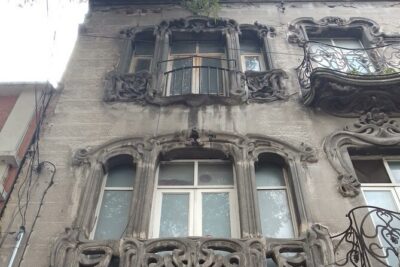
Mexico City origins and architecture: Art Nouveau, Deco,Eclectic
Read our review →Browse the lists this tour appears in