
Review · GUIDED
Copenhagen: Guided Architecture and Sustainability Tour
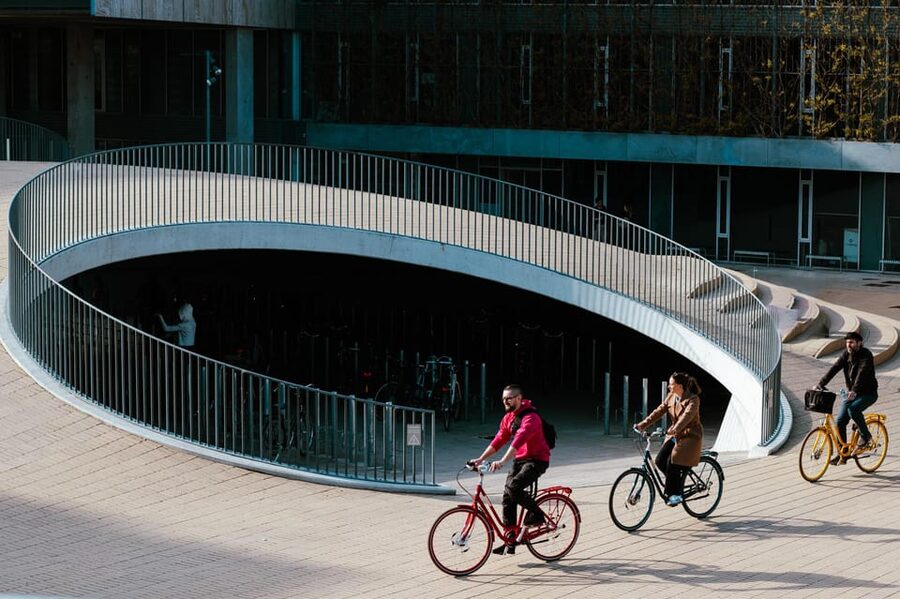
Copenhagen’s best architecture tour is not spent standing in front of one famous building. It is spent moving through the city, watching old industrial areas, new housing, harbour swimming spots, and cycle routes fit together. This 17-kilometre bike ride shows how Copenhagen’s design choices affect ordinary daily life.
I like the route’s off-centre focus, especially the harbour, Ørestad, Amager Fælled, and Cykelslangen. I also like the personal guiding style: René, Jörn, Josephine, and others explain not just what a building looks like, but why the city made certain choices. The main caution is simple: this is a serious ride, and one rider reported that the group was not always easy to manage.
- 17 kilometres by bike: Expect three hours of cycling, stopping, and short talks.
- Modern Copenhagen in context: See Blox, Lille Langebro, Kaktus Towers, Tietgen Residence Hall, and more.
- Sustainability in daily life: The focus is on city planning, cycling, public space, housing, and harbour renewal.
- Useful equipment included: Bikes, helmets, rain ponchos, luggage storage, and access to a lounge with toilets.
- Family options available: Children’s bikes can be arranged in advance, along with child seats and cargo bikes.
- English or German guiding: Private groups are available if you want a more personal ride.
Why a bike is the right way to see Copenhagen’s new side
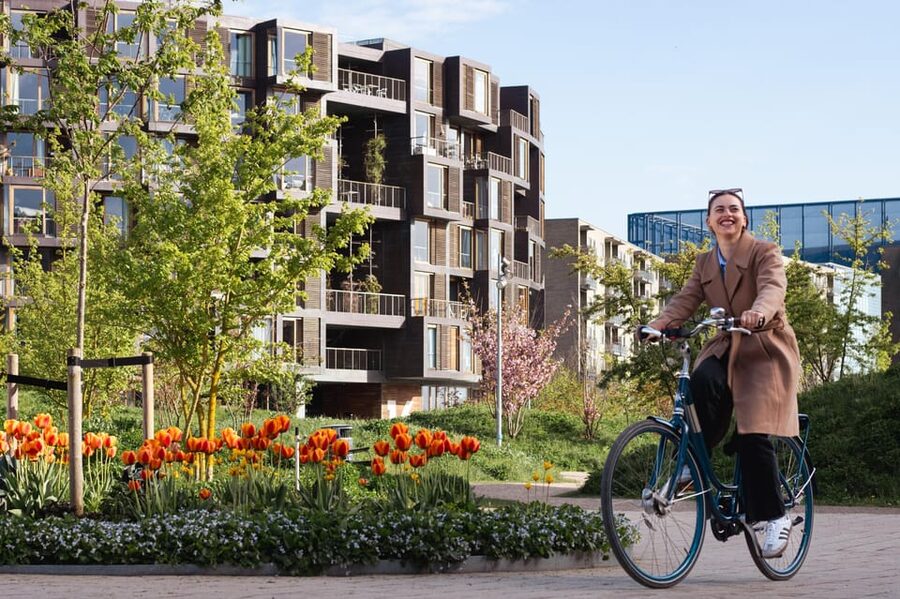
Copenhagen is easy to admire from a pavement, but its urban planning makes more sense from a bicycle. You cross bridges, follow cycle paths, pass former industrial ground, and move between dense streets and open areas without spending half the tour waiting for traffic.
That movement is the point. The tour links buildings and public spaces that might feel scattered if you visited them alone. You see how a harbour, a bridge, a residence hall, a cycling route, and a public square work as parts of one city plan.
The route also avoids making Copenhagen’s famous old centre the whole story. You do not spend three hours ticking off postcard sights. Instead, you see how the city has changed beyond the classic tourist core, with special attention to architecture from the late 20th and early 21st centuries.
You need to be comfortable on a bicycle. The tour starts in any weather, so pack clothing that can handle wind or rain and wear shoes suited to three hours of riding. A rain poncho is supplied if needed, but suitable layers are still a wise idea.
Starting at Tropical Bikes on Vester Voldgade
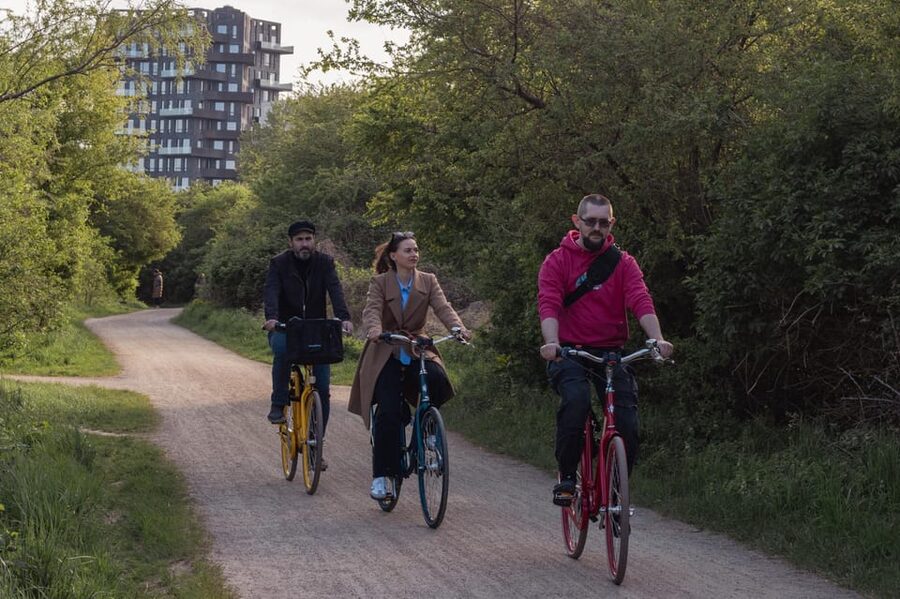
The usual starting point is Tropical Bikes at Vester Voldgade 2A, though the exact meeting point depends on the option you book. The shop provides bikes in 48, 51, and 56 centimetre frame sizes, plus 24-inch and 26-inch children’s bikes when reserved ahead of time.
A helmet is included, and luggage storage is available. You can also use the lounge and toilets before and after the ride, a small but useful touch when you are fitting the tour into a full day of sightseeing.
Baskets and phone holders cost 49 DKK each if you want them. This matters more than it may sound. The route is long enough that a phone holder can be handy for navigation between stops, though your guide leads the way.
Standard bikes are included in the price. An electric bike costs 249 DKK extra, while a cargo bike is 449 DKK, an electric cargo bike is 649 DKK, a tandem is 449 DKK, and a child seat is 119 DKK. Reserve special equipment in advance rather than assuming it will be available at the shop.
More Guided Tours in the world:
- Chicago River: 1.5-Hour Guided Architecture Cruise
★ 4.8 · 8,046 reviews - Charleston: History and Architecture Guided Walking Tour
★ 4.8 · 349 reviews - Vienna: Spanish Riding School Guided Architectural Tour
★ 4.8 · 333 reviews
Blox and Lille Langebro: a quick lesson in change
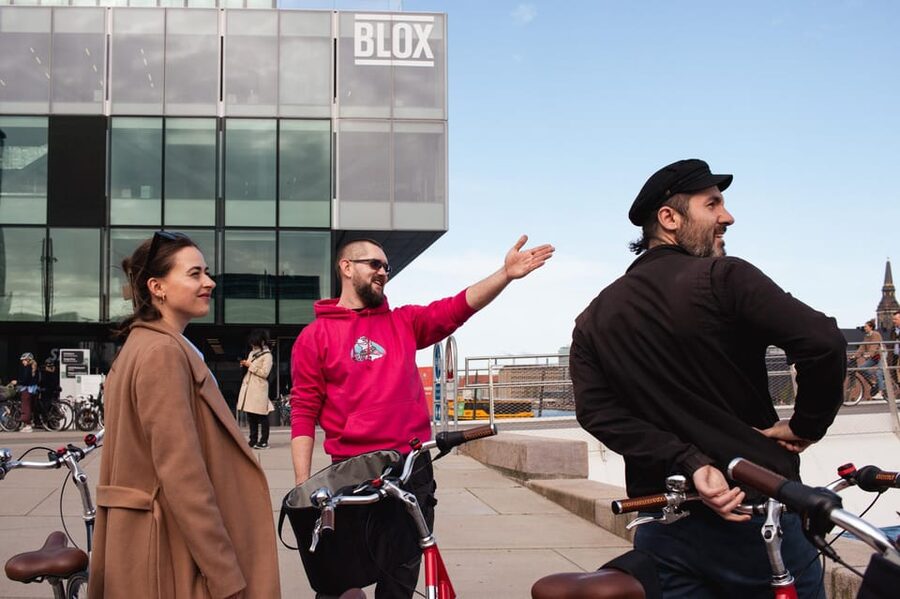
The first major stop is Blox, followed by Lille Langebro. Blox is a useful opening because it places modern design beside the older city rather than in a new district far from everything else.
Your guide uses this area to explain Copenhagen’s architectural direction and its interest in public life. The talk at Blox lasts about 10 minutes, followed by a shorter five-minute stop at Lille Langebro.
Lille Langebro is more than a bridge for crossing the harbour. It helps you read the city as a connected system, with pedestrians, cyclists, public spaces, and new buildings tied together. A short stop here is enough to take in the setting without turning the tour into a long lecture.
The guides are a major part of the experience. René has been praised for keeping riders safe while explaining the city’s efforts to improve everyday life. Josephine adds humour to her architectural explanations, while Jörn is known for bringing personal detail to the route. Guide quality can vary by departure, but the strongest part of this experience is clearly the human voice behind the buildings.
Islands Brygge and the Copenhagen harbour
At Havnebadet Islands Brygge, the emphasis shifts from buildings to the public use of the waterfront. The harbour is not treated as a barrier or a purely industrial zone. It has become a place for recreation, swimming, walking, and everyday city life.
The guided stop lasts around 10 minutes. That is enough time for your guide to explain the area’s role without making you stand still for too long. You also get a clear example of the tour’s central idea: sustainability is not only about energy-efficient buildings. It is also about making useful public spaces that people can reach by bike and use often.
The harbour section is one of the best reasons to choose this tour instead of a standard architecture walk. From a bus or a central walking route, you may see the water, but you do not get the same sense of how the city connects its waterfront districts.
Ørestad and Karen Blixens Plads
The ride continues toward Karen Blixens Plads and Ørestad. Here, the buildings become newer and the planning feels more deliberate. You get a look at how Copenhagen has expanded with large residential, educational, and public projects rather than simply filling every available gap in the old centre.
Karen Blixens Plads receives about 10 minutes of guided attention. The stop gives you time to consider how open public space works beside large modern structures. The architecture may appeal most to people who enjoy contemporary forms, but even if you prefer old buildings, the urban planning discussion gives the area purpose.
The route includes scenic riding between stops, including roughly five minutes around Ørestad. This is not a nonstop lecture. You pedal, look around, and then stop where the guide can explain a particular building or planning choice.
A few more architecture walks in the world worth a look
- Chicago Architecture River Cruise
★ 5.0 · 15,756 reviews - Chicago River 90-Minute Architecture Tour
★ 4.5 · 9,629 reviews - Chicago Architecture Center River Cruise aboard First Lady
★ 5.0 · 5,536 reviews - Chicago: Architecture River Cruise Skip-the-Ticket Line
★ 4.8 · 4,325 reviews
Tietgen Residence Hall and Amager Fælled
The Tietgen Residence Hall is one of the route’s strongest architectural stops. The guide spends about 10 minutes here, focusing on the building and its place in Copenhagen’s modern housing story.
The residence hall gives the tour a human scale. Architecture is easier to understand when you ask how people live inside it, how communal areas work, and how a large building relates to its surroundings. The tour is not only a parade of striking façades. It asks you to think about housing as part of city planning.
After that, the route reaches Amager Fælled. This open area changes the pace again. You move away from dense construction and see how natural or open ground fits into the wider plan for Copenhagen.
That contrast is important. A city built around sustainability needs more than modern apartment blocks and cycle paths. It also needs room for open space and a break from hard surfaces. The guide’s discussion here helps connect the built parts of the tour with the city’s wider environmental aims.
Gemini Residence, Cykelslangen, and Kaktus Towers
The E/F Gemini Residence offers another example of how former industrial structures can be adapted for modern urban life. The stop lasts about 10 minutes, giving your guide time to discuss the building’s appearance and its role in the harbour area.
The route then reaches Cykelslangen, or the Bicycle Snake, for a short scenic ride. This is one of the moments when cycling is not just transport between sights. The route itself becomes part of the architecture tour.
Cykelslangen shows how a cycling connection can be designed as a real piece of urban infrastructure rather than an afterthought. You feel the benefit directly because you are using the route as intended. For me, this is more convincing than a talk about cycling policy delivered from a pavement.
Kaktus Towers brings the tour back to high-profile modern design. The guided stop lasts about 10 minutes. The towers are visually unusual, and the visit gives architecture fans a chance to discuss how form, housing, and new development meet in contemporary Copenhagen.
This stretch may be the most rewarding for anyone interested in 21st-century architecture. One limitation is that the tour gives less attention to earlier periods. If your main interest is medieval Copenhagen, royal buildings, or older architectural styles, this is not the best match.
Enghave Plads and Israels Plads
Enghave Plads provides another look at public space and neighbourhood life. The stop lasts around 10 minutes, and it helps balance the grander buildings earlier in the route.
A good city is measured not only by its landmark projects. It is also measured by the squares and shared places people use on ordinary days. This part of the tour helps you notice how public areas can support local life while fitting into a wider cycling network.
The final stop is Israels Plads, also with about 10 minutes of guided explanation. By this point, the route has taken you from the harbour and new districts back toward the more familiar central city.
Israels Plads is a fitting finish because it brings together several themes from the ride: old and new Copenhagen, public space, cycling, and the effort to make urban areas more useful and environmentally aware. From there, the tour returns to Tropical Bikes on Vester Voldgade 2A, with the stated drop-off options centred on the same location.
What the $70 price gives you
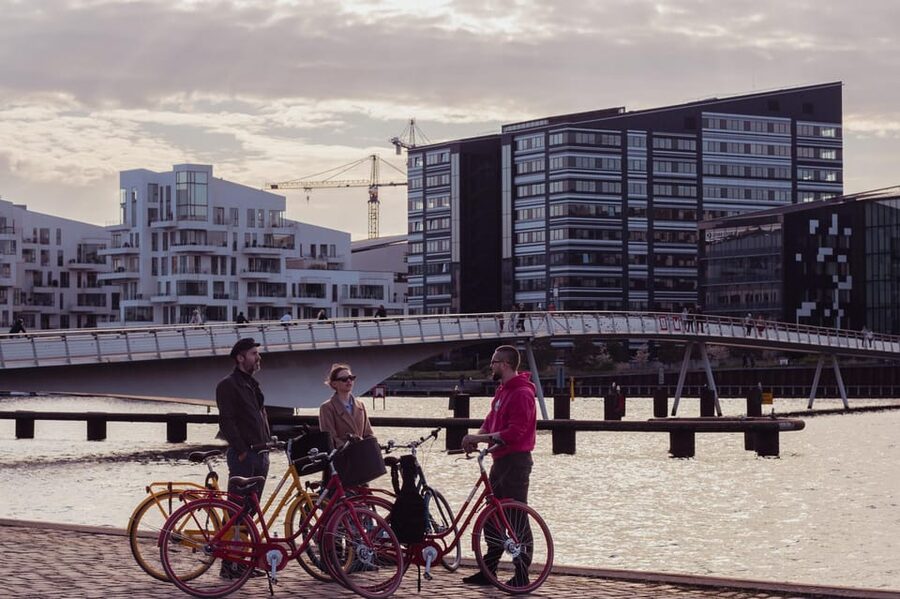
At $70 per person, this is not the cheapest way to see Copenhagen. You are paying for three hours, a local guide, a fitted bike, helmet use, and a carefully connected route of about 17 kilometres.
The price makes the most sense if you would otherwise rent a bike and try to find these places yourself. You would still need to plan the route, navigate between districts, decide where to stop, and research the buildings. The guide adds the city-planning story that ties the stops together.
It is also good value for architecture fans and repeat visitors who have already seen the central sights. The route takes you to places you might not choose on your own, including Amager Fælled, the Tietgen Residence Hall, E/F Gemini Residence, and Kaktus Towers.
The value drops if you dislike cycling, want a slow walking tour, or mainly want historic Copenhagen. You also need to account for extras. A phone holder, basket, child seat, electric bike, tandem, or cargo bike costs more, and children’s bikes must be reserved ahead of time.
Guides, pace, and the one real caution
The English- and German-speaking guides shape the tone of the ride. René is noted for friendly explanations and careful attention to bicycle safety. Jörn brings strong personal enthusiasm, and Josephine combines clear architectural information with jokes. Other guides may lead the tour, so the exact style will depend on your departure.
The pace includes frequent stops, usually five or 10 minutes long. That makes the three hours manageable for an ordinary cyclist, but it is still a substantial ride. You are not sitting in one place for most of the experience.
One issue deserves direct mention. A rider reported weak group management, with some people getting lost. That appears to be an isolated criticism among otherwise very strong feedback, but it is still useful advice. Stay close to the guide, pay attention when the group starts moving, and do not assume every turn will be obvious.
The tour runs in any weather. Copenhagen’s wind and rain can change the comfort level quickly, so bring suitable clothing even when the forecast looks friendly. The supplied poncho helps, but it does not replace warm layers or comfortable shoes.
Who should book this Copenhagen bike tour?
I would choose this tour if you enjoy modern buildings, cycling, public-space design, or the practical side of sustainability. It suits first-time visitors who want a different view of Copenhagen and repeat visitors who have already covered Nyhavn, the palaces, and the old centre.
It also works well for couples, families with older children, and private groups who want to set a more personal pace. Children’s bikes are available in advance, and the child seat and cargo options make the ride more adaptable, though you should reserve them before arrival.
I would skip it if you cannot ride a bike, dislike three-hour outdoor activities, or want a detailed survey of Copenhagen’s older architecture. The tour is strongest when you are curious about how a modern city works and happy to see that story from a bicycle seat.
Should you book it?
Book this tour if you want to understand Copenhagen rather than simply photograph it. The harbour renewal, bicycle routes, new housing, open space, and public squares make the city’s planning ideas visible in a way that a standard sightseeing route often misses.
The best reason to go is the combination of movement and explanation. You cover a lot of ground, but the guide keeps giving each stop a purpose. Choose your equipment carefully, dress for the weather, stay with the group, and reserve children’s bikes or upgrades early.
FAQ
How long is the Copenhagen architecture and sustainability tour?
The tour lasts three hours and covers roughly 17 kilometres by bicycle.
What languages are available?
Live guiding is available in English and German.
Where does the tour start?
The usual starting location is Tropical Bikes at Vester Voldgade 2A. The exact meeting point may vary according to the option booked.
Are bikes and helmets included?
Yes. Bikes in 48, 51, and 56 centimetre frame sizes and a helmet are included.
Are children’s bikes available?
Yes. Children’s bikes with 24-inch and 26-inch frames are available, but you must reserve them in advance.
What happens if it rains?
The tour starts in any weather. A rain poncho is included, but you should wear suitable clothing and comfortable shoes.
Can I cancel the tour?
Yes. You can cancel up to 24 hours in advance for a full refund. You can also reserve now and pay later.
Newly added in the world
- Barcelona: Guided tour e-bike Barcelona historical and modernist Barcelona★ 4.5 · 5 reviews
- Barcelona Architecture Walking Tour With Casa Batlló Upgrade★ 4.8 · 11 reviews
- Astana: Old City Tour, Imperialistic and Soviet Architecture★ 5.0 · 4 reviews
- Barcelona Beyond Gaudí: Modernism, Rooftops, and Hidden Gems★ 5.0 · 2 reviews
- An Architect’s Tour of Downtown Santiago★ 5.0 · 7 reviews
- Architecture Tour: Old Historic Madrid with an architect★ 4.3 · 3 reviews
- London: Architecture Tour of Benjamin Franklin House★ 5.0 · 5 reviews
- Architectural Wonders of KAFD, An Iconic Destination★ 5.0 · 3 reviews
Guided, compared.

Chicago River: 1.5-Hour Guided Architecture Cruise
Read our review →
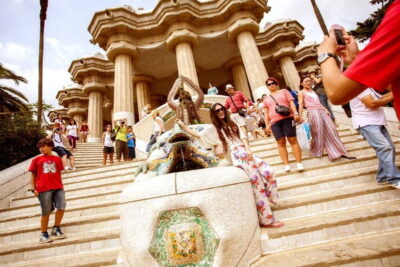
Park Güell: Guided Tour with Optional Gaudí Experience Entry
Read our review →
Vienna: Spanish Riding School Guided Architectural Tour
Read our review →
Charleston History, Homes, and Architecture Guided Walking Tour
Read our review →
Casa Vicens, Pedrera, and Casa Batlló Guided Tour
Read our review →Browse the lists this tour appears in