
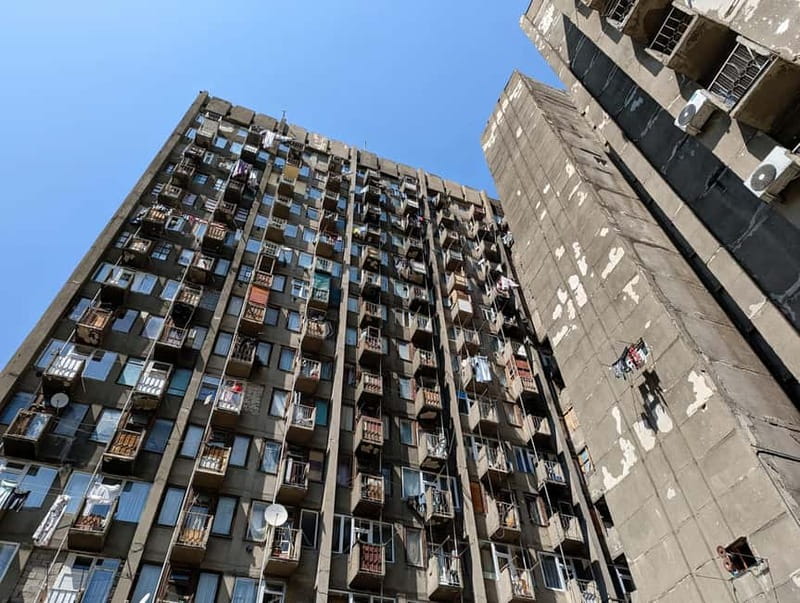
Review · BAUHAUS AND BRUTALIST ARCHITECTURE TOURS
Hidden Tbilisi: A Journey Through Modernism & Brutalism
Tbilisi’s old town gets the postcards, but this tour takes you to the city’s stranger, bolder side: Soviet modernism and brutalism, where concrete buildings, soaring bridges, ceremonial halls, and unusual public spaces tell stories that guidebooks often skip. You’ll visit places such as the Skybridge, Ministry of Roads, crematorium, archaeological museum, and Wedding Palace.
I like the way this experience connects architecture with ordinary life, politics, city planning, and personal memories. I also like the private format, hotel pickup, and the chance to see sites that are awkward to reach alone. The main drawback is that some locations may be closed or changed, and the Wedding Palace can only be viewed from outside.
Key points to know before booking
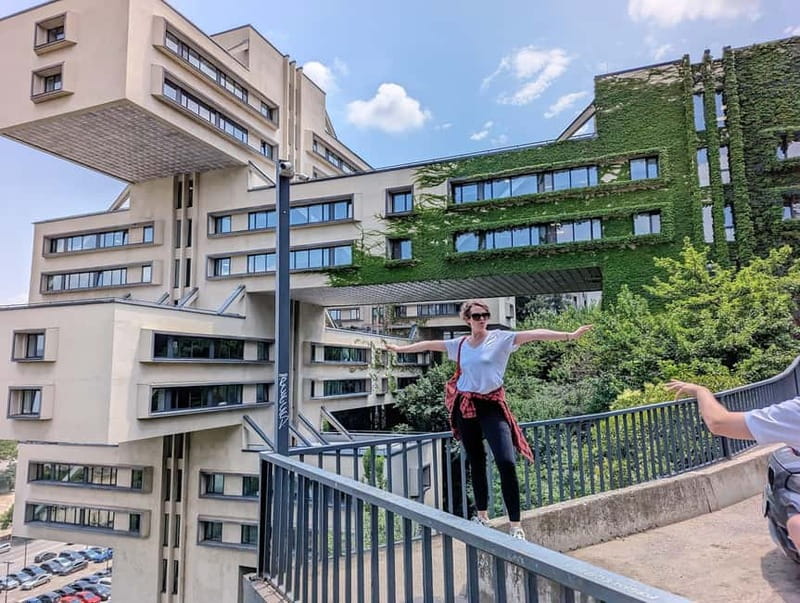
- Six hours of unusual Tbilisi: This is a half-day outing built around Soviet-era architecture rather than the usual old-town sights.
- Private transport from your hotel: The $176 rate covers a group of up to two people, making the cost easier to justify for a couple or two friends.
- Guides with personality: Alex, Khato, and Khatuna are named guides associated with the experience, and the strongest praise centers on clear explanations, humor, and personal stories.
- The Wedding Palace is exterior-only: You can study its design and hear its story, but entry into the grounds and interior is not available.
- Expect a changing route: Access can depend on local conditions, so an alternative site of similar interest may replace a planned stop.
- Dress for rough edges: Bring comfortable shoes, weather-appropriate clothes, a camera, and clothing that can get dirty.
Why Tbilisi’s concrete architecture deserves six hours
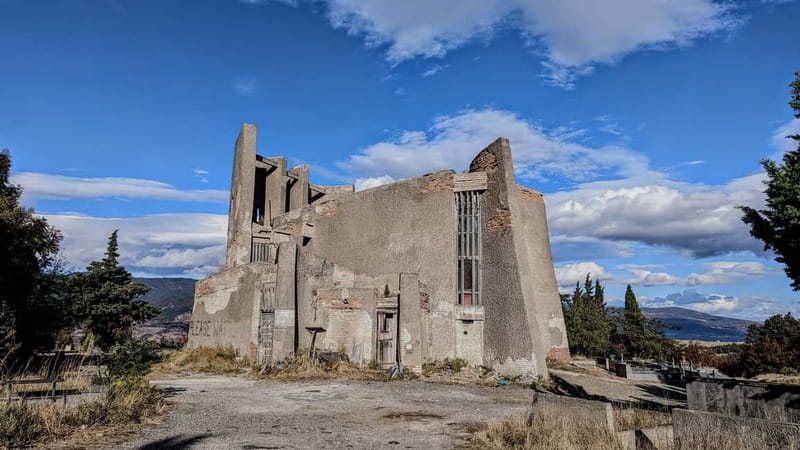
This is not a standard sightseeing drive with a few photo stops. The point is to read buildings as records of ambition, control, taste, and changing public life.
Soviet architecture in Georgia is easy to misunderstand if you see only the concrete. Some structures were made to project progress and confidence. Others were experimental works by local architects whose names are less familiar outside Georgia. Their shapes can feel severe, playful, theatrical, or almost futuristic.
I like that the experience treats these places as more than unusual backdrops. You’ll hear about the people who designed them, the purpose they served, and the forces that may threaten their future. Several buildings are at risk of alteration or removal, which gives the outing a sense of urgency without turning it into a gloomy memorial tour.
The guide matters here. Architecture can become dry in a hurry, especially when a building has a long political or technical story. The guides named for this experience, including Alex, Khato, and Khatuna, bring humor and local knowledge into the conversation. You can also ask about everyday life in Georgia, not just dates and design terms.
More Bauhaus and Brutalist Tours in the world:
- London: Brutalist Architecture & History Walking Tour
★ 4.8 · 42 reviews - Le Corbusier’s Chandigarh : A Complete Architecture Tour
★ 4.7 · 25 reviews - Architecture of New Belgrade – Brutalism Decoded
★ 4.5 · 24 reviews
The Skybridge and Tbilisi’s bold ideas
The Skybridge is one of the tour’s most appealing stops because it captures the optimism behind much Soviet public design. Its very name suggests movement, connection, and a city reaching beyond ordinary street level.
You’ll examine it as both a practical structure and a symbol. The guide explains how its form relates to the ambitions of the period, helping you see why such a bridge was more than a way to get from one point to another.
This is the kind of stop that rewards patience. Look at the angles, the scale, and the way the structure relates to its surroundings. Your guide can point out details that are easy to miss from a passing car or a quick photograph.
Do not expect a polished attraction with signs, gift shops, or a neat visitor route. That is part of the appeal, but it also means the experience depends on your guide’s explanation. If you want a simple checklist of famous monuments, this may feel too specialized. If you enjoy figuring out how a city works, the Skybridge offers a strong start.
The Wedding Palace, viewed from the outside
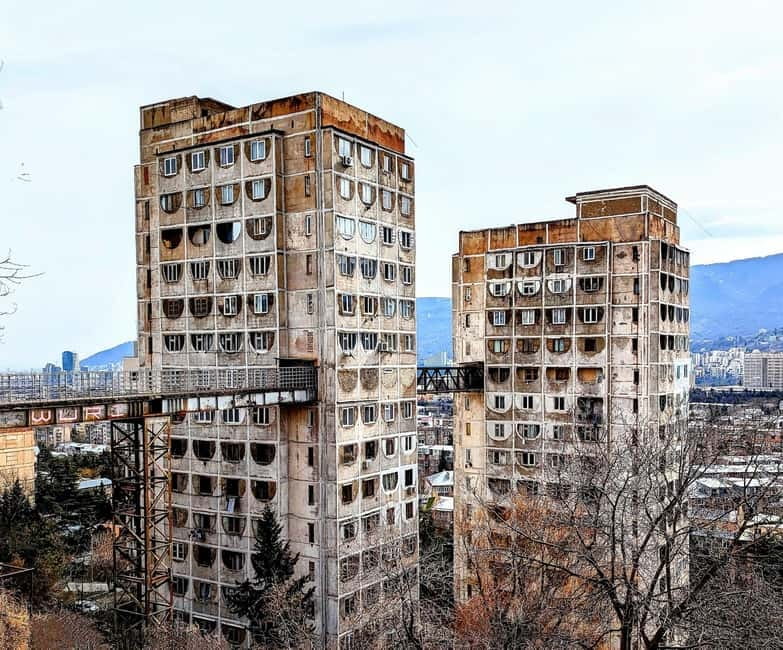
The Wedding Palace is one of the tour’s major architectural highlights, but you need to understand the access limits before you book. You cannot enter the grounds or interior during this experience. Instead, you’ll study the building from outside while the guide explains its design and role.
That restriction is worth accepting because the building’s exterior is central to its character. It challenges the idea that a ceremonial building must look traditional or restrained. Its unusual forms reflect an era when public architecture could be theatrical and highly symbolic.
The guide’s job here is especially important. Without context, the Wedding Palace may look like an eccentric piece of concrete. With an explanation of its purpose and design, you can see how architecture was used to shape public rituals and express the spirit of its time.
Bring a camera, but do not treat this as only a photo stop. Give yourself time to look at the massing, curves, openings, and relationship between the building and the surrounding space. The outside view is the complete access available, so expectations matter.
The crematorium and a cemetery with an unexpected design
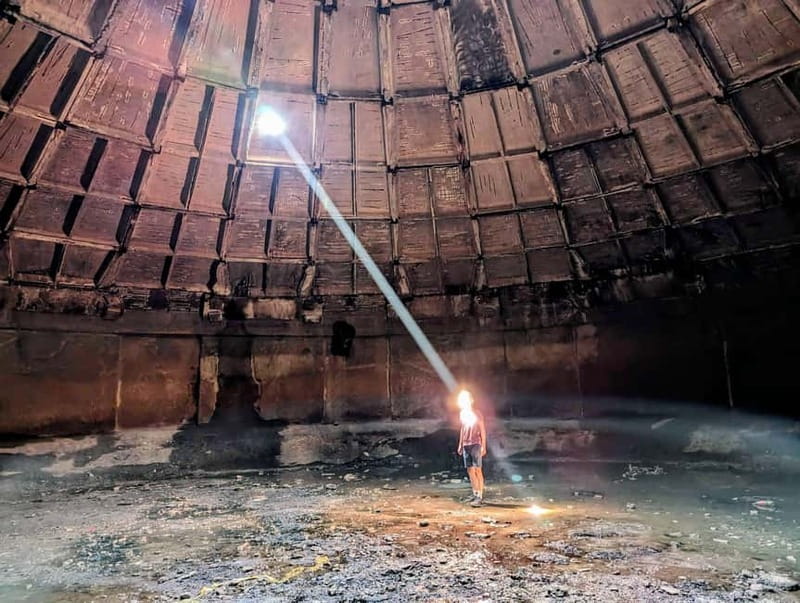
The cemetery and crematorium add a more serious note to the route. This is not a cheerful sightseeing stop, but it is an important one because it shows how modernist ideas entered places connected with death, memory, and ceremony.
The crematorium’s design is described as unusual, and its setting makes the architecture feel different from the more optimistic public buildings. Here, shapes and materials are tied to grief, ritual, and the way a society chooses to remember people.
I appreciate this part of the route because it widens the discussion beyond offices, bridges, and government projects. You get to consider how design affects private emotions as well as public life.
Your guide will also help with the tone. This is a place to behave respectfully, keep your voice low, and avoid treating every detail as a novelty. The stop has visual interest, but it also carries a human purpose that deserves care.
A few more architecture walks in the world worth a look
- Chicago Architecture River Cruise
★ 5.0 · 15,756 reviews - Chicago River 90-Minute Architecture Tour
★ 4.5 · 9,629 reviews - Chicago River: 1.5-Hour Guided Architecture Cruise
★ 4.8 · 8,046 reviews - Chicago Architecture Center River Cruise aboard First Lady
★ 5.0 · 5,536 reviews
The Ministry of Roads and Soviet-era futurism
The Ministry of Roads is another major stop, especially if you enjoy architecture that appears to ignore ordinary expectations. Its form reflects the ambition of a period that wanted public institutions to look modern, efficient, and forward-looking.
The building is often remembered for its futuristic appearance. On this tour, you can consider why a transport ministry received such a dramatic design and how the structure communicated authority and progress.
This is where the tour moves beyond strange building spotting. You’ll look at the link between the building’s function and its shape. Does the design make its purpose clearer? Does it turn a government office into a public symbol? Those questions give the stop more weight than a quick photograph from the roadside.
You may find that this building becomes one of the clearest examples of how Soviet architects used large public projects to shape a city’s identity. It also shows why preserving these structures matters. Once the original purpose fades, the architecture can be altered without much public attention.
The archaeological museum and the enigmatic dungeon
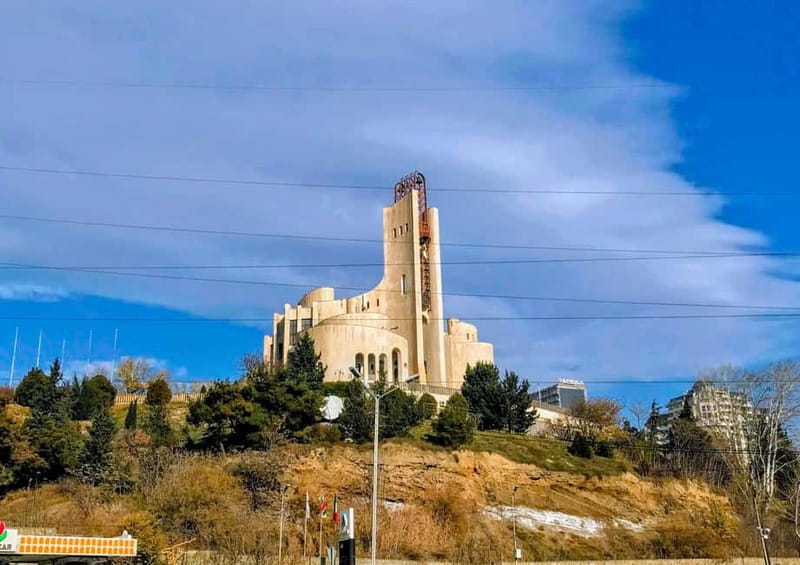
The archaeological museum brings another layer to the day. Instead of focusing only on modern concrete, the visit connects the city’s older past with its Soviet-era treatment of history.
The museum’s enigmatic dungeon adds atmosphere and raises questions about how places are reused, interpreted, and remembered. You should not expect a fully staged attraction built around entertainment. The value lies in the guide’s explanation and in the contrast between archaeological remains and modernist structures elsewhere on the route.
This combination is one of the tour’s strengths. You are not simply looking at one architectural style for six hours. You are moving between different periods and asking how each era leaves physical marks on Tbilisi.
The stop may appeal most to you if you like context. Someone interested only in clean lines and dramatic concrete may find the museum less exciting than the Skybridge or Ministry of Roads. I would still keep it in the day because it helps prevent the tour from becoming a narrow architecture walk.
The local stories that make the buildings matter
The most praised part of this experience is not one particular building. It is the way the guides connect architecture with Georgian life.
Khato is described as friendly, humorous, and able to balance design with local and personal stories. Khatuna is associated with generous explanations about daily life in Georgia, alongside the facts behind the buildings. Alex is praised for his passion for the city and for explaining urban architecture and city planning clearly.
Those details matter because brutalist buildings can feel remote. A personal story gives scale to a huge structure. It helps you understand how people used it, how they viewed it, and what it meant in a particular period.
The route can also include a break at a local bakery for khachapuri. That is a small detail, but a useful one. It adds a taste of everyday Tbilisi to a day otherwise focused on concrete, history, and design. It also gives you a chance to pause before the next group of sites.
Because the group is private, you can ask questions without worrying about holding up a large bus. That is a real advantage for an architecture-focused outing. You can ask about city planning, local politics, preservation, or a building that catches your eye.
What the six-hour format feels like
Six hours gives the tour room to connect several sites rather than rushing through a single district. Hotel pickup and drop-off are included, and transportation is provided, which matters in Tbilisi when the most interesting buildings are not arranged as a simple walking route.
You are not expected to plan complicated transfers between locations. The guide handles the movement, leaving you to focus on the buildings and the stories.
The tradeoff is that this is a full half-day. It will take a meaningful block of your schedule, and the subject is focused. If you have only a short stay in Tbilisi and still need the old town, churches, markets, and major viewpoints, you may need to plan carefully.
The private format makes the time feel more useful for the right audience. For two people, the $176 group price works out to $88 per person. That is not a bargain basement outing, but it includes six hours, transport, hotel pickup and drop-off, and a specialist English-speaking guide. For a couple or two friends who would otherwise struggle to reach these places, the value is solid.
Practical concerns before you go
Wear comfortable shoes. Some sites may have uneven ground or rougher surroundings, and the instructions specifically allow for clothes that can get dirty.
Bring a camera and weather-appropriate clothing. You may spend time outside while looking at buildings from different angles, especially at the Wedding Palace, so do not dress as if you are spending the whole day indoors.
This outing is not suitable for wheelchair users or people with mobility impairments. It is also not designed for children under 12, people with a cold, or those without experience for the physical demands of the route. Baby strollers, luggage, large bags, pets, smoking in the vehicle, alcohol, drugs, and party groups are not allowed.
The route is not completely fixed. Local conditions may prevent access to a planned location, in which case an alternative site of equal interest is included. You should see that as a practical safeguard, not a promise that every listed building will be available on your date.
Free cancellation is available up to 24 hours before the start, and you can reserve now and pay later. Those policies help if your Georgia plans are still shifting.
Who should book Hidden Tbilisi
I would book this tour if you enjoy architecture, urban planning, local stories, photography, or places that sit outside the usual sightseeing circuit. It is particularly good after you have seen Tbilisi’s better-known historic center and want to understand how the city changed in the Soviet period.
I would also recommend it to curious first-time visitors who prefer a guided introduction to the city’s less obvious side. The private format gives you room to ask questions, and the vehicle removes much of the logistical hassle.
I would skip it if you want a relaxed panoramic drive, an interior visit at every stop, or a family activity for young children. The Wedding Palace is exterior-only, access can change, and the subject requires attention. You are paying for interpretation and access to unusual places, not a polished attraction with guaranteed entry everywhere.
For the right audience, this is a thoughtful and original way to spend six hours in Tbilisi. You’ll leave with more than photographs of concrete. You’ll have a clearer sense of how architecture can carry ambition, memory, politics, and everyday life long after the era that created it has passed.
FAQ
How long does the Hidden Tbilisi tour last?
The tour lasts six hours, including transportation between the sites.
What is included in the price?
The price includes hotel pickup and drop-off, transportation, and an English-speaking live guide.
Is the tour private?
Yes. It is a private group experience for up to two people.
What is the price for the group?
The price is $176 per group of up to two people.
Can I go inside the Wedding Palace?
No. Entry to the Wedding Palace grounds and interior is not available during this tour. You will view and discuss its architecture from outside.
What happens if a planned location is closed?
Some locations may be inaccessible due to changing circumstances. If that happens, an alternative site of equal interest is included.
Is the tour suitable for children or wheelchair users?
The experience is not suitable for children under 12, wheelchair users, or people with mobility impairments.
Newly added in the world
- Barcelona: Guided tour e-bike Barcelona historical and modernist Barcelona★ 4.5 · 5 reviews
- Barcelona Architecture Walking Tour With Casa Batlló Upgrade★ 4.8 · 11 reviews
- Astana: Old City Tour, Imperialistic and Soviet Architecture★ 5.0 · 4 reviews
- Barcelona Beyond Gaudí: Modernism, Rooftops, and Hidden Gems★ 5.0 · 2 reviews
- An Architect’s Tour of Downtown Santiago★ 5.0 · 7 reviews
- Architecture Tour: Old Historic Madrid with an architect★ 4.3 · 3 reviews
- London: Architecture Tour of Benjamin Franklin House★ 5.0 · 5 reviews
- Architectural Wonders of KAFD, An Iconic Destination★ 5.0 · 3 reviews
Bauhaus and Brutalist Architecture Tours, compared.
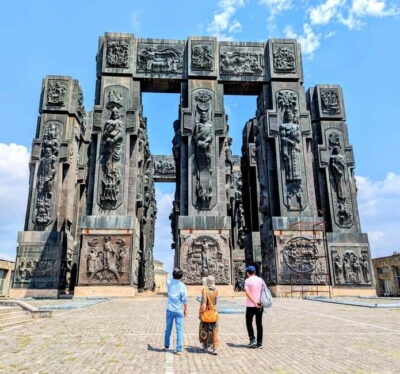
Brutalist Tbilisi: Urban exploration and untold stories
Read our review →
Le Corbusier’s Chandigarh : A Complete Architecture Tour
Read our review →
Architecture of New Belgrade – Brutalism Decoded
Read our review →
USSR History, Soviet Architects ,Statues & Mosaics
Read our review →
Brutal Tbilisi — Night Edition: Dark Side of Soviet Architecture
Read our review →USSR History , Soviet Architects , Statues & Mosaics
Read our review →Browse the lists this tour appears in