
Review · ITALY ARCHITECTURE TOURS
Architectural Milan: Private Tour with a Local Expert
Milan’s architectural story comes into focus when you place Bosco Verticale’s planted towers beside the marble Duomo and the glass-roofed Galleria Vittorio Emanuele II. This private two-hour walk links those very different chapters, from 19th-century grandeur to bold ideas about city living today.
I like the one-to-one format, which gives you room to ask why a building matters instead of simply collecting dates. I also like the flexible pace and route, with a guide who can respond to your interests. The main drawback is the price: at $636.25 for up to two people, this is a major splurge for a short tour, and transport or entry costs are not included.
Key points to know
- Bosco Verticale anchors the modern side of Milan, with trees and plants built into two residential towers.
- The route crosses several eras, from a mural-covered contemporary building to the Duomo and Galleria.
- Your guide can adjust the experience, including the pace and the subjects you want to discuss.
- The tour is private for your group, limited to up to two people at the listed price.
- The two-hour schedule is compact, so expect outside architectural viewing rather than extended indoor visits.
- You finish near Bocconi University, away from the starting point, with public transport and monument tickets extra.
From a mural-covered wall to Milan’s changing skyline
This tour begins at Casa murale on Via Gaetano de Castillia, 20, in the Porta Nuova area. The building’s exterior is covered with a mural, making it a fitting first stop for a tour about the way Milan uses architecture and art to reshape ordinary city spaces.
You can expect the guide to use this opening to set up the larger theme: Milan is not one fixed architectural style. It is a city where older stone façades, public art, glass towers, planned squares, and university buildings share the same urban frame.
The mural-covered building is also a practical start because it gets you looking at surfaces, scale, and public space before the tour reaches Milan’s better-known monuments. I like that approach. You do not begin with the obvious postcard view, then rush through everything else. You begin with a contemporary building that asks you to notice the city around it.
The exact walking order can change. The route adapts to your interests and walking pace, and weather can affect the stops. That flexibility is useful, but it also means you should not treat the advertised sequence as a minute-by-minute schedule.
More Private Tours in Italy:
- City Walk with Architect: Private walking tour of Rome
★ 5.0 · 22 reviews - Private Tour: Venice Art and Architecture Walking Tour
★ 4.0 · 22 reviews - Venice Art and Architecture Private Walking Tour
★ 4.5 · 11 reviews
Bosco Verticale and the idea of a planted tower
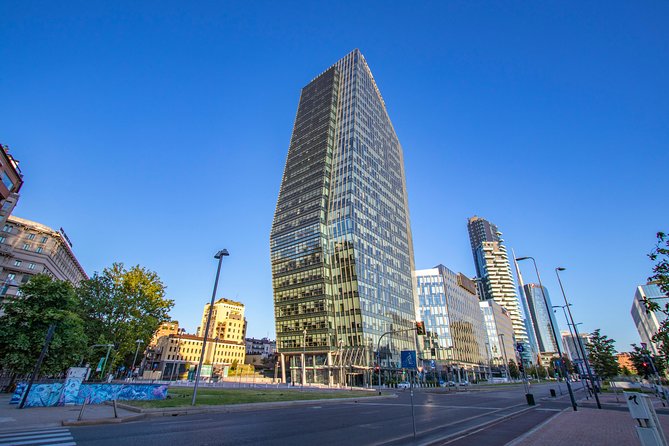
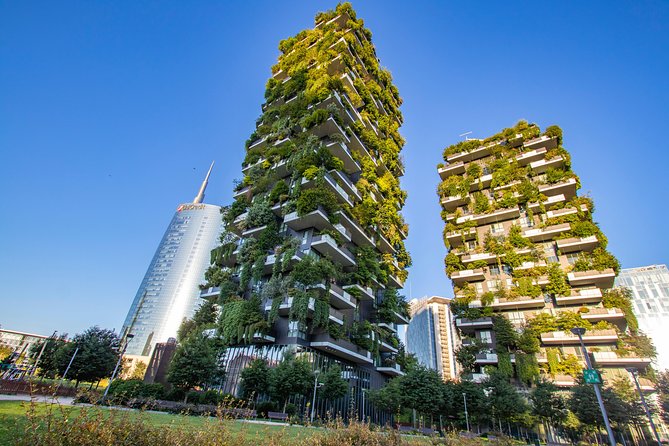
The strongest modern architecture stop is Bosco Verticale, or Vertical Forest. These two residential towers are famous for integrating trees and other plants into their design. Their greenery is not a decorative patch added after construction. It is part of the towers’ visual identity and their approach to urban living.
Your guide can explain how Bosco Verticale changed the way Milan presents its skyline. The towers are not simply tall buildings. They suggest that dense city housing can include a large amount of plant life, making the relationship between architecture and nature part of the design itself.
This is the stop where a local guide adds real value. You can look at photographs of Bosco Verticale on your own, but a personal explanation helps connect its unusual appearance to Milan’s broader modernization. Ask how the towers compare with the older buildings you have already seen, and ask what makes the project different from ordinary apartment towers.
The drawback is that this is an exterior viewing stop. The tour information does not include access to the residential buildings, so you should book it for architecture and explanation, not for an interior visit or a climb to a viewing deck.
Gae Aulenti Square and Milan’s modern public face
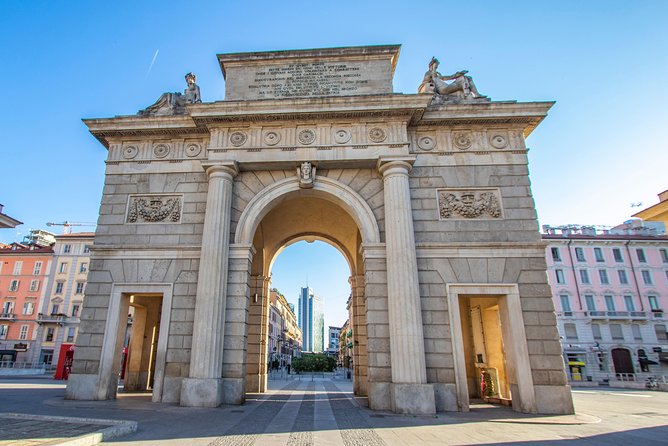
From the planted towers, the tour continues to Gae Aulenti Square, a modern public space named for the Italian architect Gae Aulenti. The square is a symbol of Milan’s urban renewal, with futuristic buildings and a design that feels far removed from the medieval core.
This stop helps you understand that Milan’s modern image is not limited to individual towers. Public space matters too. The square gives the buildings room to be seen together, and its design reflects the city’s effort to create a new center for offices, housing, and public life.
I would pay close attention to the contrast between the square and the Duomo area later in the tour. The difference is not just old versus new. It is also a change in how Milan organizes movement and civic space. Around the Duomo, the cathedral dominates the view. At Gae Aulenti Square, the public realm is shaped by contemporary planning and large-scale development.
Because this is a two-hour experience, you will likely have time for explanation and observation rather than a long break in the square. If you want to stop for coffee or photographs, tell the guide early. The private format makes that kind of adjustment more realistic than it would be on a large group tour, though it may mean spending less time at another stop.
The Galleria’s glass dome and 19th-century ambition
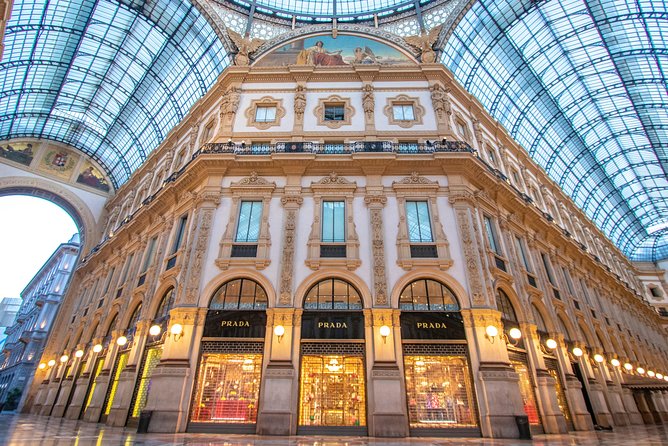
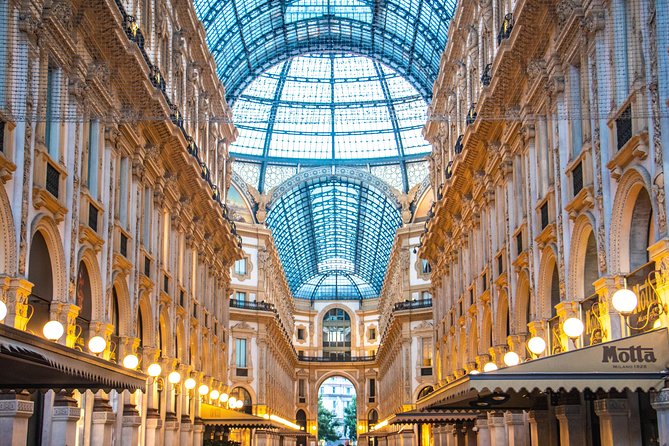
The route then reaches the Galleria Vittorio Emanuele II, one of the world’s oldest shopping malls and one of Milan’s most elegant architectural spaces. Its great glass dome, iron structure, and ornate interior show the confidence of 19th-century Italian design.
This is more than a shopping passage. It was conceived as a grand public gallery, and its architecture turns a commercial space into a civic landmark. Look up as you move through it. The dome and covered walkways are the main event, even if the cafés and luxury shops draw your eyes at street level.
The Galleria offers a useful counterpoint to Bosco Verticale. The older building celebrates ornament, symmetry, and enclosed grandeur. The newer towers emphasize height, planting, and a changing skyline. A guide can make that comparison clear without turning the tour into a list of construction dates.
Keep in mind that entry tickets for museums and monuments are not included. The Galleria is a public passage, but this experience does not promise private access, a reserved interior visit, or time for shopping. Personal expenses are also yours to cover, so purchases and refreshments add to the cost.
A few more architecture walks in Italy worth a look
- Lecce: Baroque Architecture and Underground Walking Tour
★ 4.6 · 1,248 reviews - Experience Florence’s Art and Architecture on a Walking Tour
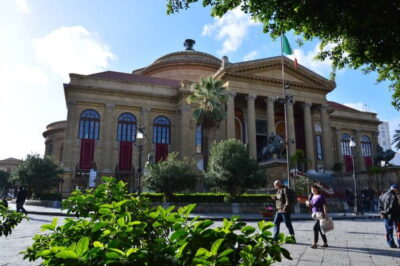
★ 5.0 · 318 reviews - Palermo: Art and Architecture Walking Tour
★ 4.7 · 136 reviews - Caprarola: Villa Farnese, masterpiece of Renaissance architecture
★ 4.5 · 28 reviews
The Duomo, Milan’s most famous architectural statement
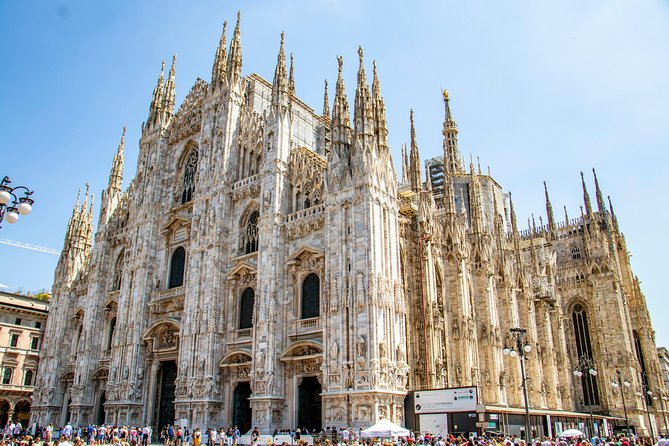
The Duomo is the tour’s great historic anchor. This magnificent Gothic cathedral is among the largest churches in the world, known for its marble façade, forest of spires, and intricate decoration.
Even if you have already seen photographs, the building rewards a slow look. The façade is crowded with detail, and the spires create a very different kind of skyline from Bosco Verticale. Here, height is expressed through Gothic vertical lines and carved stone. At the Vertical Forest, height is softened by trees and balconies.
The tour focuses on architecture, so do not assume it includes admission to the cathedral or the rooftop terraces. Monument entry tickets are excluded. If you want to go inside or visit the roof, plan that separately and allow additional time beyond the two-hour experience.
The Duomo can also be the busiest part of the route. A private guide helps you focus on the building rather than simply crossing the square for a quick photograph, but the tour cannot remove the city traffic or the crowds around Milan’s central landmark.
Bocconi University and a contemporary finish
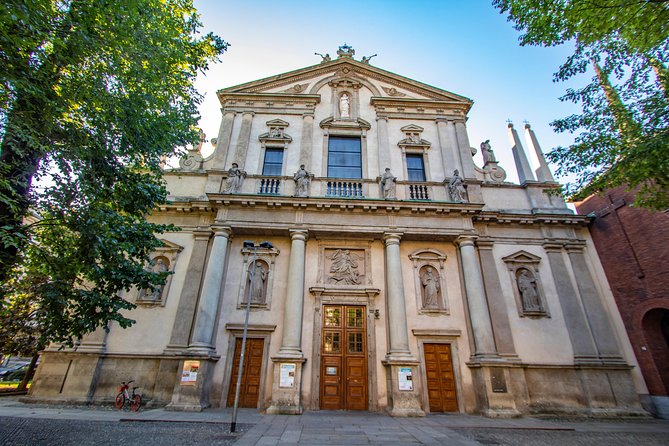
The final stop is Bocconi University at Via Roberto Sarfatti, 25. This prestigious private university is known for its modern campus design and reflects Milan’s interest in contemporary architecture beyond the major commercial districts.
Ending at Bocconi gives the tour a less predictable finish. Many architecture walks end at the Duomo, where the story naturally feels complete. This one continues to a place connected with education, innovation, and the city’s future.
The university also reinforces an important point: modern architecture in Milan is not only about famous residential towers or grand squares. It appears in institutions that shape daily life, too. A university campus can express a city’s values through materials, open space, and the way its buildings meet the street.
The end point is separate from the start. That is useful if you plan to continue exploring another part of Milan, but it means you should check your onward route before the tour begins. The experience ends with the city still open for your own discovery, not with a return to Casa murale.
What a private guide adds in two hours
The strongest reason to book this experience is the private format. It is designed for your group only, with a maximum of two people at the listed price. That gives you a better chance to ask questions, change the pace, or spend more time on the style of building that interests you most.
The guide is described as an independent local, and the experience is tailored rather than fixed in every detail. The supplied feedback praises the guide’s broad knowledge, friendly manner, and willingness to answer questions and respond to requests. That is exactly what you want from a short architecture tour. The guide’s name is not provided, so you will not be able to choose a particular guide in advance.
You might want to ask for one of these approaches:
- A comparison of Gothic, 19th-century, and contemporary Milanese design.
- More time at Bosco Verticale and Gae Aulenti Square.
- A focus on public art and urban renewal.
- Practical suggestions for seeing more modern architecture after the tour.
- A slower pace with fewer explanations at each stop.
The guide can offer recommendations for further exploration, which is helpful if architecture is a main reason for your Milan visit. Still, the two-hour length limits how much can be covered. You get a guided overview with interpretation, not a full architectural survey of the city.
Is $636.25 good value for two people?
The listed price is $636.25 per group of up to two, or about $318.13 per person if two people share the booking. That is expensive for two hours, especially since transport, museum admission, monument tickets, and personal expenses are not included.
The price makes more sense if you place a high value on privacy and specialist attention. A couple with a serious interest in architecture can ask questions freely and shape the discussion around the buildings they care about. You are paying for a dedicated local guide, not simply for access to a set of sights.
For a solo visitor, the value is harder to justify. You would pay the full group price unless the booking terms offer another arrangement, and the tour remains short. If you prefer a low-cost introduction, a public walking tour or self-guided route may serve you better.
The experience is also less appealing if you expect interior access. The advertised stops include major landmarks, but entry tickets are excluded. Add the cost of any transport and monument visits you choose, and the total rises quickly.
I would consider it good value for two people who want a private conversation about Milan’s architecture and have limited time. I would not choose it simply to see the Duomo or Galleria, since you can visit those places independently.
Timing, walking, and practical planning
The experience lasts about two hours. Since it begins at Casa murale and finishes at Bocconi University, plan for a point-to-point outing rather than a circular walk. Near the start and end, public transportation is available, but the tour price does not include transport tickets.
Wear comfortable shoes and keep the schedule flexible. The itinerary adapts to walking speed, and weather can change the stops. The information does not specify the exact distance or the amount of walking, so people with impaired mobility should raise their needs when booking and confirm that the planned route suits them.
Most people can participate, and service animals are allowed. A mobile ticket is provided, and confirmation arrives at the time of booking. Free cancellation is available until 24 hours before the experience starts. After that point, the amount paid is not refunded, and changes made within 24 hours are not accepted.
Because this is a private activity, you do not need to worry about matching a large group’s interests. You should still arrive ready to move between several parts of Milan. The route has six architectural themes, and two hours will pass quickly.
Who should book this Milan architecture tour?
I would recommend this experience to a couple who has already seen Milan’s main sights or who wants to understand the city through design rather than food, fashion, or art museums. It suits people who enjoy comparing periods and asking why a building looks the way it does.
It is also a good fit for visitors who want a local perspective on modern Milan. Bosco Verticale, Gae Aulenti Square, and Bocconi University give the tour a stronger contemporary focus than a standard historic-center walk.
You should think twice if you want a long, relaxed day with lots of indoor visits. Two hours is brief, the price is high, and admission and transportation costs sit outside the booking. The tour works best as a focused introduction, not as a complete sightseeing plan.
Should you book it?
Book this tour if private attention and architectural context matter more to you than keeping costs low. The mix of Bosco Verticale, Gae Aulenti Square, the Galleria, the Duomo, and Bocconi University gives you a clear view of Milan’s shift from Gothic stone to modern urban design.
Skip it if you mainly want entry to the Duomo, a rooftop visit, or a cheap way to see the center. You can visit several of these landmarks on your own. But if you want a flexible guide who can connect Milan’s old monuments with its newest buildings, this short private route offers a thoughtful way to read the city.
FAQ
How long is the architectural tour?
The experience lasts approximately two hours.
How many people can join the private tour?
The listed price covers a private group of up to two people. Only your group participates.
Where does the tour start?
The meeting point is Casa murale, Via Gaetano de Castillia, 20, 20124 Milano MI, Italy.
Where does the tour end?
The tour ends at Bocconi University, Via Roberto Sarfatti, 25, 20136 Milano MI, Italy.
Are transportation and monument tickets included?
No. Transportation tickets, museum admission, monument entry, and personal expenses are excluded.
Can the itinerary change?
Yes. The itinerary can adapt to your interests and walking pace, and stops may vary depending on weather conditions.
Can I cancel for a full refund?
Yes, if you cancel at least 24 hours before the experience start time. Cancellations or changes made less than 24 hours before the start are not accepted for a refund.
Newly added in Italy
- Vicenza: Palladian Architecture Private Walking Tour★ 3.3 · 3 reviews
- Private Personalized Architecture Tour of Rome with an Architect★ 5.0 · 5 reviews
- The Architect’s Water★ 4.5 · 11 reviews
- Architectural Florence: Private Tour with a Local Expert★ 5.0 · 3 reviews
- Rione Sanità: tour among street art, architecture, folklore★ 4.5 · 2 reviews
- Palermo Tour: Magnificent Mixture Of Architectural Styles★ 4.2 · 6 reviews
- Discover Coppedè in Rome: Liberty architecture, symbols, and jewels★ 5.0 · 2 reviews
- Borgo Parrini Gaudí-style: a walking tour in a colorful art village★ 4.8 · 9 reviews
Italy Architecture Tours, compared.
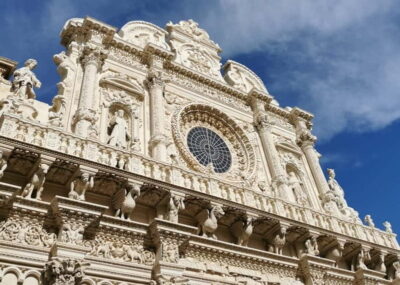
Baroque Architecture and Underground Walking Tour
Read our review →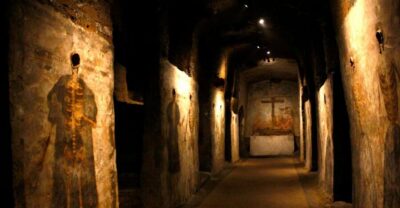
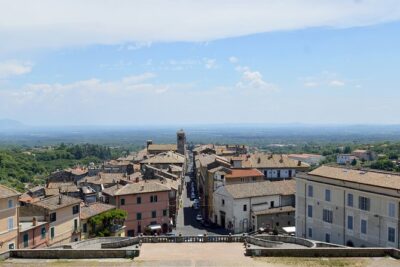
Caprarola: Villa Farnese, masterpiece of Renaissance architecture
Read our review →
Best of Bologna in one day : Food, architecture, art and history
Read our review →
City Walk with Architect: Private walking tour of Rome
Read our review →
Private Tour: Venice Art and Architecture Walking Tour
Read our review →
Basilica San Marco and the Pala d’Oro with Architect Guide
Read our review →Browse the lists this tour appears in