
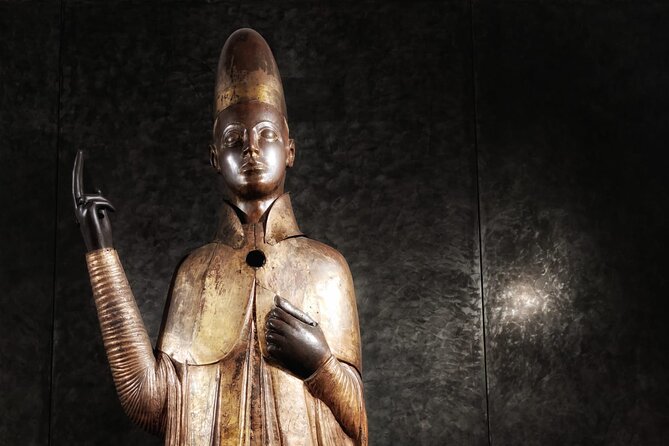
Review · HISTORICAL TOURS
Best of Bologna in one day : Food, architecture, art and history
Bologna reveals its best side when art, food, and history are kept together. This private seven-hour walking tour moves from Piazza Maggiore and its medieval churches to the city’s old market, then finishes with mortadella, Parmigiano Reggiano, tagliatelle, lasagna, and a short pasta lesson.
I like the range: you see major works by Michelangelo, Nicolò dell’Arca, Raphael, and the Carracci family, yet also visit quiet corners such as the Canale delle Moline. I also like the way Riccardo Bacchi ties paintings and buildings to Bologna’s food traditions. The tradeoff is a fast pace and a lot of information, so this suits curious, attentive walkers more than anyone seeking a relaxed stroll.
Key points
- A full day of Bologna’s major sights: Piazza Maggiore, Santo Stefano, San Domenico, the Archiginnasio, and the Pinacoteca Nazionale all fit into one route.
- Riccardo Bacchi leads with art and history: His background as a university professor gives the tour a classroom-like depth, but with the city as your setting.
- The food stop is substantial: Expect tastings of cured meats, pasta, cheeses, lasagna, balsamic vinegar, and other local specialties.
- You get more than the usual postcard views: The route includes frescoed rooms, an anatomical theatre, hidden canals, cloisters, and lesser-known religious spaces.
- Comfortable shoes matter: Nearly everything is on foot, and the day moves quickly from one stop to the next.
- Best for a first or short visit: It gives you a strong working picture of Bologna in one day, with ideas for what to revisit later.
Why this Bologna tour covers so much
At $174.69 per person, this is not a budget walking tour. It is a private experience, however, so only your group takes part. That changes the value considerably. You are not simply paying for a route through the center. You are paying for a guide who can connect Bologna’s art, architecture, religion, university life, and food culture in one continuous story.
Riccardo Bacchi is the key part of that equation. He is described as a university professor and brings the teaching habits of an art historian to the streets. You should expect detailed explanations, small visual clues, and plenty of context about medieval and Renaissance Bologna.
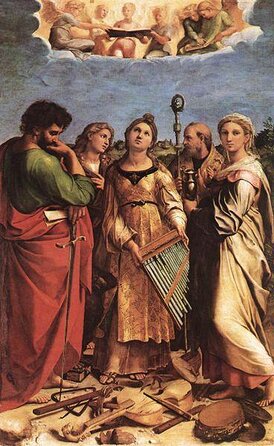
The tour is also unusually broad. Many city walks focus on Piazza Maggiore, the Two Towers, and a market tasting. This one adds the Pinacoteca Nazionale, the Archiginnasio’s anatomical theatre, San Domenico’s sculpture and choir, the Oratory of Santa Cecilia, and the unusual complex of Santo Stefano.
That breadth is useful if you have only a day or two in Bologna. It also means you need to stay engaged. One person described the material as a lot to absorb, and that is fair. Riccardo’s style is enthusiastic and highly detailed. If you want a light introduction with a few amusing stories, this may feel intense. If you enjoy asking questions and following a long thread from Romanesque sculpture to Bolognese pasta, it offers excellent value.
More Food and Drink Tours in Italy:
- Chicago in a Day: Food, History & Architecture Walking Tour
★ 5.0 · 1,153 reviews - Miami Beach Food and Art Deco Walking Tour
★ 4.5 · 245 reviews - South Beach Food & Fun Art Deco Miami Food Tour
★ 5.0 · 138 reviews
Piazza Maggiore and Bologna’s civic heart
The day starts at Bar Vittorio Emanuele on Piazza Maggiore, a practical meeting point in the city center. The opening section takes about 40 minutes and introduces the buildings that made Bologna a major medieval and civic center.
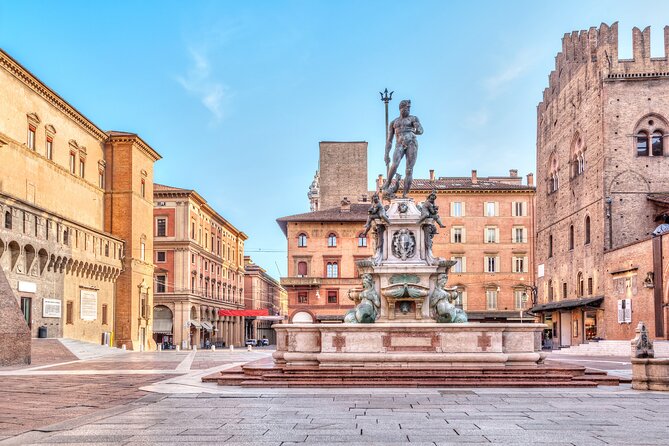
You look at the Fountain of Neptune, the Palazzo Comunale, and the Basilica of San Petronio. The square also contains terracotta sculpture by Nicolò dell’Arca, whose expressive figures are among the city’s most memorable works.
The Palazzo Comunale adds an interior dimension. You visit frescoed rooms and see the grand staircase associated with Bramante’s horses. These rooms help explain how Bologna’s public power was displayed through decoration, scale, and ceremony.
I like beginning here because you get the city’s basic vocabulary right away: red brick, arcades, religious authority, civic government, and terracotta sculpture. The guide can point out details you might pass without noticing. The only caution is that this is just the first major stop, and the day keeps moving.
Santo Stefano and the city’s layered churches
Piazza Santo Stefano receives about 20 minutes, followed later by a longer visit to the Basilica-Santuario di Santo Stefano. The two entries refer to the same historic complex from different parts of the day, so you should think of this as a return visit rather than two unrelated churches.
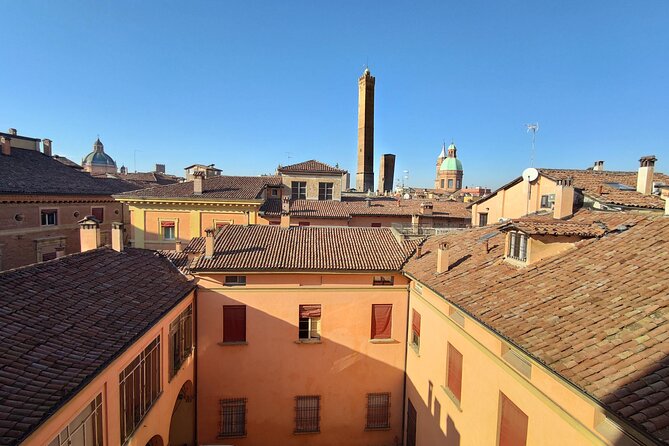
The complex is one of Bologna’s most unusual architectural experiences. It brings together early medieval and Romanesque buildings, Gothic additions, frescoes, porticoes, spiral staircases, and a terrace with views toward the towers and rooftops.
The later 40-minute visit focuses on the complex’s connection to the Holy Sepulcher in Jerusalem. That idea gives the buildings a strong symbolic purpose, and the layered spaces reward a slower look. You may notice how the route shifts from grand public squares to enclosed courtyards and small devotional rooms.
This is one place where Riccardo’s historical background matters. Santo Stefano can seem like a collection of old buildings if you visit alone. With a clear explanation, its design and religious purpose become easier to follow.
Nicolò dell’Arca’s dramatic Lamentation
At Santa Maria della Vita, you spend about 20 minutes with a Baroque church and the famous Lamentation by Nicolò dell’Arca. The terracotta group shows mourners gathered around the dead Christ, with an emotional force that can surprise you after the formal grandeur of Piazza Maggiore.
This is not a large stop, but it is an important one. Bologna’s terracotta tradition appears again, now in a work built around grief, movement, and human expression. Riccardo’s art-focused approach helps place the sculpture within the city’s larger artistic story.
If you prefer long museum visits, 20 minutes may feel brief. If you are seeing many sites in one day, the short format keeps the route moving without reducing the work to a passing glance.
More Food Tours in Italy:
- Chicago: Food, History and Architecture Tour
★ 4.8 · 104 reviews - Chicago in a Day: Food and Architecture Private Walking Tour
★ 5.0 · 53 reviews - New York City: Flatiron Food, History, and Architecture Tour
★ 4.8 · 43 reviews - South Beach Food Tour- Culinary & Art Deco & History
★ 5.0 · 22 reviews
The Archiginnasio and Bologna’s university story
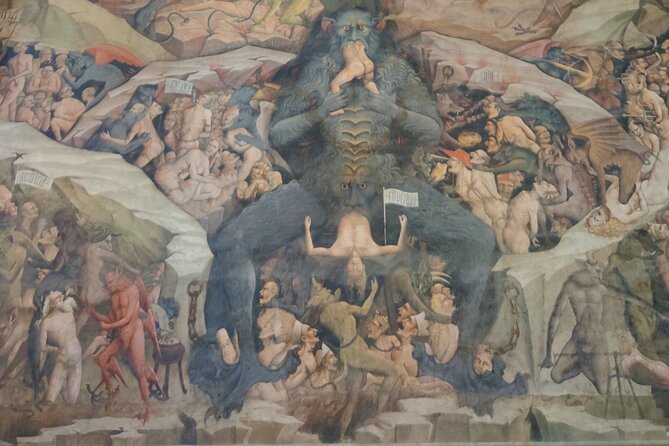
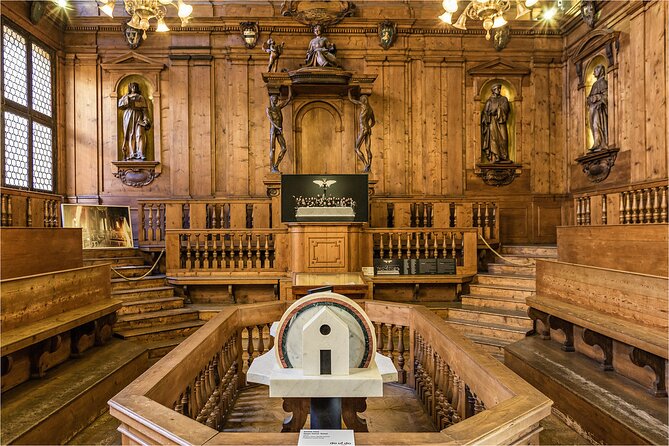
The Archiginnasio takes about 20 minutes and offers one of the day’s most distinctive interiors. This Renaissance and Baroque palace was built for the University of Bologna, one of Europe’s oldest universities.
Inside, frescoes, heraldic decorations, historic books, and carved wood create a very different mood from the open squares. The wooden anatomical theatre is the main draw. It gives you a direct sense of how medicine was taught and displayed in an earlier age.
This stop is especially useful if you are interested in science, medicine, or university history. One past participant with those interests found it a highlight, and I can see why. The room is not just decorative. It shows how learning, ceremony, and public status were tied together.
The 20-minute timing is enough for orientation and explanation, but not for a detailed study of every fresco or book. Treat it as a focused introduction, then return later if you want more time.
Bologna’s major paintings at the Pinacoteca Nazionale
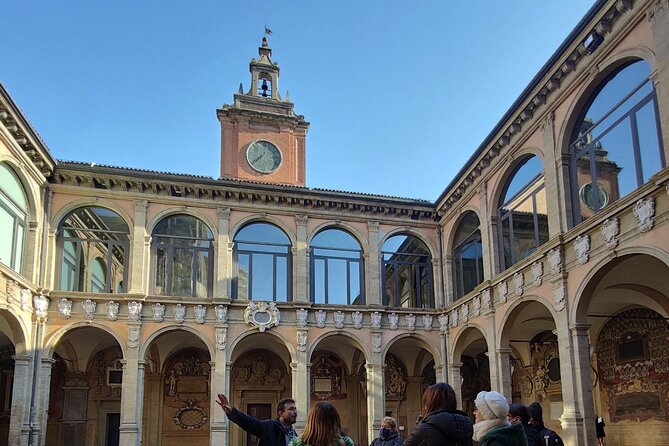
The Pinacoteca Nazionale receives about 40 minutes, making it one of the longer cultural stops. Its collection ranges from Giotto and Raphael to Titian, Guido Reni, Parmigianino, the Carracci family, and Guercino.
You also encounter artists connected with Bologna and Emilia-Romagna, including Ercole de Roberti and Vitale da Bologna. This gives the museum a useful regional focus rather than presenting Italian art as a simple parade of famous names.
Forty minutes is enough to understand the collection’s broad development and see selected major works. It is not enough for every gallery. I would think of the visit as a guided survey, not a complete museum day.
For many people, this will be the most demanding part of the tour. The architecture stops can be understood through space and decoration. A painting museum asks you to compare periods, techniques, and subjects in quick succession. Riccardo’s explanations help, but you should be ready to concentrate.
The Quadrilatero, where history becomes lunch
The Quadrilatero is Bologna’s old market district, filled with traditional food shops, taverns, and historic stalls. The route gives you about 40 minutes here before the longer tasting at Bruno e Franco, La Salumeria.
This is where the tour’s art and history become edible. The market is not treated as a generic food stop. It is presented as part of Bologna’s identity, with the old center still linked to the products and habits of Emilia-Romagna.
The tasting includes figs with Parma ham, culatello, salami, mortadella, pasta, Bologna-style meatballs with peas, tagliatelle with ragù, Parmigiano Reggiano aged three to four years, traditional green lasagna, and Modena balsamic vinegar aged up to 24 years. The list is generous enough to function as a substantial meal for many people, though the experience is described as tastings rather than a formal restaurant lunch.
This is one of the strongest value points in the $174.69 price. You get to sample several regional staples in one sitting instead of ordering full portions at multiple restaurants. It also gives you a chance to ask about ingredients and preparation while the food is in front of you.
Fresh pasta and the practical side of Bolognese food
After the tasting, the same salumeria hosts a 30-minute cooking class focused on pasta alla Bolognese. The lesson covers egg pasta used for tagliatelle, tortellini, lasagna, balanzoni, tortelloni, and passatelli.
Do not expect a full culinary school session in half an hour. Think of it as a compact demonstration and introduction to the role of fresh pasta in local cooking. The class gives the food portion more substance than a simple series of samples.
I like this pairing because you first taste finished dishes, then see how the pasta tradition begins. It also breaks up the art-heavy day with something practical and hands-on. If food is your main reason for visiting Bologna, this part may be the most immediately useful.
San Giacomo Maggiore and the Oratory of Santa Cecilia
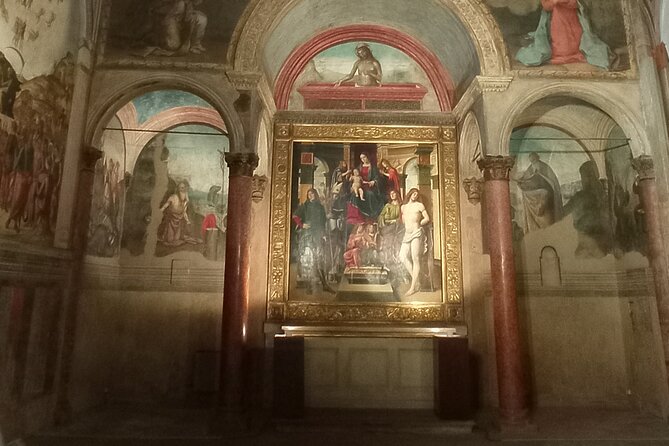
The Church of San Giacomo Maggiore takes about 40 minutes. It is described as an art-filled church with the Bentivoglio Chapel, an important work of the Emilian Renaissance.
The Oratory of Santa Cecilia adds frescoes and musical associations. Together, the church and oratory show how religious buildings could also serve as settings for family power, art commissions, and performance.
This stop is a good example of the tour’s approach. You are not only checking off a church. You are looking at the relationship between patrons, artists, religious spaces, and civic life. It is the kind of context that can be hard to assemble from a guidebook paragraph.
The Canale delle Moline and Bologna’s quieter side
The Canale delle Moline is a brief five-minute stop, but it changes the visual rhythm of the day. Bologna is known for its arcades and red buildings, yet its canals and water routes are easy to miss.
Here you may see towers, medieval houses, palaces, unusual architecture, old porticoes, and the city’s concealed waterways. The stop is short, so do not expect a long canal walk. Its purpose is to point out a less obvious part of Bologna and help you notice how much of the medieval city survives beyond the main squares.
This is also where a guide’s local eye adds real value. You might walk nearby on your own and never realize what is behind a wall or beneath a street-level view.
San Domenico, Michelangelo, and the medieval cloister
The Basilica of San Domenico receives about 40 minutes and is another major art stop. Its treasures include the Ark of Saint Dominic, with work by Nicola Pisano, Nicolò dell’Arca, and Michelangelo.
You also see an alchemical wooden choir, an organ associated with Mozart’s visits, and a Renaissance cloister. That is a lot to take in, but the combination makes the basilica memorable. Sculpture, music, religious ritual, and architectural space all meet in one building.
The mention of Michelangelo is not a loose connection. His work here is part of the Ark, and seeing an early sculpture by a famous artist within its original religious setting is more meaningful than seeing the name on a museum label.
As with the other churches, modest dress and respectful behavior are sensible. The tour data confirms that service animals are allowed, and the route is near public transportation, but most of the experience itself is on foot.
Pace, group size, and who should book
This is a private activity, so only your group participates. That makes it easier to ask questions and lets Riccardo respond to your interests. One participant received extra attention for science and medical history, while others valued photography tips and recommendations for a second day in Bologna.
The pace is fairly quick. Comfortable trainers or walking shoes are essential. You should also be ready for frequent transitions between outdoor streets, churches, museums, arcades, and food stops.
I would recommend this tour to first-time visitors, art lovers, history students, couples who want a full introduction, and anyone with only a short stay. It is also a good fit if you want a private guide rather than a large group.
I would hesitate to recommend it to someone who wants a slow morning, long café breaks, or extensive time in each museum. You will cover a great deal, but you will not linger everywhere.
Confirmation arrives when you book, and free cancellation is available up to 24 hours before the start time. Most people can participate, and the activity is offered in English. The tour starts and ends at Bar Vittorio Emanuele on Piazza Maggiore.
Should you book this Bologna experience?
Book it if you want Bologna explained rather than simply photographed. The strongest reasons are Riccardo Bacchi’s art and history teaching, the access to places that are easy to miss, and the unusually generous food section.
The price makes the most sense for a private group that values depth and convenience. You get roughly seven hours, museum and monument visits, a large tasting, and a pasta lesson. The main cost is your energy: the day is full, fast, and information-heavy.
If that sounds exciting, this is a strong way to get your bearings and understand why Bologna deserves more than a quick stop between larger Italian cities. If you prefer to wander slowly and choose only two or three sights, split the same places across several days instead.
FAQ
How long does the Bologna tour last?
The experience lasts approximately seven hours. The published stop times add up to slightly less than that, allowing for movement between locations and the full flow of the day.
Where does the tour begin and end?
It begins at Bar Vittorio Emanuele, Piazza Maggiore 1, Bologna. The activity ends back at the same meeting point.
Is this a private tour?
Yes. Only your group participates in the activity.
Is food included?
Yes. The food portion includes tastings at Bruno e Franco, La Salumeria, including cured meats, pasta, meatballs with peas, tagliatelle with ragù, Parmigiano Reggiano, green lasagna, and aged Modena balsamic vinegar. A short pasta-making class is also included.
Is the tour offered in English?
Yes. The experience is offered in English.
What happens if I need to cancel?
You can receive a full refund if you cancel at least 24 hours before the local start time. Cancellations or changes made less than 24 hours before the start time are not accepted for a refund.
More One-Day Tours in Italy
- Private Montserrat, Gaudi and Modernism Day Trip from Barcelona
★ 4.5 · 20 reviews
More History Walks in Italy
- Charleston’s Best Highlights: History, Culture & Architecture
★ 5.0 · 422 reviews - Palm Springs Modernism Architecture & History Bike Tour
★ 5.0 · 359 reviews - Charleston: History and Architecture Guided Walking Tour
★ 4.8 · 349 reviews - Historic Georgetown: History, Gossip, & Architecture Walking Tour
★ 5.0 · 321 reviews
Newly added in Italy
- Venice Art and Architecture Private Walking Tour★ 4.5 · 11 reviews
- Basilica San Marco and the Pala d’Oro with Architect Guide★ 4.5 · 19 reviews
- Walking tour in Venice with an architect★ 5.0 · 16 reviews
- Noto: Sicilian Baroque Architecture Guided Walking Tour★ 4.3 · 6 reviews
- LECCE: AMONG ARCHITECTURAL TREASURES IN THE LECCE BAROQUE★ 4.7 · 3 reviews
- Martina Franca: Baroque and Rococo Architecture Walking Tour★ 5.0 · 4 reviews
- City Walk with Architect: Private walking tour of Rome★ 5.0 · 22 reviews
- Private Tour: Venice Art and Architecture Walking Tour★ 4.0 · 22 reviews
Historical Tours, compared.
Chicago in a Day: Food, History & Architecture Walking Tour
Read our review →
Charleston’s Best Highlights: History, Culture & Architecture
Read our review →
Palm Springs Modernism Architecture & History Bike Tour
Read our review →
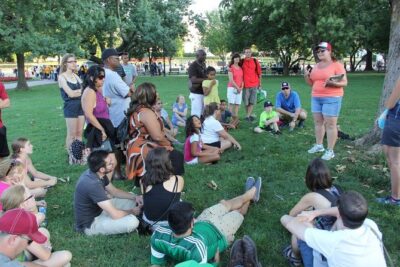
Historic Georgetown: History, Gossip, & Architecture Walking Tour
Read our review →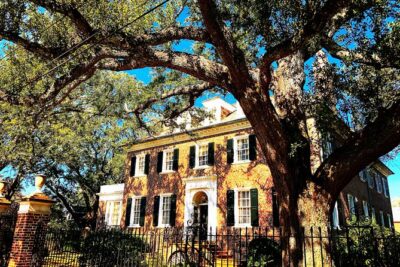
Charleston History, Homes, and Architecture Guided Walking Tour
Read our review →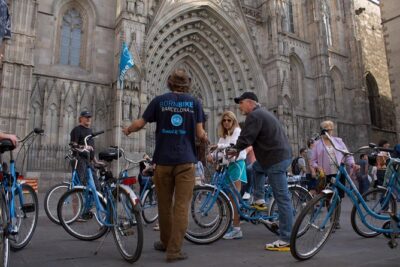
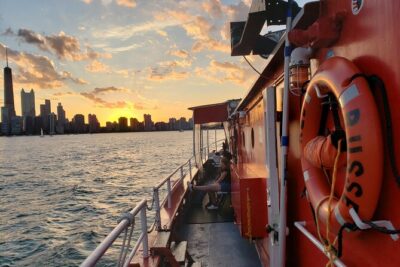
Historical and Architectural Chicago Fireboat River & Lake Cruise
Read our review →Browse the lists this tour appears in