
Review · BAUHAUS AND BRUTALIST ARCHITECTURE TOURS
Brutalist Skopje Architecture Tour
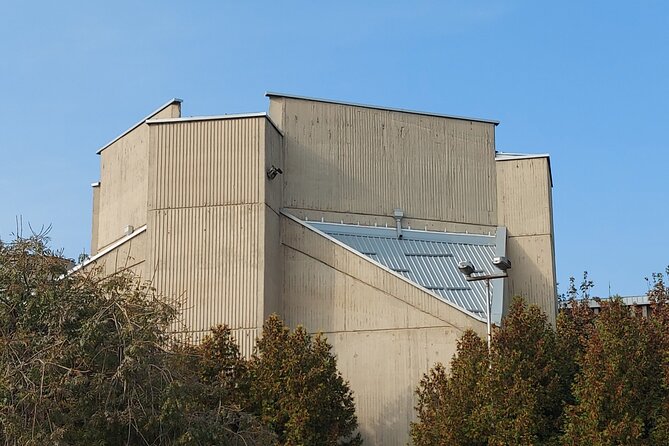
Skopje’s most revealing story is written in concrete and sharp angles. This three-hour private walk takes you beyond the usual monuments to buildings shaped by the 1963 earthquake and the bold rebuilding that followed. You’ll see a shopping center, post office, railway station, university, and opera house in one compact route.
I like the small private format, which gives you room to ask questions rather than keep pace with a large group. I also like that guide Elena brings personal knowledge to the walk, including her own connection to the university. The main consideration is simple: this is a specialized architecture tour, so it may feel less rewarding if you want a broad introduction to Skopje’s food, museums, or ancient sights.
Key points to know before you book
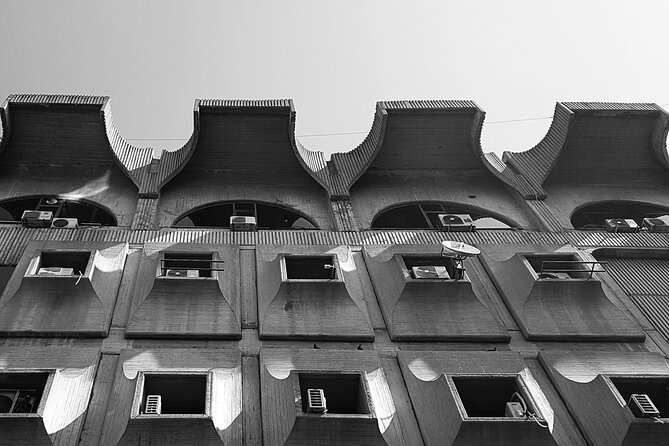
- Seven modernist landmarks: The route links GTC City Shopping Centre, Macedonia Square, the post office, railway station, university, student dormitory, and opera house.
- A private walk for up to three people: Your group has the guide to itself, which is useful for questions and a relaxed pace.
- Guide Elena adds local perspective: She can explain the city with personal experience, including time spent at the university.
- Three hours on foot: The stops are short, but the tour gives you a focused look at a distinctive side of Skopje.
- Ends at the Opera and Ballet: The final stop puts you near the riverfront and central Skopje sights.
- Best for curious architecture fans: You’ll get more from this tour if postwar design, city planning, and local stories interest you.
Why Skopje’s concrete architecture deserves your time
Skopje can surprise you. Many first-time visitors expect Ottoman-era streets, old stone bridges, and grand national monuments. Those are part of the city, but another Skopje took shape after the 1963 earthquake, when much of the center had to be rebuilt.
This tour focuses on that later chapter. You move through buildings that show how planners and architects imagined a modern capital in the decades after the disaster. The result is a collection of heavy concrete forms, open public spaces, unusual curves, and large civic buildings that feel very different from the historic center.
I like this focus because it gives you a clearer way to read the city. Instead of seeing a strange-looking building and walking past, you can ask why it was built that way, what purpose it served, and how it fit into Skopje’s recovery.
The route also has a useful mix. You are not looking only at grand cultural buildings. You see places used for shopping, study, mail, transport, and student life. That makes the architecture feel connected to ordinary city life rather than trapped in a museum.
More Bauhaus and Brutalist Tours in the world:
- London: Brutalist Architecture & History Walking Tour
★ 4.8 · 42 reviews - Le Corbusier’s Chandigarh : A Complete Architecture Tour
★ 4.7 · 25 reviews - Architecture of New Belgrade – Brutalism Decoded
★ 4.5 · 24 reviews
Starting near GTC City Shopping Centre
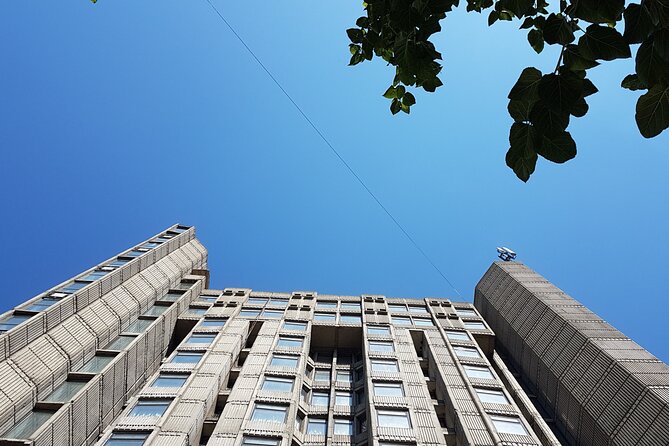
The tour begins at XCVJ+QXM on 11th October Street at 9:30 in the morning. The first stop is GTC City Shopping Centre, one of the older shopping malls in Skopje.
This is a sensible place to start. A shopping center may sound less exciting than an opera house, but it shows how modernist design entered daily life. You can consider the building as a piece of public architecture, not just a place to buy things.
The planned visit lasts about 10 minutes, so expect an introduction rather than a long interior inspection. Admission is free. The short stop also helps keep the walk moving, since six more locations follow.
For you, the practical advantage is orientation. You begin in a central part of Skopje and quickly see how the tour will work: a short explanation, time to look at the structure, then a walk to the next building.
Macedonia Square and the buildings that survived
The second stop is Macedonia Square, also about 10 minutes. Here, Elena points out buildings that survived the earthquake.
This stop adds an important contrast. The tour is not only about what was built after the disaster. It also helps you notice what remained, and how older buildings and later construction share the same central space.
Macedonia Square is one of the city’s key public areas, so it can also help you connect the architecture walk with the wider center of Skopje. You are not studying isolated objects. You are looking at how the city changed around them.
Because the stop is short, ask questions if you want more detail about a particular surviving building. A private tour gives you a better chance to shape the conversation around what catches your eye.
Goce Delcev State Student Dormitory
The student dormitory receives the longest stop so far, about 20 minutes. That extra time makes sense. A residence building offers a different view of modernist planning than a civic landmark or cultural venue.
The focus here is student life and the practical side of postwar construction. You can expect to examine a building designed for everyday use, where architecture had to serve many residents rather than impress only from a distance.
This is also one of the stops where Elena’s personal connection to the city matters. She studied at the university included later in the route, and her experience as a local guide helps connect the buildings to real life in Skopje.
Do not expect a formal interior tour unless the guide confirms access. The supplied details describe a visit to the dormitory, but they do not promise entry into private rooms or residential areas. Think of this as a guided look at the building and its role in the city.
A few more architecture walks in the world worth a look
- Chicago Architecture River Cruise
★ 5.0 · 15,756 reviews - Chicago River 90-Minute Architecture Tour
★ 4.5 · 9,629 reviews - Chicago River: 1.5-Hour Guided Architecture Cruise
★ 4.8 · 8,046 reviews - Chicago Architecture Center River Cruise aboard First Lady
★ 5.0 · 5,536 reviews
The unusual Post Office building
The Post of Macedonia post office is next, with about 10 minutes set aside for the visit. It is described as a unique building, and this is likely to be one of the tour’s most memorable stops for anyone who enjoys bold public architecture.
A post office may seem ordinary at first. Here, the building itself is the point. Public services once received major architectural attention, and the design shows how infrastructure could become part of a city’s identity.
The short timing keeps this from becoming a technical lecture. You’ll have enough time to see the form, hear why it matters, and ask a few questions. If you enjoy taking photographs, this is a place where the shapes and surfaces may reward a closer look, though the tour does not promise dedicated photography time.
Skopje Central Train Station and the earthquake story
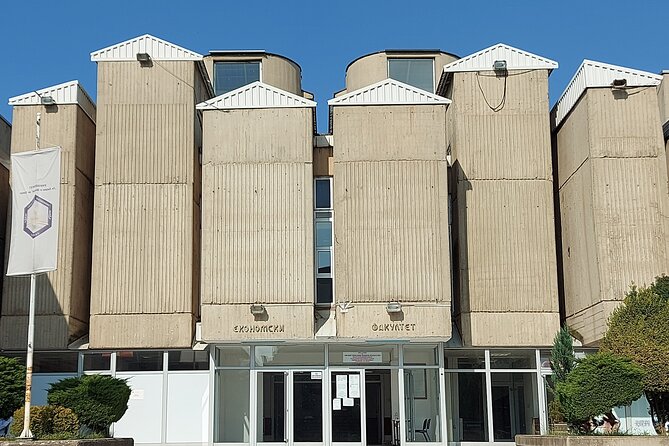
The walk continues to Skopje Central Train Station for about 15 minutes. Rail stations naturally connect a city to the wider country, so this stop adds a useful transport angle to the tour.
It also carries strong earthquake context. The station is one of the places where Skopje’s recovery can be understood through public infrastructure. You are looking at a building with a practical purpose, but also at a symbol of how the capital rebuilt its systems.
Again, the visit is brief. That is good if you want a compact introduction, but less ideal if you are hoping to explore every interior detail. The tour’s strength is its sequence. Each stop adds another part of the city’s story without asking you to spend a full hour at one building.
Ss. Cyril and Methodius University in Skopje
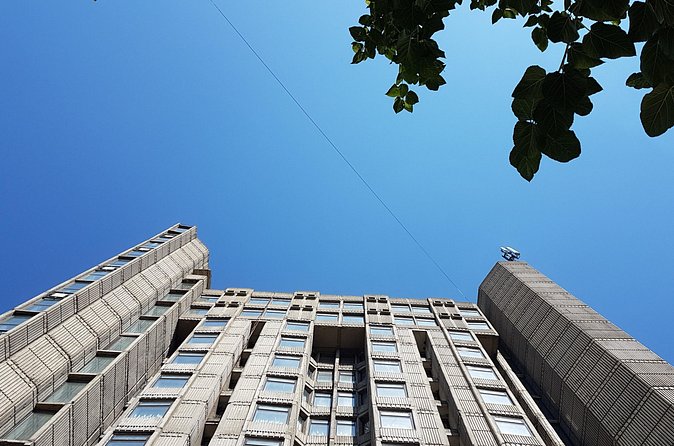
The university department is scheduled for about 15 minutes. This is one of the most personal parts of the route because Elena studied at the university herself.
That detail can change the feel of a building visit. Instead of only hearing dates and design terms, you may get a sense of how the space functions as a place of study. Elena is also described as willing to answer questions in detail, so this is a good point to ask about student life, the university’s role, or how local people view the buildings.
The tour does not specify which department you will enter or guarantee access to interior academic spaces. You should therefore treat this as a visit to the university building and its architectural setting, with the exact amount of interior access dependent on local conditions.
Finishing at the Macedonian Opera and Ballet
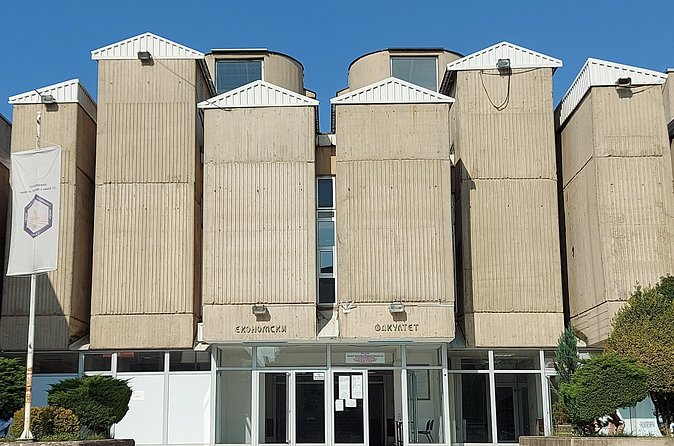
The final stop is the Macedonian Opera and Ballet, known locally as MOB, on Goce Delcev Boulevard. The scheduled visit lasts about 10 minutes, and the tour ends in front of the building.
Ending here gives the walk a strong final image. After seeing shopping, housing, mail, transport, and education buildings, you arrive at a major cultural venue. The sequence shows how modernist ideas reached nearly every part of civic life.
The end point is practical, too. You are not returned to the starting point, so plan your next move from the opera house. The tour provider gives the end address as Boulevard Goce Delcev 4 in Skopje. Since the tour is near public transportation, you can continue exploring from there, although the supplied information does not specify a particular bus or taxi route.
What the private format adds
The price is $169.38 per group of up to three people, not per person. That matters. A couple pays about $84.69 each, while three people pay about $56.46 each. For a solo visitor, the same group price is harder to justify, but for two or three people it becomes more reasonable.
You are paying for a private, English-language experience rather than a large group walk. The value comes from attention and flexibility. If you want to stop and ask why a building looks the way it does, or connect the university to Elena’s own story, a private setting is useful.
There are also limits. The tour lasts about three hours, but the listed visits total roughly 90 minutes. The remaining time is used for walking, explanations, and moving between sites. That is normal for a city walk, but you should not expect three full hours inside buildings.
The tour is offered in English and uses a mobile ticket. Confirmation arrives within 48 hours, subject to availability, so it is wise not to book it for the final morning of a tightly planned trip.
Who will get the most from this walk
I would choose this tour if you like architecture, urban planning, postwar history, or cities that do not fit a single visual style. It also suits repeat visitors who have already seen the main historic center and want a different way to understand Skopje.
The private setup works well for couples, friends, and families with older children who can handle a three-hour city walk. Most people can participate, and the route is near public transportation.
I would be more cautious if you want a general sightseeing tour. The route does not focus on restaurants, markets, museums, religious buildings, or a full history of North Macedonia. It has a narrow subject, and that is both its appeal and its limit.
Wear comfortable shoes and start with realistic expectations. The buildings are the main attraction, and some stops are viewed from outside or visited briefly. You will get the most from the experience by listening to the explanations and noticing how each structure serves a different part of city life.
Weather, cancellations, and timing
The tour requires good weather. If poor weather cancels it, you are offered another date or a full refund. It also requires a minimum number of participants, and a cancellation for that reason brings the same choice of another date, another experience, or a full refund.
You can cancel for a full refund up to 24 hours before the 9:30 a.m. start time. Cancellations or changes made less than 24 hours ahead are not accepted for a refund. The cut-off follows local Skopje time.
Morning is a good time for this route. Starting at 9:30 gives you a clear block before lunch, and the three-hour length leaves the afternoon open for other sights. Just allow time to find the precise meeting point on 11th October Street.
Should you book the Brutalist Skopje Architecture Tour?
Book it if you want to understand the Skopje that rose after the earthquake, not just photograph the city’s most famous squares. The route covers an impressive range of civic buildings, and Elena’s personal university connection gives the tour a human touch.
Skip it if your main goal is a broad first-day introduction or a slow visit inside major landmarks. The stops are short, access details are limited, and the subject is specific.
For two or three people who enjoy modern architecture, the group price is fair. For a solo visitor, I would book only if this subject is a real priority. If that sounds like you, this is a focused way to see a less obvious side of Skopje and leave with a better sense of how the city rebuilt itself.
FAQ
How long does the Brutalist Skopje Architecture Tour last?
The tour lasts approximately three hours, including the walking time between the seven scheduled stops.
Where does the tour begin?
The meeting point is XCVJ+QXM, 11th October Street, Skopje 1000, North Macedonia. The start time is 9:30 a.m.
Where does the tour end?
The tour ends in front of the Macedonian Opera and Ballet at Boulevard Goce Delcev 4, Skopje 1000, North Macedonia.
How many people can join the private tour?
The price covers one private group of up to three people. Only your group participates in the activity.
Is the tour offered in English?
Yes. The tour is offered in English and uses a mobile ticket.
Can I cancel for a full refund?
Yes. You can cancel at least 24 hours before the experience start time for a full refund. Changes or cancellations made less than 24 hours in advance are not accepted for a refund.
Newly added in the world
- Washington, DC: Georgetown Architecture Walking Tour★ 5.0 · 8 reviews
- Washington DC: Dupont Circle & Embassy Row Architecture Tour★ 5.0 · 6 reviews
- New Orleans : Garden District Architecture Walking tour★ 4.8 · 5 reviews
- Wilmington History and Architecture Tour★ 4.8 · 18 reviews
- Walk & Discover KL’s Architectural and Heritage Gems★ 5.0 · 7 reviews
- Unveiling Brno: History, Culture & Architectural Delights★ 5.0 · 2 reviews
- Vicenza: Palladian Architecture Private Walking Tour★ 3.3 · 3 reviews
- Private Colonial Williamsburg Architectural Tour★ 5.0 · 5 reviews
Bauhaus and Brutalist Architecture Tours, compared.
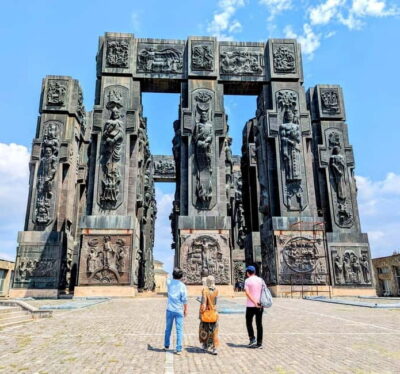
Brutalist Tbilisi: Urban exploration and untold stories
Read our review →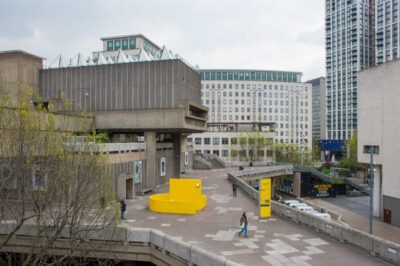
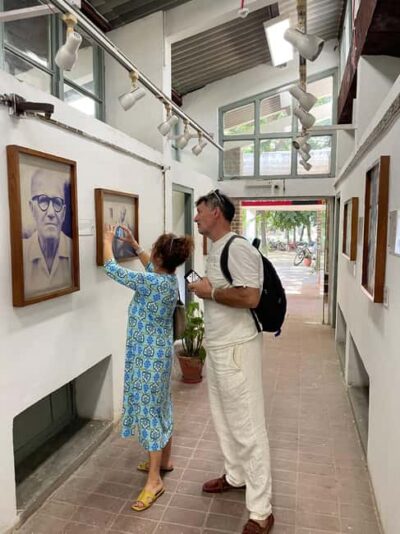
Le Corbusier’s Chandigarh : A Complete Architecture Tour
Read our review →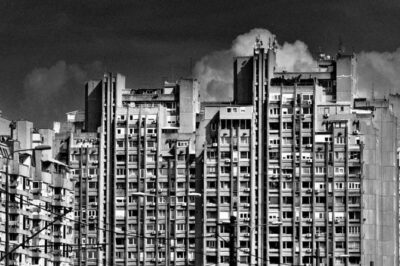
Architecture of New Belgrade – Brutalism Decoded
Read our review →
Secret Split: Socialist Architecture & brutalism – Urban Utopia
Read our review →
Tashkent Soviet Architecture (Modernism) and Subway station tour.
Read our review →
Space architecture tour – brutalist architecture
Read our review →
USSR History, Soviet Architects ,Statues & Mosaics
Read our review →Browse the lists this tour appears in