
Review · WALKING TOURS
Martina Franca: Baroque and Rococo Architecture Walking Tour
Martina Franca’s old town is a fine place to see how Puglia turned stone into theater. This two-hour private walk moves from grand palace rooms to narrow lanes, then on to Baroque churches and Rococo details around the historic center.
I like the route’s compact design, which gives you several major sights without wasting time on transport. I also like the private format and choice of five languages. Guides such as Lucia bring humor and perspective, while Silvia is praised for especially clear English.
The main consideration is the price: $326.26 per group, which is strong value for a larger party but costly for one or two people. Food, drinks, and hotel transfers are not included, and the walk ends where it starts.
Key points to know before you book
- Palazzo Ducale brings the 18th century indoors, with frescoes and formal rooms that add more than an exterior photo stop.
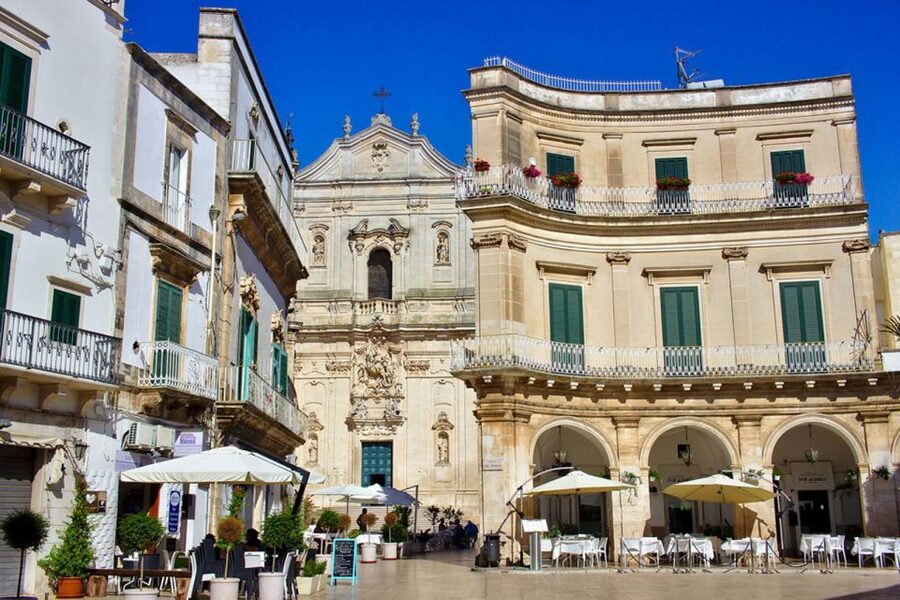
- St. Martin’s Basilica is the architectural centerpiece, with a bold Baroque facade and a place in Martina Franca’s civic life.
- The old-town lanes connect the sights naturally, so you get a walking tour rather than a string of disconnected stops.
- The private group format gives you a more personal pace, with no strangers added to your party.
- Lucia and Silvia are named guide options, with strong praise for Lucia’s humor and Silvia’s clear English.
- The tour works best for groups, since the flat price can be divided among as many as 25 people.
Starting under the Santo Stefano arch
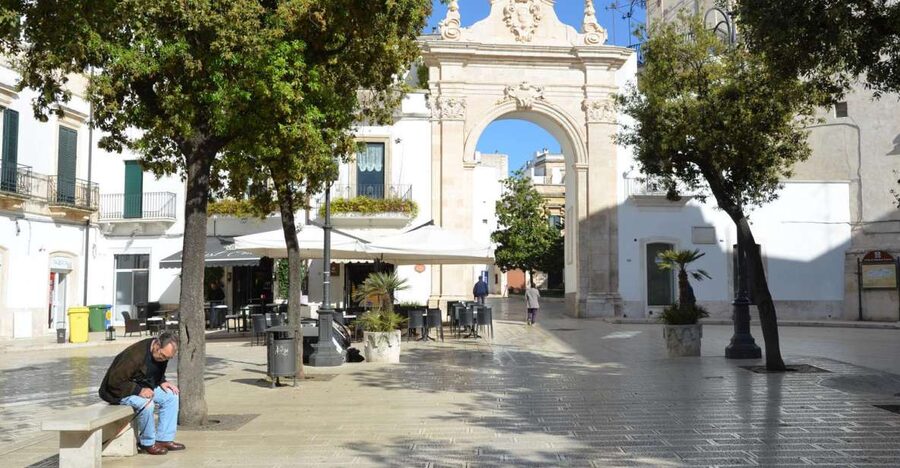
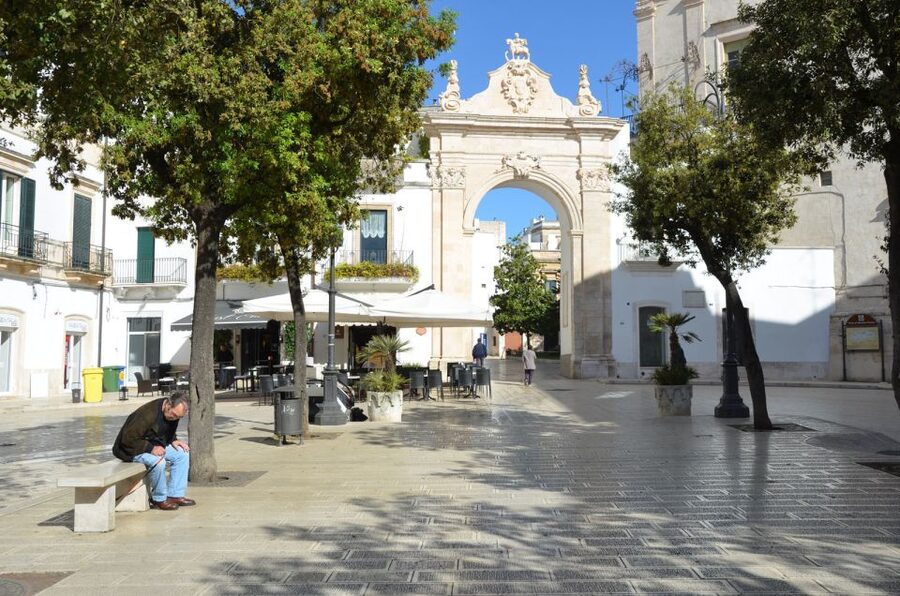
Your walk begins at Piazza XX Settembre, under the arch by Gate Santo Stefano. This is a practical starting point because the square leads directly toward Martina Franca’s old center, and the gate gives you an immediate sense of the town’s historic edge.
I like beginning here instead of meeting beside a single church. The route starts with the town as a place where people still pass through, gather, and move between neighborhoods. From the first minutes, you are walking into the center rather than simply being dropped at a monument.
Your guide will lead the private group from the gate toward Piazza Roma. Since the whole activity lasts only two hours, the timing matters. You will see a concentrated selection of Martina Franca’s main buildings, not every church or side street in town. That is a sensible trade for anyone who wants an introduction before exploring alone.
The guide’s role is important here. Architecture can turn into a blur of cream-colored stone and decorative fronts unless someone points out what you are seeing. Lucia is known for combining information with humor and a sense of perspective. Silvia is noted for clear English, which matters when the tour depends on architectural terms and historical explanation.
More Walking Tours in Italy
- Lecce: Baroque Architecture and Underground Walking Tour
★ 4.6 · 1,248 reviews - Experience Florence’s Art and Architecture on a Walking Tour
★ 5.0 · 318 reviews - Palermo: Art and Architecture Walking Tour
★ 4.7 · 136 reviews
Piazza Roma and the dolphin fountain
The route continues to Piazza Roma, where the fountain of the dolphins gives the tour one of its smaller but more memorable stops. Fountains often work as useful markers in an old town, and this one helps you read the square as part of Martina Franca’s public spaces rather than just as a backdrop for photographs.
I would pay attention to the relationship between the fountain and the surrounding buildings. On a guided walk, these details help explain how a town’s decorative style appears in everyday places, not only on major churches. The dolphin design also gives your guide something concrete to discuss before the route shifts to the much larger Palazzo Ducale.
The square is an easy place to pause and get your bearings. You can take photographs here, but do not let the camera keep you from looking upward. Martina Franca’s appeal comes from the way ornament appears across doorways, balconies, facades, and church fronts.
Palazzo Ducale and its 18th-century rooms
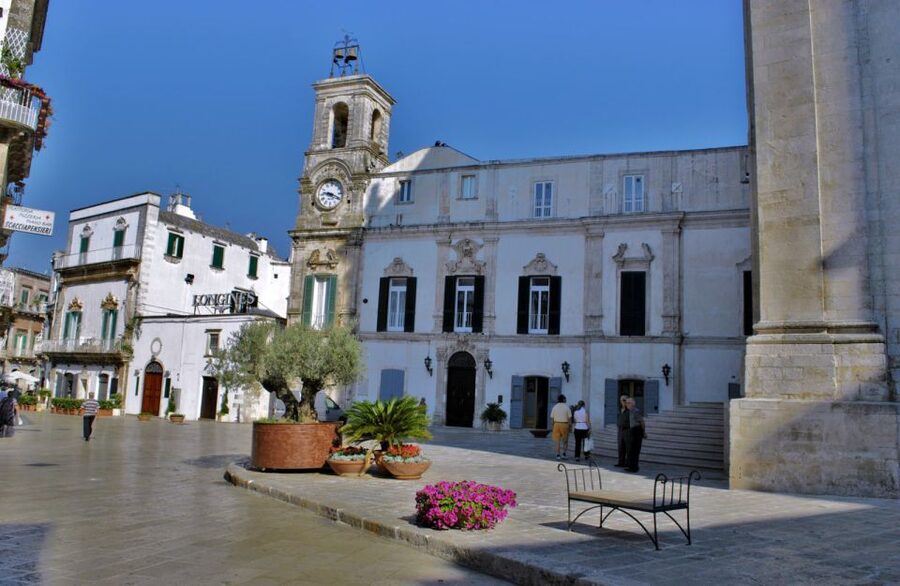
Palazzo Ducale is one of the tour’s most valuable stops because it lets you see the period style from inside. The visit includes 18th-century frescoes and stately rooms, giving you a look at the world behind the grand stone facades.
The palace helps make sense of Martina Franca’s Baroque and Rococo character. A church facade shows public religious drama. A palace adds the setting of official life, ceremony, and power. You get a fuller picture when the two appear on the same route.
I especially like this part for visitors who want more than a quick walk through pretty lanes. The frescoes give the guide a chance to explain how decoration was used across ceilings and formal interiors. The stately rooms also create a useful contrast with the tight lanes that follow.
Keep your expectations measured. This is a short city walk, not a long palace tour with hours of room-by-room explanation. The value comes from seeing Palazzo Ducale as one part of a wider architectural story. Your guide can connect the interior to the streets and churches outside, which is more useful than treating it as an isolated monument.
The old-town alleys and changing architectural styles
After Palazzo Ducale, the route turns into the alleys of Martina Franca’s old town. This is where the walk feels least like a checklist. The lanes bring you close to the surfaces of the city, with buildings appearing at different angles and decorative details revealing themselves as you move.
The Baroque style is often associated with movement, theatrical forms, and strong visual impact. Rococo is lighter and more playful in its ornament. You may not spot every distinction on your own, particularly when several styles share the same pale stone. A licensed guide can point out the difference and explain why a doorway, curve, balcony, or church detail matters.
I like having the narrow lanes placed between the larger sights. The sequence gives the tour a rhythm: square, palace, alley, piazza, basilica, then smaller religious buildings. It also keeps the experience rooted in Martina Franca as a town, rather than reducing it to a collection of grand facades.
There is a practical limit. The lanes can feel visually busy, and two hours pass quickly. If you want long stops for detailed photography or extended time inside each church, this route may feel brisk. If you want a well-shaped first look, the pace should suit you.
More Baroque Architecture Tours in Italy:
- Noto: Sicilian Baroque Architecture Guided Walking Tour
★ 4.3 · 6 reviews - LECCE: AMONG ARCHITECTURAL TREASURES IN THE LECCE BAROQUE
★ 4.7 · 3 reviews
Piazza del Plebiscito and St. Martin’s Basilica
The walk reaches Piazza del Plebiscito, home to the basilica dedicated to St. Martin. This is the architectural high point of the route and the place where Martina Franca’s Baroque identity comes through most strongly.
The basilica is described as an exceptional example of Baroque architecture, and the visit gives you a chance to study the building rather than simply pass it from the outside. The facade’s decoration and sense of movement show how religious buildings were designed to command attention in an urban square.
A guide adds real value here. Without context, Baroque churches can blend together after several days in Puglia. You will get more from the basilica if you listen for the choices in its design, the way the facade frames the entrance, and how the church relates to the piazza around it.
This stop also gives you a natural pause in the walk. Piazza del Plebiscito creates more breathing room after the old-town alleys. I would use the time to look back at the surrounding buildings, since the square shows how the basilica functions as part of the town rather than as a stand-alone attraction.
Immaculate Square and the Greek chapel
The final part of the route includes Immaculate Square and the Chapel of St. Nicholas of the Greeks. These stops add variety after the larger basilica. The chapel is especially useful for showing that Martina Franca’s religious architecture is not limited to one grand Baroque church.
The name of the chapel points to a Greek connection, and your guide can give that stop its proper context during the visit. The supplied information does not specify the chapel’s interior details or the exact length of time spent there, so I would treat it as a focused stop within the final section rather than expect a long independent visit.
Immaculate Square helps keep the tour connected to the town’s public spaces. Churches, chapels, squares, and lanes work together here. You are not only looking at individual buildings. You are seeing how architecture shapes the way people move through the center.
This is also where a good guide can make a difference. Lucia’s strength is perspective and humor, which can keep the final stops from feeling like an afterthought. Silvia’s clear English is useful if you want precise explanations late in a compact tour.
San Domenico and the walk back
The final visit is the Church of San Domenico. Its place at the end of the route gives you one more church facade and a chance to compare its style with St. Martin’s Basilica.
I like finishing with a second important church because comparison makes the architecture easier to remember. You can think back to the basilica, Palazzo Ducale, the chapel, and the smaller details seen in the lanes. The route has covered public, residential, palace, and religious settings in a short distance.
The activity ends back at the meeting point. That is helpful if you have left a car nearby or want to continue from a familiar location. Hotel pickup and drop-off are not included, so you need to make your own way to Piazza XX Settembre and arrange your onward plans.
The walk is listed as two hours, with starting times available according to the date you choose. I would allow a little extra time around the scheduled start if you need to find the arch, especially if you are arriving in Martina Franca for the first time.
What the private price really means
The cost is $326.26 for a group of up to 25 people. That flat structure changes the value dramatically depending on the size of your party.
For a full group of 25, the cost works out to about $13.05 per person. For five people, it is about $65.25 each. For two people, it is about $163.13 each. I consider the tour a much stronger buy for families, friends, or organized groups than for a couple traveling alone.
The private format is the key benefit. You are not sharing the guide with a mixed crowd, and your group can ask questions suited to your interests. The tour also avoids transport costs because it stays in the historic center and takes place on foot.
The price does not include food or drinks. That is not a serious drawback for a two-hour walk, but you should plan your own cafe stop before or after the activity. Hotel transfers are also excluded, so this is best for people already staying in or visiting Martina Franca.
Languages, timing, and who should book
The tour is offered with a live guide in English, Italian, Spanish, French, or German. Language choice can make a large difference on an architecture tour. You will get more from the churches and palace if you can follow explanations without having to translate in your head.
I would recommend this experience to:
- First-time visitors who want a clear introduction to Martina Franca
- Architecture fans interested in Baroque and Rococo buildings
- Families or larger groups that can divide the flat price
- People who prefer a private guide to a large scheduled group
- Visitors who want a short activity before exploring the town independently
I would be more cautious if you are traveling alone or as a couple and watching every euro. The per-person cost can be high at that group size. I would also choose a different plan if you want a long food experience, extensive museum time, or a full-day visit across the Itria Valley. This is a focused town walk, not a regional tour.
The cancellation terms are friendly: you can cancel up to 24 hours ahead for a full refund, and you can reserve now while paying later. Those conditions help if your Puglia schedule is still shifting.
Should you book this Martina Franca walk?
Book it if you want a private, guide-led introduction to Martina Franca’s Baroque and Rococo center, especially if you are traveling with several people. The route is well chosen, the language options are broad, and the mix of palace, basilica, chapel, church, squares, and lanes gives you a useful view of the town in two hours.
I would make the booking more readily for a larger group than for two people. If Lucia or Silvia is available in your preferred language, that is an appealing choice: Lucia brings humor and perspective, while Silvia offers clear English. For a compact architectural walk with a strong local focus, this is a sound way to get oriented before exploring Martina Franca on your own.
FAQ
How long does the Martina Franca walking tour last?
The tour lasts two hours.
Where does the tour begin?
It begins at Piazza XX Settembre, under the arch.
Where does the tour end?
The activity ends back at the meeting point.
Is this a private tour?
Yes. It is offered as a private group experience for up to 25 people.
What languages are available?
The live guide can conduct the tour in Spanish, English, French, German, or Italian.
What sights are included?
The route includes Gate Santo Stefano, Piazza Roma and its dolphin fountain, Palazzo Ducale, the old-town alleys, Piazza del Plebiscito, St. Martin’s Basilica, Immaculate Square, the Chapel of St. Nicholas of the Greeks, and San Domenico Church.
Is hotel pickup included?
No. Hotel pickup and drop-off are not included.
What is included in the price?
The price includes the two-hour walking tour and a licensed guide. Food and drinks are not included.
Newly added in Italy
- Venice Art and Architecture Private Walking Tour★ 4.5 · 11 reviews
- Basilica San Marco and the Pala d’Oro with Architect Guide★ 4.5 · 19 reviews
- Walking tour in Venice with an architect★ 5.0 · 16 reviews
- Noto: Sicilian Baroque Architecture Guided Walking Tour★ 4.3 · 6 reviews
- LECCE: AMONG ARCHITECTURAL TREASURES IN THE LECCE BAROQUE★ 4.7 · 3 reviews
- City Walk with Architect: Private walking tour of Rome★ 5.0 · 22 reviews
- Private Tour: Venice Art and Architecture Walking Tour★ 4.0 · 22 reviews
- Best of Bologna in one day : Food, architecture, art and history★ 5.0 · 27 reviews
Walking Tours, compared.
The Official Art Deco Walking Tour by The Miami Design Preservation League
Read our review →
Baroque Architecture and Underground Walking Tour
Read our review →
Chicago in a Day: Food, History & Architecture Walking Tour
Read our review →
Ramblas, Old Town, Gothic and Gaudi Architecture Walking Tour
Read our review →
Chicago’s Secret Interiors Architectural Walking Tour
Read our review →
Browse the lists this tour appears in