
Review · WALKING TOURS
Noto: Sicilian Baroque Architecture Guided Walking Tour
Noto is a city built for slow looking. Golden limestone, theatrical stairways, carved balconies, and church façades line the main streets, creating one of Sicily’s finest Baroque showpieces. This private two-hour walk takes you from Porta Reale to the cathedral, Palazzo Nicolaci, and several smaller landmarks that are easy to miss on your own.
I like the private group format, which gives the guide room to adjust the pace and explain details without a crowd pressing in. I also like the mix of major sights and smaller stops, from the grand Cathedral of San Nicolò to the Loggia del Mercato and Fountain of Hercules. The main consideration is price: at $346.65 for up to 25 people, it makes the most sense for a group, not a solo visitor or couple.
Key points to know before you book
- Start at Porta Reale: Enter Noto’s historic center through the grand gate beside the Church of St. Francis.
- See the city’s Baroque core: The route includes Palazzo Ducezio, San Nicolò Cathedral, Palazzo Nicolaci, and Santa Chiara.
- Look up at the balconies: Palazzo Nicolaci is famous for limestone masks, animals, figures, and other carvings.
- Allow for stairs and walking: The route includes a church staircase and a two-hour walk through the main streets and lanes.
- Choose English or Italian: A licensed guide leads the private group, with a visible license badge.
- Watch the value: The fixed group price becomes more reasonable when divided among a larger party.
Why Noto’s Baroque style feels so theatrical
Noto is not a city of quiet, restrained façades. Its Baroque architecture uses movement and decoration at every turn. You will see stairways rising toward churches, statues peering down from ledges, curved lines, heavy ornament, and warm limestone that changes color as the sun moves.
That stone is one reason the city feels so unified. Many of the main buildings share the same honey-colored material, so the streets can look almost painted in late afternoon. The effect is especially strong around Piazza del Duomo, where the cathedral and civic buildings face one another across an open urban stage.
A guided walk helps because Noto’s decoration can become visual overload. Without context, you may notice only that everything is ornate. With a guide, you can pay attention to how churches, palaces, public buildings, balconies, and fountains work together to shape the city.
The tour also gives you a useful sense of scale. Noto’s central sights are close together, but the city is more than a string of photo stops. The route shows how religious power, civic government, theater, commerce, and private wealth all found a place in the same Baroque center.
More Walking Tours in Italy
- Lecce: Baroque Architecture and Underground Walking Tour
★ 4.6 · 1,248 reviews - Experience Florence’s Art and Architecture on a Walking Tour
★ 5.0 · 318 reviews - Palermo: Art and Architecture Walking Tour
★ 4.7 · 136 reviews
Beginning at Porta Reale and the Church of St. Francis
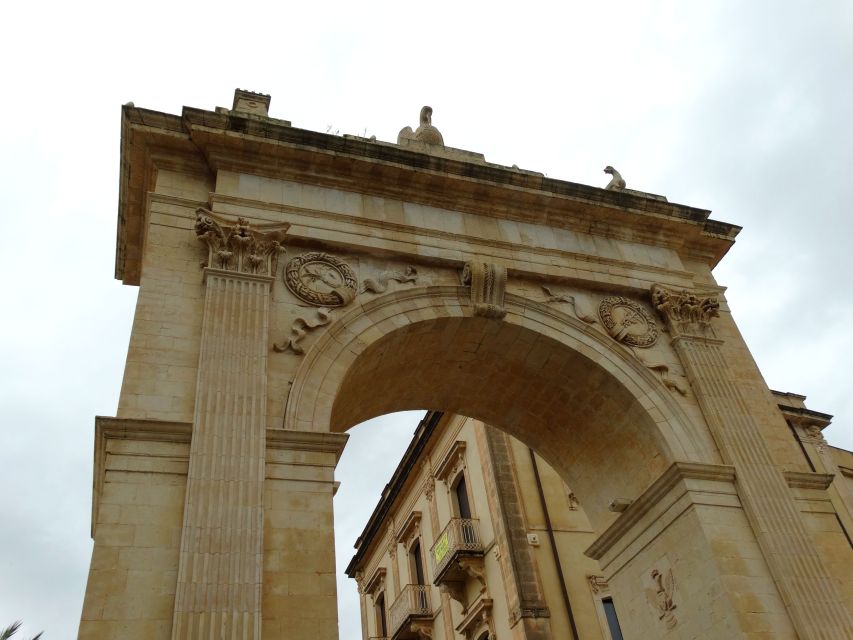
Meet your guide beneath Porta Reale, also called Porta Ferdinandea, at the entrance to the historic center. Look for the guide’s clearly visible license badge. This is a straightforward meeting point, and starting here gives the walk a strong sense of arrival.
The first stop is the Church of St. Francis of Assisi, reached by a handsome staircase beside the former Convent of the Holy Savior. The steps are not just a way into the church. They create a gradual approach, drawing your eye upward and making the building feel more imposing as you climb.
Inside, the church is known for frescoes and decorative details. This is a good early stop because it sets the tone for the rest of the walk. You begin with the relationship between architecture and ceremony, then carry that visual vocabulary into the streets.
If you have trouble with stairs, keep this point in mind before booking. The tour is not described as strenuous, but it does include stairways, regular walking, and church interiors. Comfortable shoes and comfortable clothing are sensible choices.
Santa Chiara and the details above eye level
A short walk along the main street brings you to the Church of Santa Chiara, next to a former Benedictine monastery. From outside, it may look like another attractive Baroque church. Inside, the details become more persuasive.
The columns are decorated with stucco, and statues of apostles and putti add movement to the interior. Look up and around rather than focusing only on the altar. In Noto, ornament often appears in places you might pass without noticing, especially around columns, arches, ledges, and ceiling areas.
Santa Chiara is a useful contrast with the larger Cathedral of San Nicolò. It feels more intimate, while the cathedral presents Baroque design on a much grander scale. Seeing both helps you understand that Noto’s style is not limited to one famous square.
The exact interior access can depend on church opening conditions, so you should allow the guide to manage the order of the visit. The planned route includes a visit inside Santa Chiara and the cathedral, but religious buildings can have changing access arrangements.
Piazza del Duomo and Palazzo Ducezio
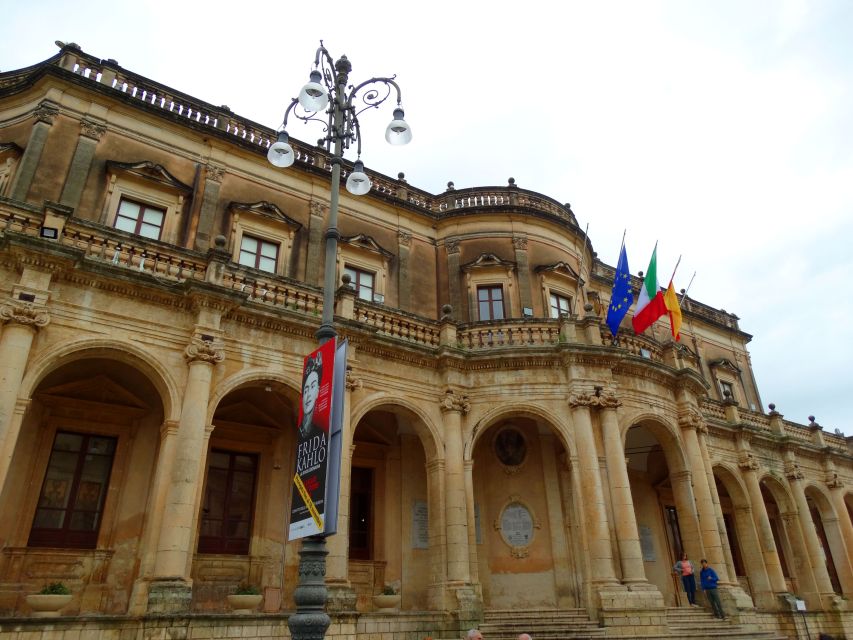
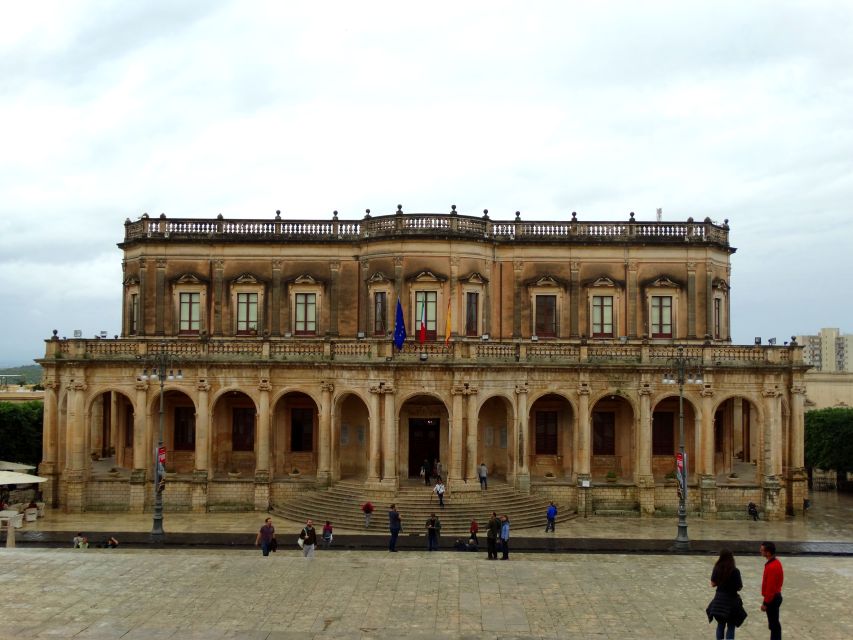
The walk continues to Piazza del Duomo, the city’s grand central space. Here, the focus shifts from church decoration to public power. Palazzo Ducezio, home of Noto’s Town Hall, faces the cathedral and was built between the 18th and 19th centuries.
The palace is more than a handsome façade. Its interior includes a frescoed roof and rooms with mirrors arranged to create visual illusions, making the spaces appear larger. This is a small but telling Baroque trick. The period was fond of display, surprise, and controlled illusion, and the mirrors let the building perform even when the room itself is not enormous.
I would pay attention to the relationship between Palazzo Ducezio and the cathedral. One represents civic authority, the other religious authority, and both use scale and decoration to make an impression. The square works because the buildings are not isolated attractions. They face each other as part of a carefully shaped public room.
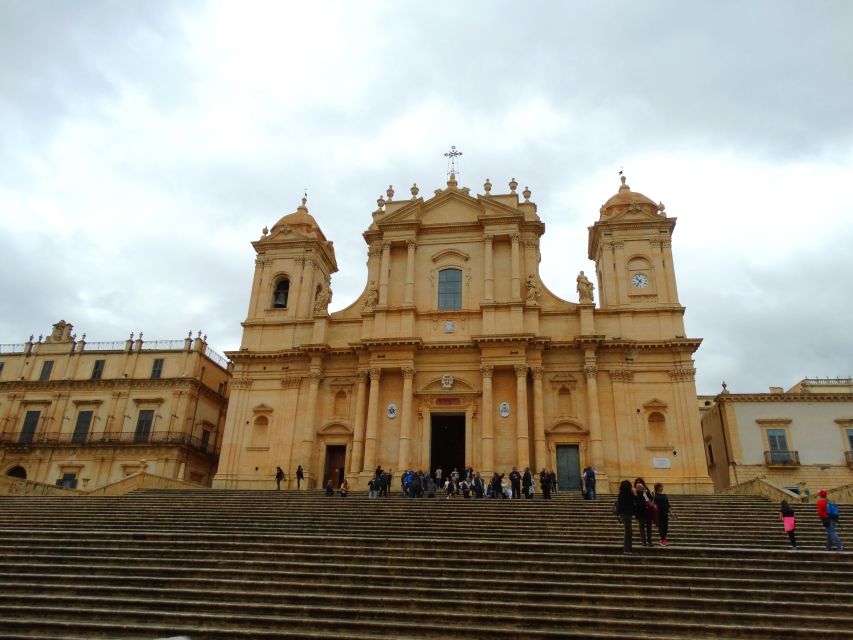
This is also one of the best spots for photographs, especially if you want a clear view of the cathedral façade and its monumental staircase. Your guide can help you read the square rather than simply point a camera at it.
More Baroque Architecture Tours in Italy:
- Martina Franca: Baroque and Rococo Architecture Walking Tour
★ 5.0 · 4 reviews - LECCE: AMONG ARCHITECTURAL TREASURES IN THE LECCE BAROQUE
★ 4.7 · 3 reviews
Entering San Nicolò Cathedral
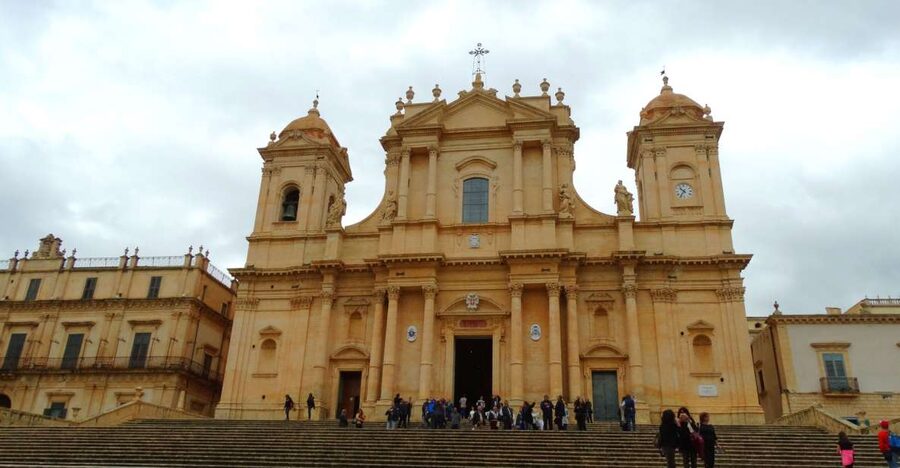
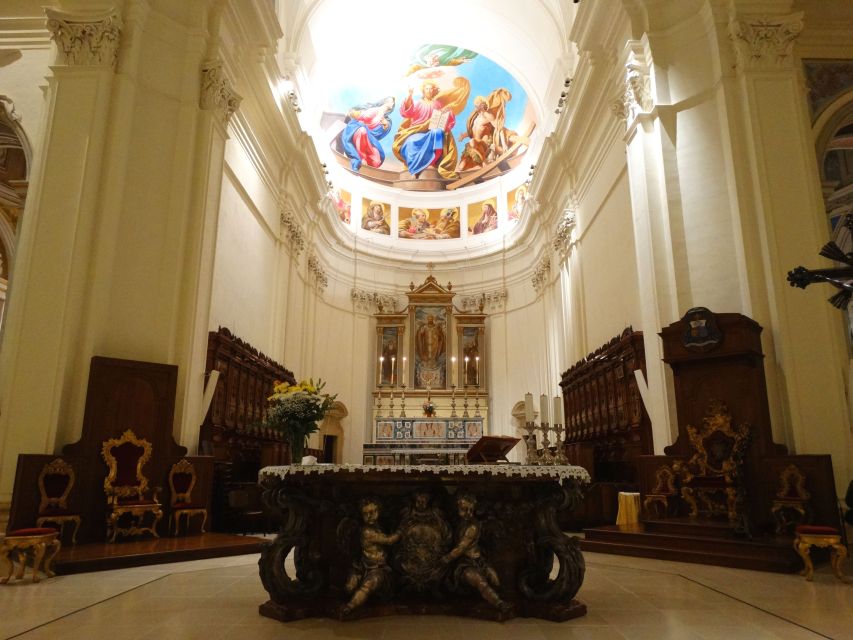
The Cathedral of San Nicolò is Noto’s most recognizable building. Its honey-colored façade rises at the top of a broad staircase, with two bell towers, one holding a bell and the other a clock.
The cathedral was built in the 18th century and has collapsed three times over time. It has been rebuilt, though many frescoes were lost. That information changes how you look at the interior. You are not seeing a perfectly preserved Baroque room. You are seeing a building that has been repaired and remade while retaining its central role in Noto.
The interior visit is an important part of the experience. The exterior is dramatic, but the inside gives you a clearer sense of the cathedral as a working religious space. The repeated rebuilding also makes the building a useful lesson in the limits of architecture. Stone can look permanent, but even monumental churches can be damaged, altered, and rebuilt.
The cathedral’s color is especially striking at sunset, when the limestone takes on a deeper golden tone. The tour lasts two hours and starting times vary, so you can check availability if the light matters to you. Do not assume every departure will catch sunset, but an afternoon or evening time may give the stone a warmer appearance.
Via Nicolaci and Palazzo Nicolaci’s comic balconies
From Piazza del Duomo, the route continues to Via Nicolaci, one of Noto’s best-known streets. This is where the Infiorata flower display is set up, creating a carpet of flowers along the road. The event attracts many visitors, but the street is worth seeing even when flowers are not being arranged.
Via Nicolaci is also home to Palazzo Nicolaci, one of the city’s most memorable private palaces. The lower parts of its balconies are decorated with limestone carvings of masks, animals, figures, and other imaginative forms.
Take time to look up. The carvings can be easy to miss if you hurry through the street, especially when you are focused on the cathedral or the broad view down the road. The balconies are not plain platforms attached to a palace. They are part of the spectacle, with expressive faces and creatures appearing to support or frame the building.
This is one of the most enjoyable portions of the walk for people who like unusual architectural details. Palazzo Nicolaci shows the playful side of Baroque design, while the cathedral shows its grand and formal side.
The tour visits the palace externally, so do not book this expecting a full interior tour of Palazzo Nicolaci. Its façade and balconies are the main attraction here.
The Loggia del Mercato and Noto’s everyday side
The route leaves the most famous monuments behind for a look at the Loggia del Mercato. This wrought-iron loggia once served as Noto’s market and is now used for cultural events.
It is a valuable stop because it brings everyday life into a route otherwise dominated by churches, town halls, and aristocratic palaces. Markets are where architecture meets ordinary business, food, conversation, and local routines. Even if the market function has changed, the building still gives you a different view of the city.
The loggia also reminds you that Noto is not simply a museum of decorated façades. The city center has been used in different ways over time, and the tour makes room for those less grand but equally useful places.
Theater and the Fountain of Hercules
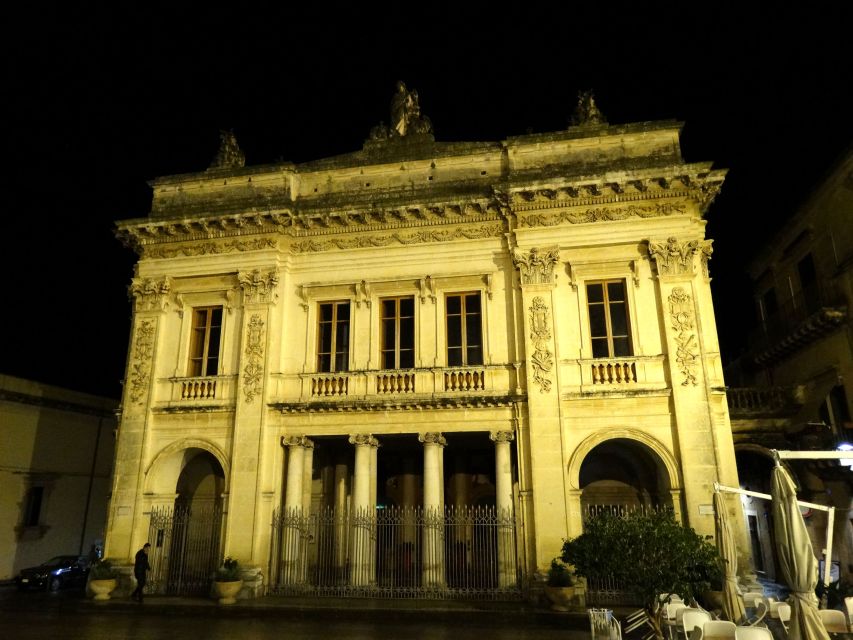
The final part of the walk brings you to the Tina di Lorenzo Theater and the Fountain of Hercules. The theater occupies an elegant Neoclassical building, offering a change of style after the heavier Baroque decoration seen earlier.
That contrast makes the stop worthwhile. Noto’s center is often presented as a single Baroque vision, but the theater shows that later architectural taste brought different ideas about balance and restraint. A good guide can help you notice the shift without turning the walk into a lecture.
The Fountain of Hercules, built in the 1700s, adds a final piece of civic decoration. Fountains helped give public streets and squares a focal point, and this marble example fits the city’s taste for sculptural detail.
The tour ends back at the meeting point under Porta Reale. That makes the route practical if you need to continue exploring the center on your own, return to a car, or meet your group nearby.
What the private price means for your group
The price is $346.65 per group of up to 25 people. That is not a low-cost walking tour for one or two people. For a full group, though, the per-person cost can become reasonable, especially if you want a private guide rather than a large shared group.
For example, a group of 10 pays about $35 per person. A group of 20 pays about $17 per person. The price is therefore best understood as a group fee, not an individual ticket.
The private format has another benefit. The guide can adjust the pace, answer questions, and respond to heat or shade needs more easily than on a crowded group departure. One guide, described as Elia, is noted for making the tour fit the time available and for choosing shaded places to pause on a warm day. Another praised guide is described as kind and attentive.
That detail matters in Noto, where the main streets can feel exposed under the Sicilian sun. You should still bring water and dress for walking, but a guide who watches the heat can make the two hours more pleasant.
Who will get the most from this walk
I would choose this tour if you want a clear introduction to Noto’s major architecture and prefer to have the city explained as you walk. It suits first-time visitors, architecture fans, couples traveling with friends, and families or private groups that want one shared activity.
It is also a good choice if you have only a short time in Noto. In two hours, you cover the major churches, the cathedral square, Via Nicolaci, a historic market loggia, a theater, and a fountain. You will not see every building in town, but you will leave with a strong map of the center.
The tour is less suited to someone who wants an unhurried museum visit or a long stop inside each church. The schedule includes many places, so the guide must keep the walk moving. It also may not be the best value for a single person or couple unless the convenience of a private guide matters more than cost.
English and Italian are available. The tour is led by a licensed guide, and the visible license badge makes the meeting process easier at Porta Reale.
Practical advice for making the walk comfortable
Wear shoes that handle stairs and paved streets. Comfortable clothes are recommended, and you should be prepared for a mix of outdoor walking and indoor church visits.
Because the walk includes several churches, dress respectfully. The supplied information does not give a specific dress code, so follow the usual approach for religious sites and avoid clothing that could cause an entry problem.
The tour is two hours, but the experience can feel full because the route includes many stops. If you want time for photographs, tell the guide early. A private group gives you more flexibility, but the guide still needs to cover the planned route.
You can cancel up to 24 hours before the activity for a full refund, and you can reserve now while paying later. Those terms are useful if your Sicily plans are still shifting.
Should you book the Noto Baroque walking tour?
Book it if you are traveling with a group and want Noto’s architecture explained in a focused, efficient walk. The route covers the buildings most people hope to see, while also adding Santa Chiara, the market loggia, the theater, and the Fountain of Hercules.
The strongest reasons to choose it are the private format, the named English and Italian guiding option, and the attention to pacing in hot weather. The main drawback is the fixed price for small parties. If you are alone or traveling as a couple, compare the cost carefully.
For a group of friends or family members, I think the value is much better. You get a licensed guide, interior visits to key churches, a close look at Palazzo Nicolaci’s extraordinary balconies, and a useful introduction to why Noto is considered the capital of Sicilian Baroque.
FAQ
How long does the Noto walking tour last?
The tour lasts two hours. Starting times vary, so you need to check availability when booking.
Where does the tour begin?
The meeting point is under Porta Reale, also called Porta Ferdinandea, at the entrance to Noto’s historic center. The guide will wear a clearly visible license badge.
Where does the tour end?
The activity ends back at the meeting point under Porta Reale.
Which languages are available?
The tour is available in English and Italian.
Is this a private tour?
Yes. It is a private group activity for up to 25 people.
What does the price include?
The price is $346.65 per group, up to 25 people, and includes a licensed tour guide. You should bring comfortable shoes and comfortable clothes.
Newly added in Italy
- Venice Art and Architecture Private Walking Tour★ 4.5 · 11 reviews
- Basilica San Marco and the Pala d’Oro with Architect Guide★ 4.5 · 19 reviews
- Walking tour in Venice with an architect★ 5.0 · 16 reviews
- Martina Franca: Baroque and Rococo Architecture Walking Tour★ 5.0 · 4 reviews
- LECCE: AMONG ARCHITECTURAL TREASURES IN THE LECCE BAROQUE★ 4.7 · 3 reviews
- City Walk with Architect: Private walking tour of Rome★ 5.0 · 22 reviews
- Private Tour: Venice Art and Architecture Walking Tour★ 4.0 · 22 reviews
- Best of Bologna in one day : Food, architecture, art and history★ 5.0 · 27 reviews
Walking Tours, compared.
The Official Art Deco Walking Tour by The Miami Design Preservation League
Read our review →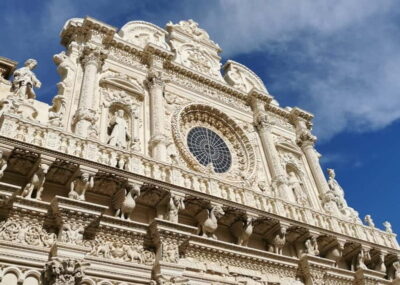
Baroque Architecture and Underground Walking Tour
Read our review →
Chicago in a Day: Food, History & Architecture Walking Tour
Read our review →

Ramblas, Old Town, Gothic and Gaudi Architecture Walking Tour
Read our review →
Chicago’s Secret Interiors Architectural Walking Tour
Read our review →
Browse the lists this tour appears in