
Review · ROTTERDAM ARCHITECTURE TOURS
Rotterdam: Architecture Highlights Tour including the Depot
Rotterdam’s best architecture is not tucked behind museum doors. It fills the streets, rises above the skyline, and sometimes opens up under your feet on a rooftop. This private walking tour connects the Markthal, Cube Houses, Central Station, and Depot Boijmans van Beuningen, while explaining why Rotterdam keeps rebuilding itself.
I like the small private group, which gives you room to ask about design, engineering, and city planning. I also like the rooftop access, with Timmerhuis on weekday tours and Het Witte Huis on weekends. The main drawback is pace: 2.5 hours on foot covers a lot, so it may feel brisk if you want long visits inside every building.
Key points at a glance
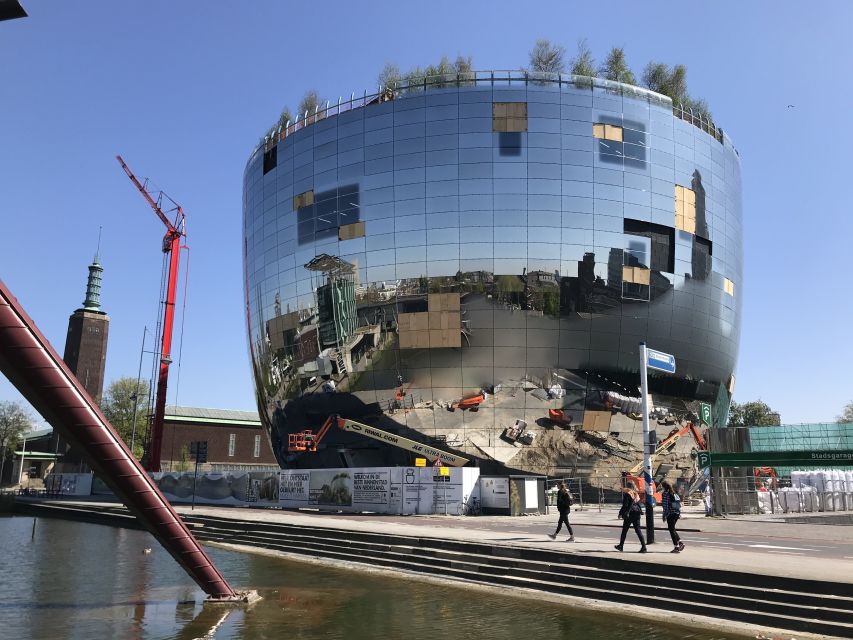
- See Rotterdam’s newest architectural showpiece: Study the curved, mirrored facade of Depot Boijmans van Beuningen and learn how its huge doors work.
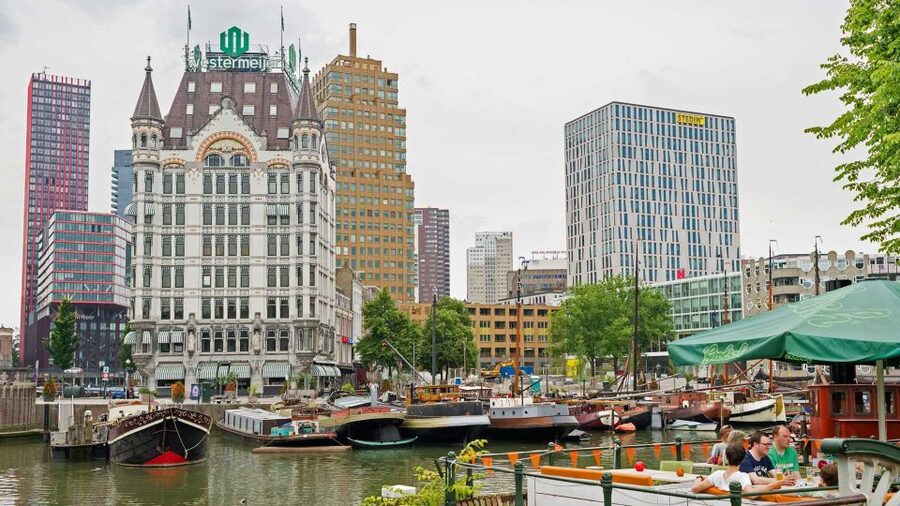
- Compare old and new Rotterdam: Move from the 19th-century Het Witte Huis to post-war offices, experimental housing, and OMA’s Timmerhuis.
- Choose your rooftop view by day: Weekday tours include a rooftop terrace near Grotekerkplein, while weekend tours visit the roof of Het Witte Huis.
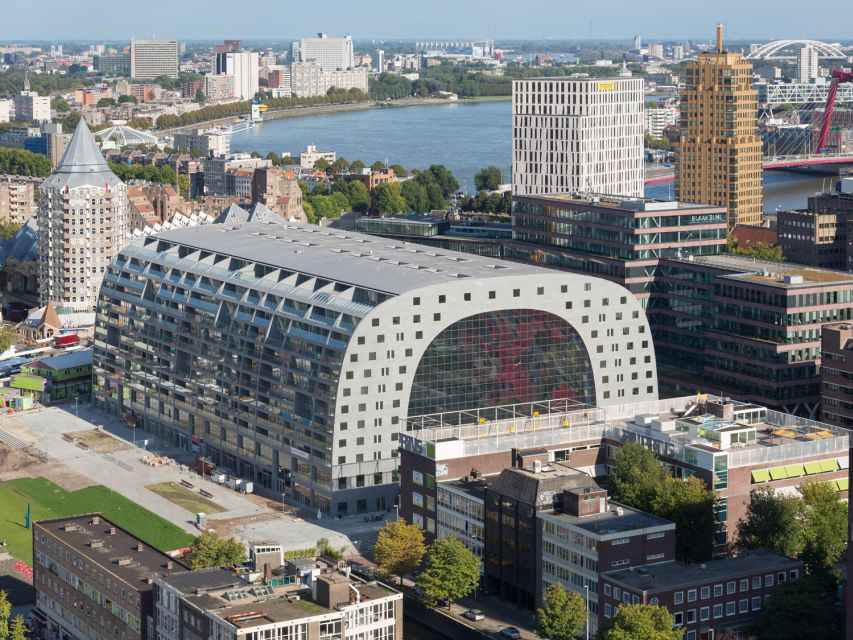
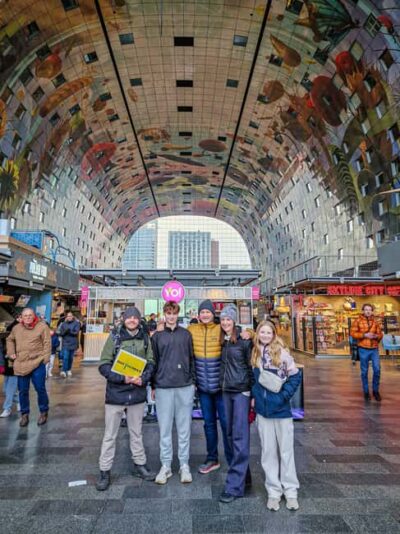
- Walk through the Markthal: Learn how apartments, food stalls, and public space share one giant horseshoe-shaped building.
- Get an architecture-focused guide: Frank Schipper has led groups through Rotterdam’s building history with a friendly, clear style.
- Keep the group personal: The tour is private for up to six people, with a local guide and three postcards by photographer Ossip van Duivenbode.
Why Rotterdam works so well for an architecture walk
Rotterdam gives you a rare chance to read a city through its buildings. The center combines old fragments, post-war repairs, large redevelopment schemes, and daring new designs. Instead of seeing architecture as isolated monuments, you watch the city change from one block to the next.
This tour focuses on that contrast. You may begin with Het Witte Huis, a landmark from an earlier Rotterdam, then move through the Markthal, Timmerhuis, Central Station, Museumpark, and Depot. The route shows how the city has used architecture to recover, modernize, and keep making room for new ideas.
I find this more useful than a tour that only points out famous buildings. You hear about the architects, but also about construction, structure, planning, and the way each building serves its neighborhood. That makes the walk a good introduction to Rotterdam before you explore the city on your own.
The private format matters here. With a maximum of six people, you can ask why a facade curves, how a tower handles its weight, or why a public square was designed in a certain way. German, English, and Dutch tours are available.
A few more architecture walks in Netherlands worth a look
- Rotterdam: Architectural Highlights Guided Walking Tour
★ 4.8 · 215 reviews - Rotterdam: Highlights, Gems, Architecture & History Walk
★ 5.0 · 191 reviews - Rotterdam Walk: Hilights, Gems, Architecture & WWII | 2 or 3hrs
★ 5.0 · 149 reviews
Rooftop views from Het Witte Huis or Timmerhuis
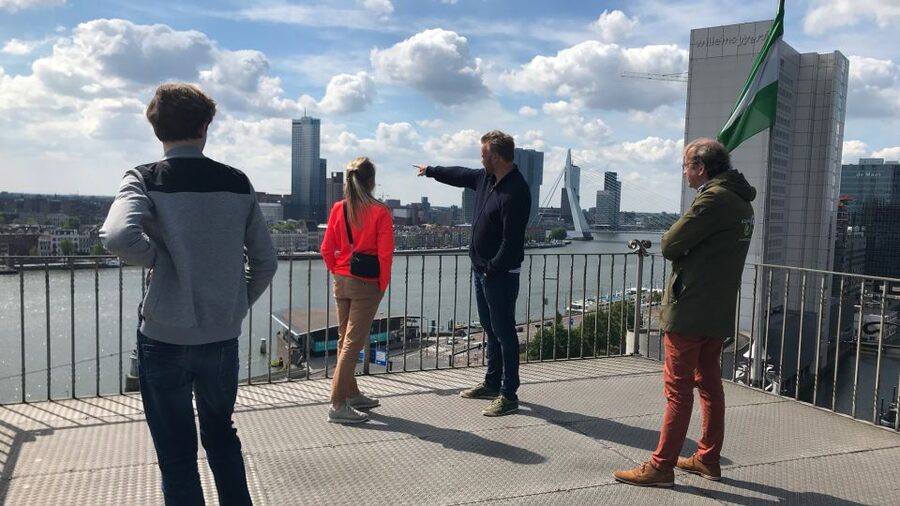
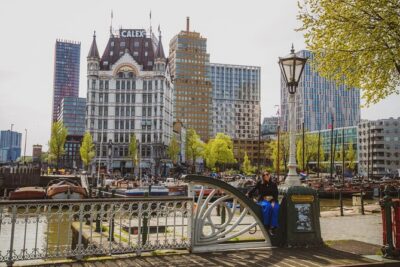
The rooftop portion changes according to the day of your booking. On weekends, the tour starts on the roof of Het Witte Huis. On weekdays, you visit a rooftop terrace near Grotekerkplein, connected with the Timmerhuis part of the route.
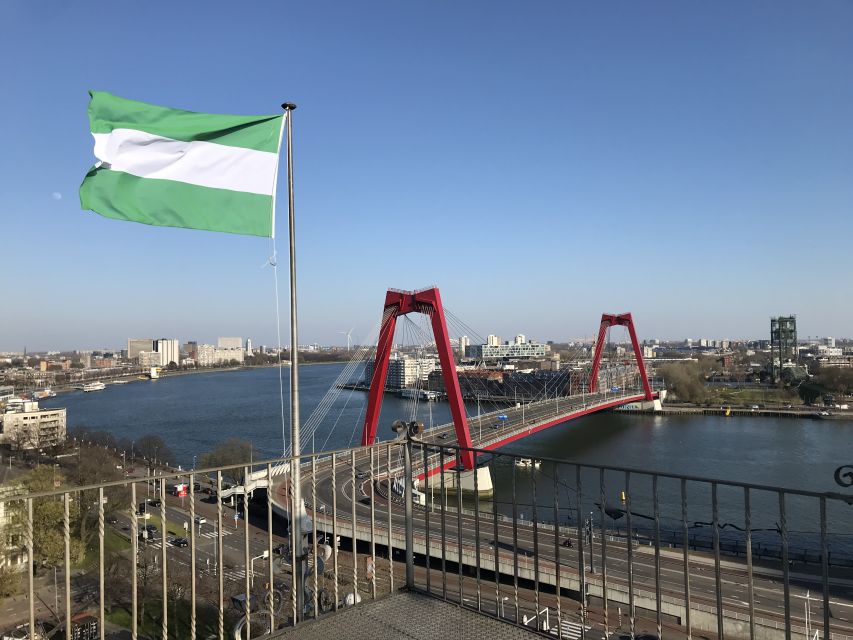
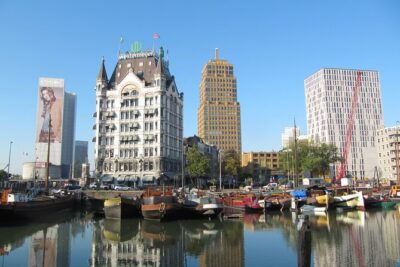
Het Witte Huis is especially useful for getting your bearings. From its roof, you can look toward the Markthal, Cube Houses, Erasmus Bridge, Willems Bridge, and De Rotterdam. These buildings represent several periods of Rotterdam design, so the view becomes a quick lesson in the city’s changing scale.
The building itself has an important place in Rotterdam’s story. It is described as Europe’s oldest skyscraper, and its early high-rise form gives you a useful comparison with the much larger towers nearby. The weekend rooftop visit is therefore not just a photo stop. It places modern Rotterdam beside one of its earlier tall buildings.
On weekday tours, the rooftop terrace near Grotekerkplein offers a different angle over the city center and Markthal. The tour also includes the recently refurbished Grotekerkplein, which has a public stage for music and dance. That connection between roof, square, and public life helps explain how Rotterdam uses open space as part of its architecture.
You should check the day before booking if the rooftop is important to you. The two options are not interchangeable, and the weekend tour gives you the Het Witte Huis view while the weekday version focuses on the Timmerhuis area.
Markthal and the practical side of bold design
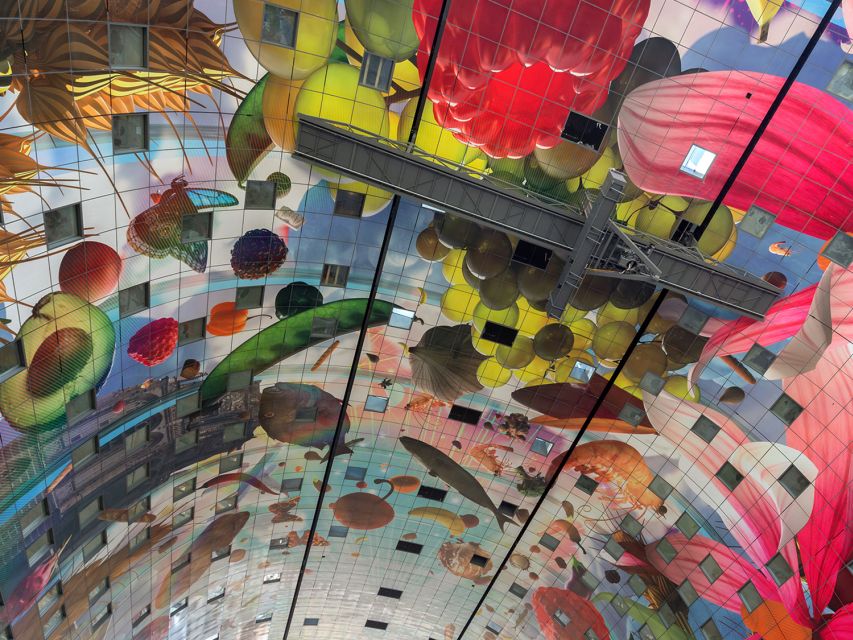
The Markthal is one of the route’s most memorable stops because it combines several jobs in one building. It is a food market, a public gathering place, and housing, all enclosed in one large arched form.
You walk directly through the market, rather than simply viewing it from outside. That makes the design easier to understand. The food scene gives the building everyday purpose, while the apartments show how Rotterdam has placed homes above and around public activity.
The colorful interior artwork draws attention, but the more interesting question is how the building functions. A market needs open public space. Housing needs privacy and a strong structure. The design brings both together in a single concept.
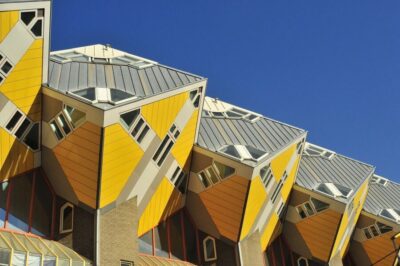
The tour also includes a 50 percent discount on entry to the Cube Houses. That discount is useful if you want to continue exploring Rotterdam’s experimental housing after the walk. The tour itself does not list Cube House entry as included, so plan on paying for that separately after using the reduced price.
Timmerhuis and the city’s layered center
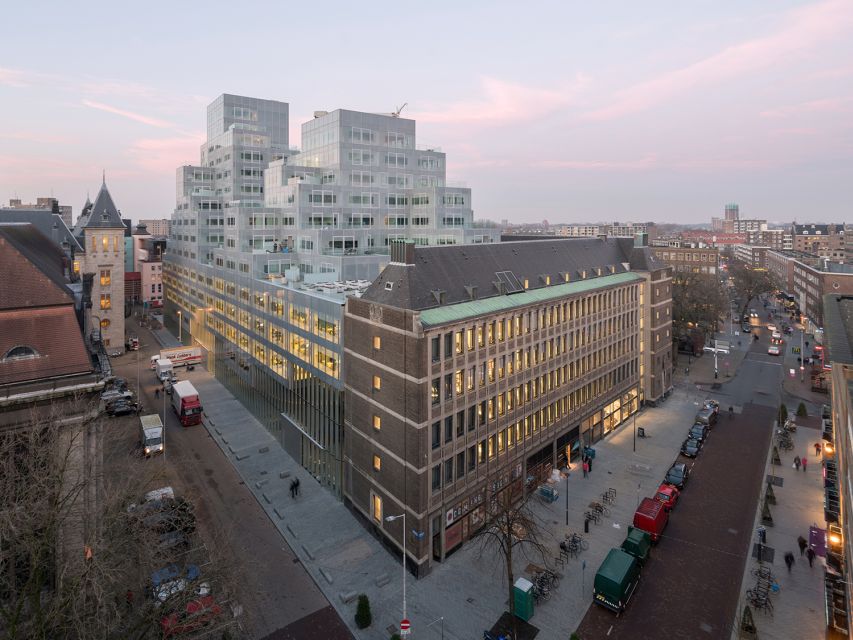
Near Grotekerkplein, the tour introduces the Timmerhuis, an inner-city redevelopment by the Rotterdam firm OMA. The project joined a municipal office block from the 1950s with a newer steel-and-glass structure made of shifting, pixel-like sections.
This is a good stop for understanding how Rotterdam handles existing buildings. Instead of clearing the older office block away, the project connects it to a new structure. The result is a conversation between a solid post-war building and a more fragmented modern form.
You also pass Dudok’s Dudok, then continue through parts of the city center where different periods sit close together. The route includes the post office and the de Bijenkorf warehouse, giving you more historical and post-war reference points before the newer buildings take over.
I like this section because it prevents the tour from becoming a parade of glossy new buildings. You get older commercial and civic architecture too. The city’s design story becomes less tidy, but more believable.
Same city, a different facade:
- Rotterdam Architecture Highlights Walking Tour
★ 5.0 · 66 reviews - The rise of Haarlem: Culture, History, Art and Architecture Walking Tour
★ 5.0 · 59 reviews - Rotterdam Must Do Tour: Highlights, History, WW2 and Architecture
★ 5.0 · 20 reviews - Walking Tour about Golden Age Architecture, private local guide
★ 5.0 · 15 reviews
Schouwburgplein, Central Station, and the rebuilt city
The route continues past Forum to Schouwburgplein and then Kruiskadeplein. Here you see Groothandelsgebouw, Rotterdam Central Station, and de Delftse Poort.
Central Station is one of the clearest examples of Rotterdam’s present-day confidence. Its striking form acts as a gateway for people arriving by train, while the surrounding buildings show how much the center has been reorganized around movement and redevelopment.
Groothandelsgebouw offers another kind of lesson. Together with the post office and other post-war buildings, it helps you understand the scale of reconstruction that shaped central Rotterdam. The tour does not present the city as an untouched old town. It shows a place that had to make large, practical decisions about offices, transport, housing, and public space.
You then pass Calypso, Pauluskerk, and de Unie. These buildings add more variety to the route, with changes in color, shape, use, and historical setting. Because the tour moves on foot, you can see how each design affects the street around it, something that is harder to grasp from a vehicle.
The tradeoff is time. The itinerary includes many buildings, and some will be viewed from outside as you walk between main stops. If you want a slow architectural study of each facade, a private follow-up walk may be useful. If you want a broad first look at Rotterdam’s center, the quick changes keep the tour lively.
Museumpark and the arrival at Depot
The final stretch moves into Museumpark, where you see Sonneveld House and Het Nieuwe Instituut before arriving at Depot Boijmans van Beuningen.
Sonneveld House brings the tour back to a more domestic scale. After large markets, stations, offices, and towers, a house shows how modern design shaped private living spaces. Het Nieuwe Instituut then returns you to the world of architecture, design, and cultural ideas.
Depot is the grand finale. Its mirrored, double-curved facade is designed to reflect the surrounding city and park. The building is home to the world’s first public art depot, so it is more than an unusual shell. It is a working place for the care and storage of art.
Your guide explains how the reflecting panels create the curved exterior. You also hear about the aviation engineering methods needed to operate the huge entrance doors. That detail gives the building a useful physical dimension. It is not just a striking object in photographs. Its shape and moving parts required demanding technical solutions.
You should not assume that this walking tour includes a full interior visit to the Depot or a general museum admission. The stated focus is the architecture, concept, and construction. If you want to see the collection spaces, confirm what is available when booking.
Guide quality and the private format
The guide can make or break an architecture tour. A long list of building names is not enough. You need someone who can explain why a design matters without turning every stop into a lecture.
Frank Schipper is one guide associated with this experience. His tours have been described as friendly, well informed, and able to answer questions about construction, structure, architects, and Rotterdam’s building history. That matters particularly for a private group of architecture students, designers, or professionals who may want more technical discussion.
You do not need to be an architect to enjoy the route. The tour is also suited to first-time visitors who want a strong introduction to Rotterdam. Still, the amount of information may appeal most to people who already care about buildings, engineering, or urban planning.
The small group gives you a better chance to shape the conversation. Ask about the curved panels at Depot, the Timmerhuis connection, or the way the Markthal combines homes with a food market. With a large group, those questions can be harder to fit in.
Is $494 a fair price?
The price is $494 for a private group of up to six people. That works out to about $82 per person if you fill all six places. For two people, the cost is about $247 per person, so the value depends heavily on group size.
The price includes the expert guide, rooftop access, three postcards by Rotterdam architectural photographer Ossip van Duivenbode, and a 50 percent discount on Cube House entry. The rooftops and private format carry most of the value. The postcards are a pleasant extra, but they should not drive your booking decision.
For a full group of six, this is a sensible option if you want a focused guide and a custom conversation. A couple paying the full private rate needs to care strongly about architecture to find the price worthwhile. The tour covers a lot in 2.5 hours, but it does not replace several separate museum visits or an extended interior tour.
I would consider it strongest for families, friends, architecture students, professional groups, or anyone who wants a private introduction rather than a standard group walk. If your main goal is simply to see the Markthal and Depot from outside, you can explore those areas without paying for a private guide.
Timing, walking, and access details
The tour lasts 2.5 hours and takes place on foot. Wear comfortable shoes and expect a steady route through central Rotterdam and Museumpark. The schedule includes many buildings, so keep your camera ready but do not expect long free periods at every stop.
The meeting point is outside the entrance of Het Witte Huis. That applies even though weekday tours use the rooftop near Grotekerkplein and Timmerhuis later in the route.
The activity information describes the tour as wheelchair accessible, but it also says it is not suitable for people with mobility impairments. Those statements do not fully agree. If you use a wheelchair or have limited mobility, contact the provider before booking and ask about the exact route, rooftop access, stairs, and any building restrictions.
Assistance dogs are allowed, but other pets are not. Cancellation is free up to 24 hours before the start, and you can reserve now and pay later, which helps if your Rotterdam schedule is still changing.
Who should book this architecture tour?
Book it if you want Rotterdam explained as a living design project rather than a collection of photo stops. The route gives you old and new buildings, public squares, housing, markets, stations, museums, and rooftop views in one concentrated walk.
It is especially good for a private group that enjoys asking questions. The guide’s explanation of Depot’s facade and doors, the Timmerhuis redevelopment, and Markthal’s mixed use gives you more than a list of architects.
Think twice if you dislike walking, prefer a slow museum visit, or are mainly looking for food-market time. The itinerary is full, and some buildings are viewed while passing by. For the right group, though, the mix of rooftop access, city history, and experimental design makes this one of the more useful ways to get oriented in Rotterdam.
FAQ
How long is the Rotterdam architecture tour?
The tour lasts 2.5 hours.
How many people can join the private group?
The price covers a private group of up to six people.
What languages are available?
The tour is available in Dutch, English, and German.
Where does the tour meet?
Meet your guide outside the entrance of Het Witte Huis.
Which rooftop do I visit on a weekday?
Weekday tours include entrance to a rooftop terrace near Grotekerkplein, with views over the city center and Markthal.
Which rooftop do I visit on a weekend?
Weekend tours begin on the roof of Het Witte Huis, with views toward the Markthal, Cube Houses, Erasmus Bridge, Willems Bridge, and De Rotterdam.
Is entry to the Cube Houses included?
Cube House entry is not listed as included, but the tour provides a 50 percent discount on the entrance ticket.
Is the tour wheelchair accessible?
The activity information describes it as wheelchair accessible, but also says it is not suitable for people with mobility impairments. Contact the provider before booking to confirm the route and rooftop access for your needs.
Can I cancel the booking?
You can cancel up to 24 hours in advance for a full refund. Reserve now and pay later is also available.
Should you book it?
Book this tour if you are filling several places in the private group and want a clear, architecture-centered introduction to Rotterdam. It is particularly worthwhile for people interested in construction, urban planning, or modern design, and the rooftop choice adds a view you may not get on your own.
For just one or two people, the cost is harder to justify. In that case, book only if the expert guide, private questions, and Depot-focused route matter more to you than keeping the price low.
Newly added in Netherlands
- Rotterdam Must Do Tour: Highlights, History, WW2 and Architecture★ 5.0 · 20 reviews
- Private Rotterdam Walking Tour – guided by Architects★ 5.0 · 2 reviews
- Rotterdam Architecture and Highlights Walking Tour (TOP RATED)★ 4.5 · 14 reviews
- Maastricht Highlights, Architecture & Heritage Tour★ 5.0 · 7 reviews
- Gouda Private Walking Tour: History, Architecture & Cheese★ 4.5 · 8 reviews
- Rotterdam: Art and Architecture Highlights Walking Tour★ 4.9 · 10 reviews
- Rotterdam Architecture: Centre and South Bank with watertaxi★ 5.0 · 4 reviews
- Rotterdam: Wilhelminapier, High-rise & floating architecture★ 4.0 · 3 reviews
Rotterdam Architecture Tours, compared.
Rotterdam Walk: Hilights, Gems, Architecture & WWII | 2 or 3hrs
Read our review →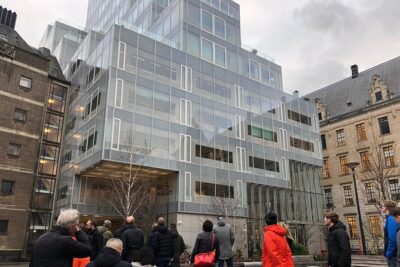
Rotterdam Must Do Tour: Highlights, History, WW2 and Architecture
Read our review →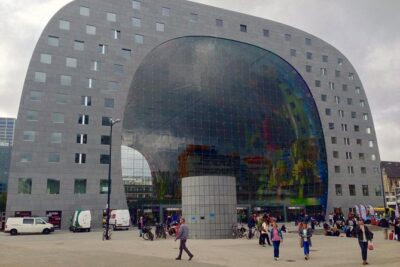
Rotterdam Architecture and Highlights Walking Tour (TOP RATED)
Read our review →

Rotterdam Architecture: Centre and South Bank with watertaxi
Read our review →Browse the lists this tour appears in