
Review · WALKING TOURS
Rotterdam: Highlights, Gems, Architecture & History Walk
Rotterdam makes the most sense when you connect its wartime destruction and daring rebuild. This walk does that well, moving from old harbor quarters to the Cube Houses, Markthal, and the city’s new architectural ideas. Local guide Yoreh, and at times Elmer, add personal stories, old photographs, maps, and even plans for what comes next.
I like the route’s wide range of subjects, from medieval beginnings and shipping to WWII, public art, modern buildings, and food. I also like the practical finish inside the Markthal, where you receive suggestions for eating instead of simply being left at a landmark.
The main consideration is physical: you cover roughly 5 kilometers and about 11,000 steps in two to three hours. You keep a steady pace, stand for long stretches, and may walk stairs, though the route can avoid steps for wheelchair users. If your feet, hips, or back are troublesome, this may feel like too much.
Key points to know before you book
- A local guide puts Rotterdam’s rebuilding story into context: Yoreh grew up in the city and connects its past, present, and future with clear explanations and personal memories.
- The route links major sights rather than treating them as isolated photo stops: You pass the Depot, Veerhaven, Erasmus Bridge, Leuvehaven, the Maritime District, Oude Haven, Cube Houses, and Markthal.
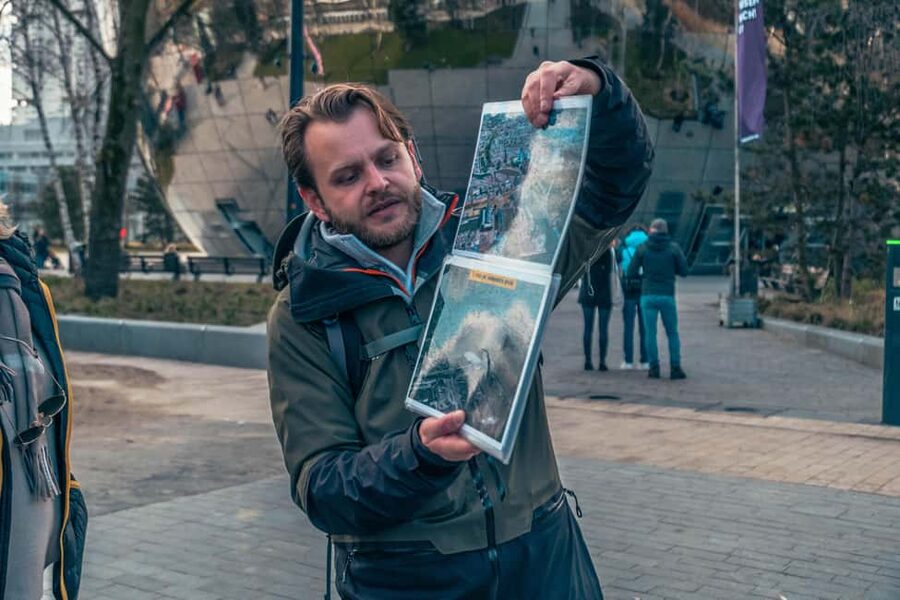
- Visual aids make the history easier to picture: A3 photographs, maps, and charts show what Rotterdam looked like before the bombing and how new projects may change it.
- The three-hour option offers the fuller story: The two-hour walk gives you orientation, while the longer version allows more detailed explanations and additional routes through the center.
- Small touches make the walk feel personal: You receive a Dutch stroopwafel halfway, photo advice, toilet and sitting breaks, and suggestions for food and sights after the tour.
- Come prepared for an active city walk: Good shoes, weather-ready clothing, and a willingness to keep moving matter more here than dressy sightseeing clothes.
Why Rotterdam needs a walking introduction
Rotterdam is not a city that reveals itself in one postcard view. Its famous skyline is modern, but its story begins in the 13th century beside the Rotte River. From there, it grew into a major trading center and then one of Europe’s great ports.
The city’s character changed sharply during WWII, when bombing destroyed much of the central area. The rebuilding that followed did not simply replace old streets. Rotterdam took the chance to test new ideas in housing, planning, transport, and architecture.
That is the key reason I find this walk useful. You are not just checking off the Cube Houses or taking a picture of the Erasmus Bridge. You are learning why so much of Rotterdam looks different from Amsterdam, Delft, or Utrecht, and how destruction helped create a city willing to experiment.
The guide’s job matters here. Yoreh uses large image sheets and other visual material to show earlier buildings, wartime scenes, present-day structures, and future plans. The pictures give you something solid to look at while he explains the changes around you.
More Walking Tours in the world:
- Lecce: Baroque Architecture and Underground Walking Tour
★ 4.6 · 1,248 reviews - Chicago in a Day: Food, History & Architecture Walking Tour
★ 5.0 · 1,153 reviews - Ramblas, Old Town, Gothic and Gaudi Architecture Walking Tour
★ 5.0 · 723 reviews
Starting near the Museum Quarter
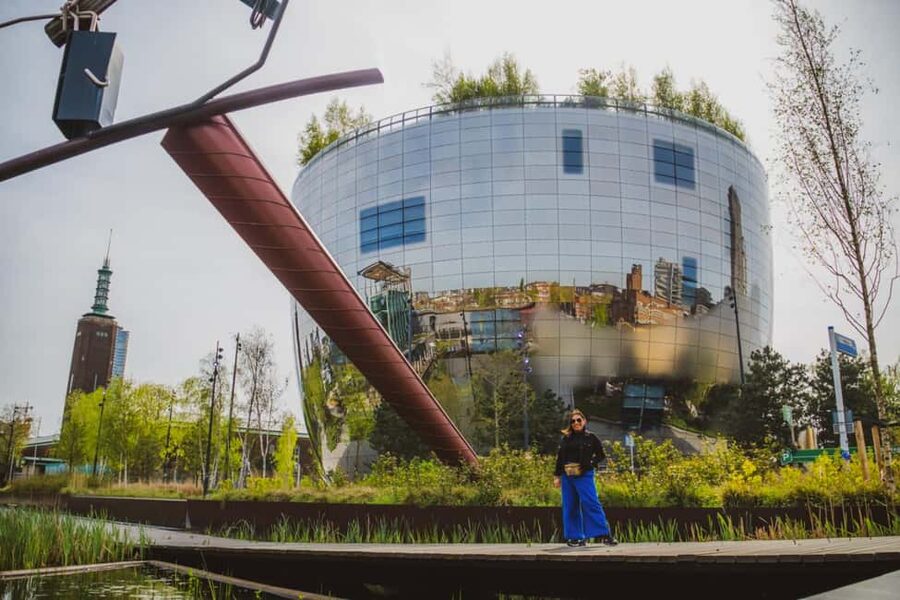
The meeting point can vary according to the option you book, so check your confirmation carefully. One listed starting area is near the Vaimoo bicycle station at Melkkoppad. The route then heads toward the Museum Quarter and the Depot Boijmans Van Beuningen.
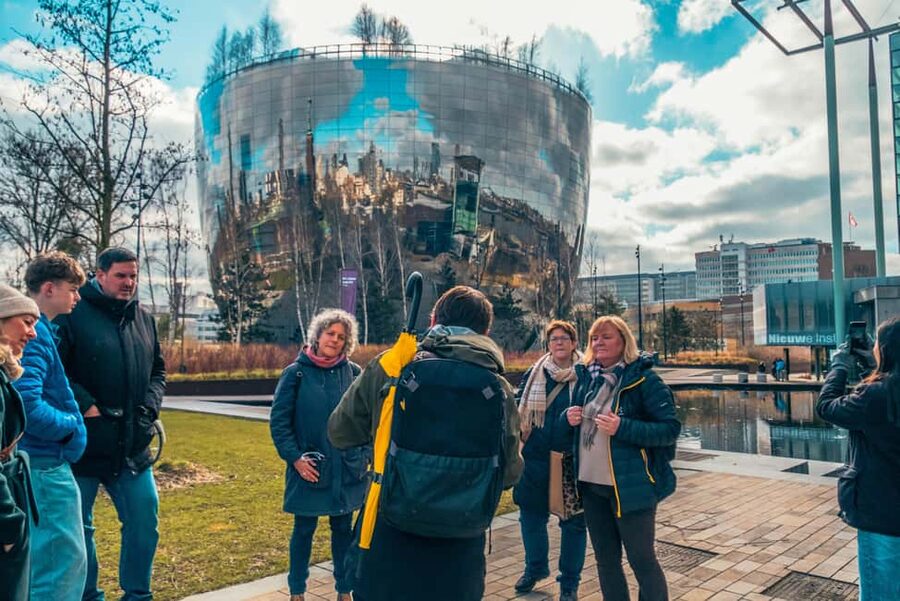
The Depot is a striking first stop, although you pass by rather than tour the inside. Its mirrored exterior and unusual shape introduce Rotterdam’s taste for buildings that make you stop and look. The guide uses this area to talk about art, design, and the city’s habit of putting bold new structures beside older streets.
You should not expect a museum visit during the walk. This is an exterior orientation, useful for deciding which cultural sites deserve your time later. If you want to visit the Depot itself, plan that separately.
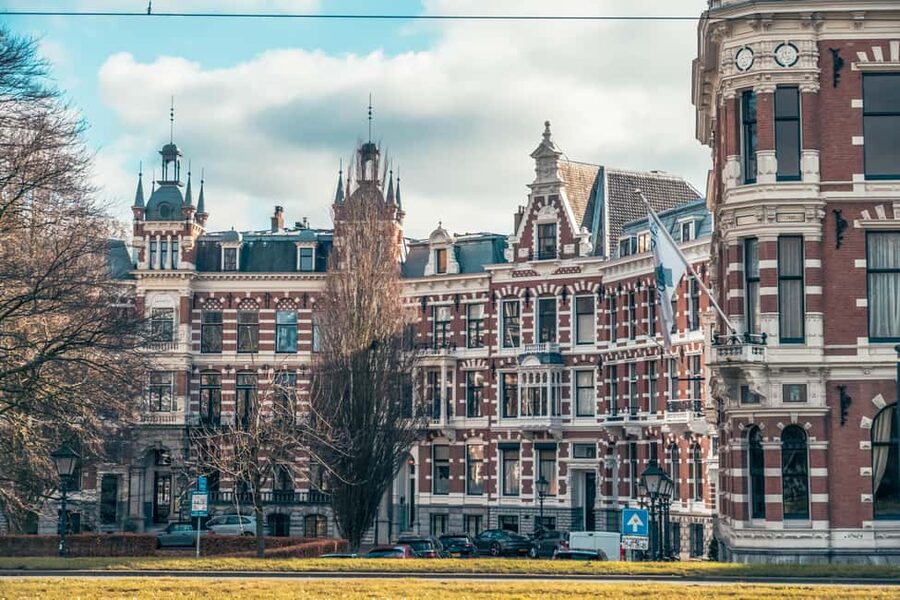
The early part of the route can also include older residential areas and elegant villas. That contrast helps prevent the usual mistake of seeing Rotterdam as nothing but concrete, glass, and cranes. The city has older fragments, but they are mixed into a much newer urban plan.
Veerhaven and the city’s maritime character
At Veerhaven, the walk shifts toward Rotterdam’s water and shipping story. The harbor is not just background scenery here. It explains how a settlement on the Rotte became a port city with international reach.
You pass through the area rather than stopping for a long harbor tour. That keeps the walk moving, but the guide adds the context you would miss on your own. Rotterdam’s connection to trade, ships, industry, and water is central to its identity, and the maritime sections help explain why the city rebuilt with such a strong outward-looking attitude.
This is also one of the more pleasant places for photographs. You receive advice about good angles and places to return after the tour. If photography is important to you, have your camera ready, but do not expect unlimited time at every stop. The group needs to maintain a steady pace to finish on schedule.
Erasmus Bridge and a symbol of recovery
The Erasmus Bridge is one of Rotterdam’s best-known landmarks, and you pass by it rather than cross it as a formal activity. Its long white pylon and sweeping cables make it an easy symbol for a city that keeps reaching forward.
The useful part of seeing the bridge with a local guide is the connection to Rotterdam’s wider recovery. The bridge is not presented as an isolated engineering object. It fits the city’s pattern of using major public works to link districts and announce a new chapter.
Views from this part of the route help you understand the scale of Rotterdam. You see the water, skyline, and changing mix of old port spaces and newer development. The exact view depends on the day’s route and city conditions, but skyline photographs are part of the experience.
More History Walks in the world:
- Charleston’s Best Highlights: History, Culture & Architecture
★ 5.0 · 422 reviews - Palm Springs Modernism Architecture & History Bike Tour
★ 5.0 · 359 reviews - Charleston: History and Architecture Guided Walking Tour
★ 4.8 · 349 reviews - Historic Georgetown: History, Gossip, & Architecture Walking Tour
★ 5.0 · 321 reviews
Leuvehaven and the Maritime District
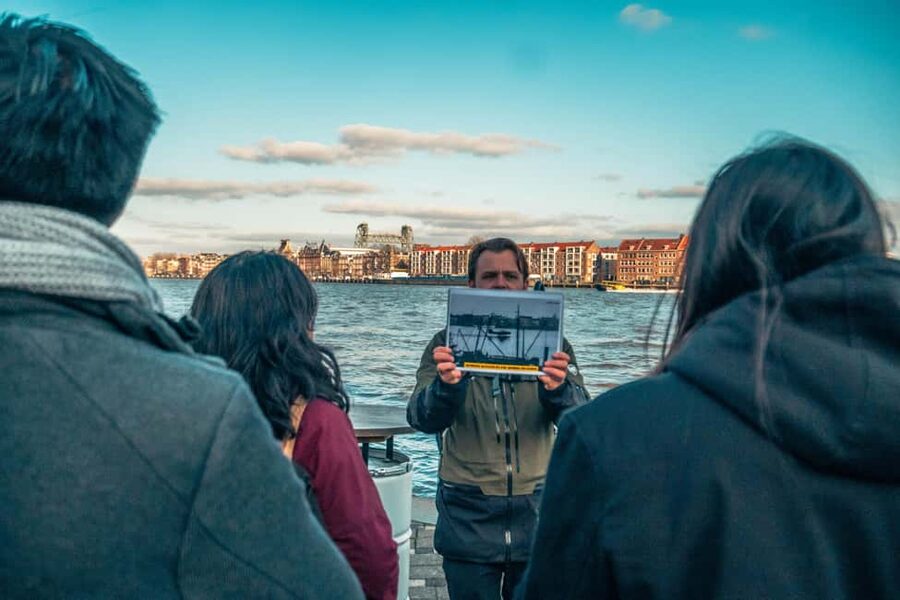
At Leuvehaven, the guide brings the story closer to the water. This stop lasts about ten minutes in the planned route, enough for explanation and photographs without turning the walk into a full maritime museum visit.
The Maritime District and nearby shipping areas show how Rotterdam’s port shaped daily life. You hear about work, commerce, city growth, and the changing role of the waterfront. The guide also places these areas beside Rotterdam’s newer plans, so the discussion moves beyond the past.
This part rewards curiosity. Ask questions about buildings, harbor use, and future construction. Yoreh’s style is interactive, and the tour can be adjusted somewhat to the group’s interests. His English is described as fluent, and Dutch is also available.
Oude Haven and the city before the war
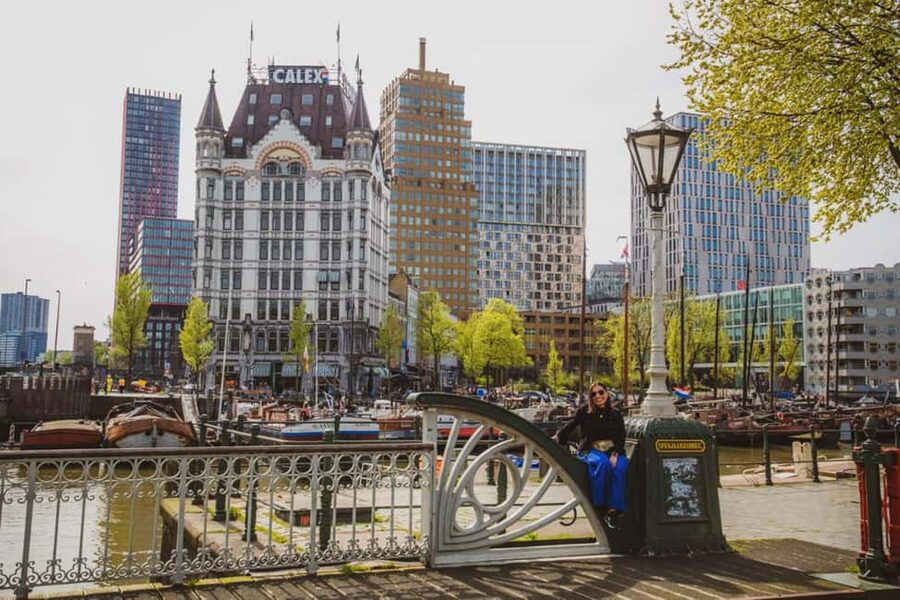
Oude Haven gives you one of the clearest chances to think about Rotterdam’s earlier character. The old harbor area offers a contrast to the large-scale rebuilding elsewhere in the center.
The guide explains how Rotterdam grew from a modest settlement into a major port and how war changed the center. WWII is not treated as a quick footnote. The stories cover the bombing, the German invasion, the hardship faced by local people, and the difficult decisions that followed.
For me, this is one of the strongest parts of the walk. Many city tours race toward modern architecture and skip the human cost of rebuilding. Here, the history gives the buildings emotional weight. You begin to see the modern center not just as a collection of unusual shapes, but as the result of loss, planning, and a deliberate choice to create something new.
Some details can be difficult, especially for children, but the guide’s explanations are balanced and accessible. Families with older children have found the mix of history, humor, and architecture effective. The three-hour option gives this subject more room.
Cube Houses and Overblaak
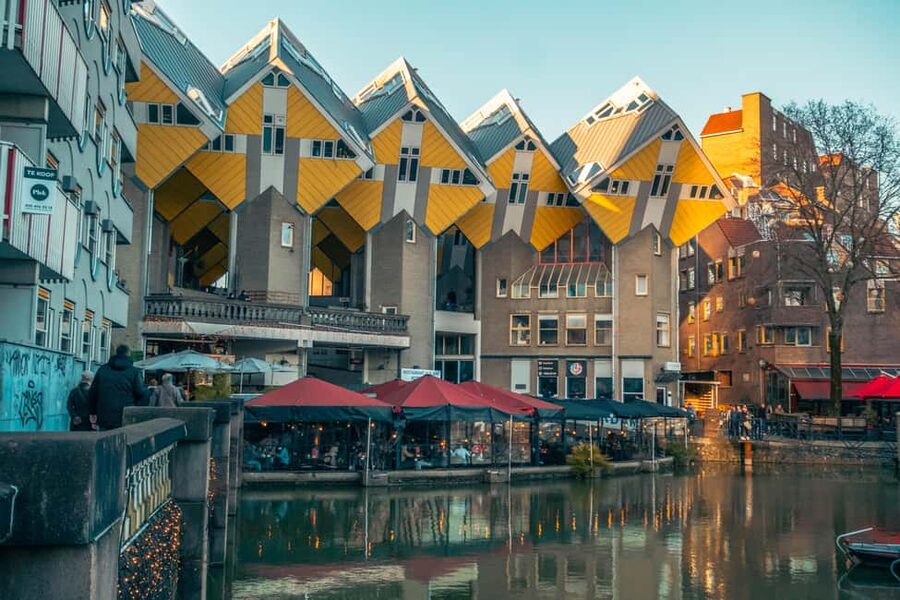
The Cube Houses are one of Rotterdam’s signature sights, and the route walks through the Overblaak area. You see the buildings from the outside and learn about their design, purpose, and place in the city’s housing experiments.
Do not assume that passing through the Cube Houses includes entry to one. You can visit the inside of a cube afterward, about a one-minute walk away, but that visit is separate from this tour.
The area is ideal for discussing Rotterdam’s willingness to challenge normal ideas about homes and streets. It is also a lively photo stop, though the angles can be tricky. The guide offers suggestions for pictures and can take photos for you when practical.
The Cube Houses are visually strong, but they can also feel like a quick novelty if you only see them from a distance. The explanation is what makes this stop worthwhile. You get a better sense of how an eye-catching building fits into a larger plan for pedestrian movement, housing, and public space.
Markthal, the practical finish
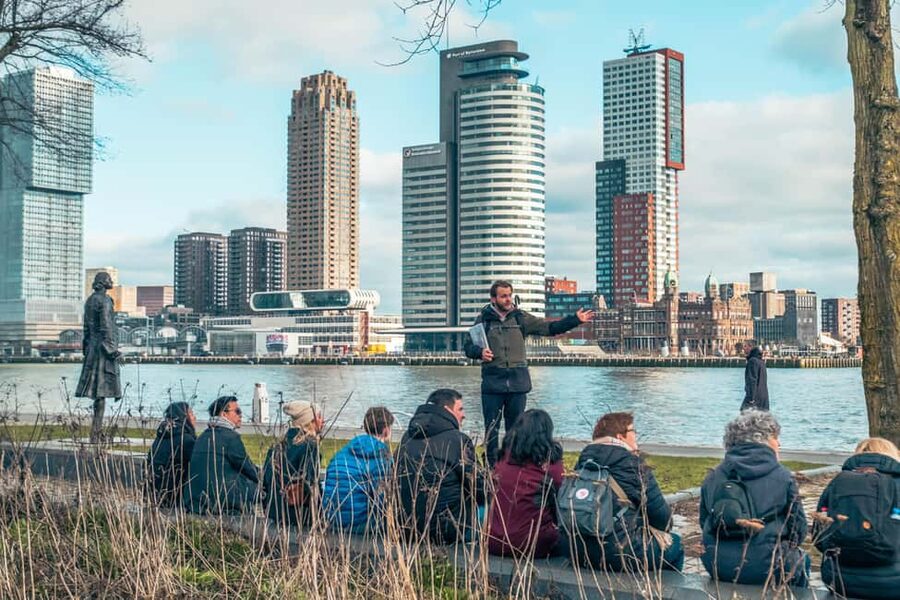
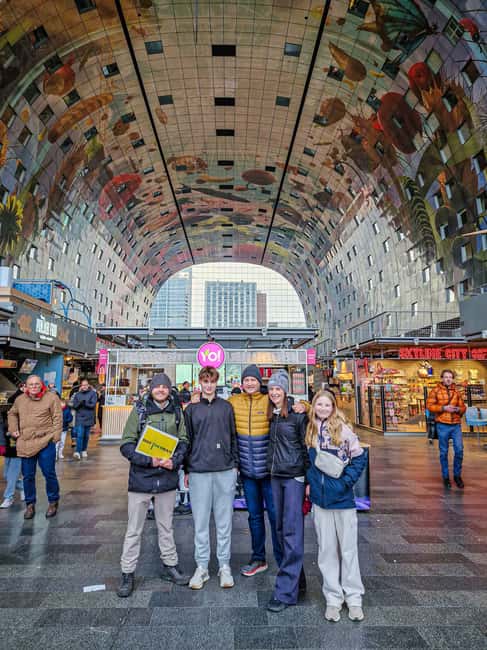
The route finishes at the Markthal, where you have time to see the building and receive food suggestions. This is a smart ending. After several hours on your feet, the market gives you a chance to sit down, eat, and decide what to do next.
The Markthal’s enormous interior artwork has earned it comparisons with the Modern Sistine Chapel. That nickname is a bit grand, but the ceiling is certainly memorable. The building combines apartments, food stalls, shops, and public space in one large structure.
The guide does not simply point at the ceiling and move on. The Markthal helps bring together the tour’s main subjects: new construction, urban living, public art, food, and Rotterdam’s future-minded approach.
Food advice is one of the tour’s practical strengths. You receive suggestions about where to eat inside the market rather than a vague instruction to find something nearby. A stroopwafel halfway through the walk provides a small Dutch snack and a useful energy boost. Some tours offer little more than a guide’s speech. This one adds a few simple comforts that matter after several kilometers.
Two hours or three hours?
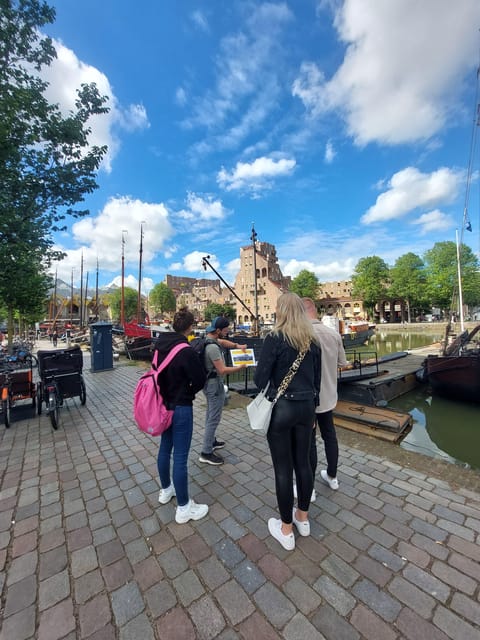
Choose the two-hour version if you want a city introduction, a list of major sights, and help finding your bearings on a short stay. It gives you the main sequence of architecture, harbor areas, WWII context, and Markthal without taking up most of an afternoon.
Choose three hours if Rotterdam’s history and buildings are a main reason for your visit. The longer route goes further into the central districts, gives the stories more time, and uses the visual material more fully.
The extra hour is not just more walking. It lets the guide explain connections between the port, the bombing, the rebuilding, and future projects. You also have more room for questions and personal recommendations.
I would book the longer option early in your stay. It helps you decide which museums, food areas, viewpoints, and neighborhoods deserve a return visit. If you have mobility limits, limited energy, or only want a quick overview, two hours is the safer choice.
Pace, comfort, and access
This is an active walking tour. The stated distance is about 5 kilometers, or approximately 11,000 steps, with some stairs and extended periods of standing. Seating is available at selected stops, and there is a restroom break around the halfway point.
The route is wheelchair accessible, and stairs or steps can be avoided. A wheelchair-accessible restroom is available. Still, accessible does not mean effortless. You should be comfortable spending several hours outdoors and moving through a city at a steady pace.
Wear proper walking shoes. Several people specifically found footwear important, and that advice is worth taking seriously. Rotterdam weather can change, so bring suitable clothing and be ready for the route to shift slightly during major city events or extreme weather.
The tour is not recommended for people with back, hip, or foot problems, or for highly pregnant participants. The guide tries to keep the group together, so this is not the right walk if you need frequent unscheduled rests.
Guide style and group atmosphere
Yoreh is the name most closely associated with this experience, and his local connection is part of its appeal. He shares personal memories from growing up in Rotterdam, along with facts about buildings, city planning, folklore, art, and important local figures.
Elmer also leads the walk and has received praise for his care with solo participants and his willingness to answer questions. If you book, the exact guide may depend on the date and availability.
The group size is small, which makes it easier to hear, ask questions, and request a photo stop. The guide can also adjust parts of the conversation to the group. Solo visitors may still be accepted even when no other bookings are present, but do not assume every date will operate the same way.
The style is energetic rather than formal. You get stories, visual references, personal anecdotes, and humor. The guide also points out restaurants, museums, shopping areas, and places to return for better photographs.
Is $48 a fair price?
At $48 per person, this is not the cheapest way to walk around Rotterdam. You can see the Cube Houses, Erasmus Bridge, Oude Haven, and Markthal without paying for a guide.
The value comes from the connections. A self-guided walk may show you the same buildings, but it is less likely to explain how the medieval settlement, port growth, WWII bombing, rebuilding, and future development fit together. The photographs and maps also help you picture what no longer exists.
The price includes a local professional guide, small-group format, visual material, a stroopwafel, restroom and sitting opportunities, photo advice, and food suggestions. It does not include entry to the Cube House interior or other museums, so budget separately if those interest you.
I consider the price reasonable for a first visit, especially if you have only one day or two in Rotterdam. It becomes less attractive if you already know the city well and mainly want independent time inside museums or food halls.
Who should book this walk?
I would recommend it to first-time visitors who want orientation with substance. It is also a good fit for architecture fans, history-minded visitors, families with older children, solo visitors, and anyone curious about how a city rebuilds after catastrophe.
It suits people who enjoy learning while walking. You should be ready to listen outdoors, keep moving, and accept that some stops are brief.
I would skip it if you dislike group pacing, cannot walk several kilometers, or want long visits inside individual attractions. This is a city overview with strong storytelling, not a museum tour or a relaxed café-to-café stroll.
Final verdict: book it early in your Rotterdam stay
Book this walk if you want Rotterdam to make sense, not just look unusual. The strongest feature is the way Yoreh or Elmer links the city’s harbor origins, WWII experience, modern architecture, and future plans into one clear story.
Pick two hours for a brisk introduction. Pick three for the fuller experience, especially if you care about architecture or local history. Bring good shoes, leave room for a meal at the Markthal, and save time afterward to visit the places that catch your eye along the way.
FAQ
How long does the Rotterdam walking tour take?
You can choose a two-hour or three-hour version. The two-hour option gives you a general introduction, while the three-hour route offers more detailed stories and additional areas.
How far do you walk?
The walk covers about 5 kilometers and approximately 11,000 steps. You should expect a steady pace, stairs in some places, and periods of standing.
Which languages are available?
The tour is offered in Dutch and English.
Who guides the tour?
The listed local guides are Yoreh and Elmer. The guide assigned to your booking may depend on the date and availability.
Does the tour enter the Cube Houses?
The route walks through the Cube Houses area, but entry into a cube is not included. You can visit the inside of a cube separately after the tour, about one minute away.
Is the tour wheelchair accessible?
Yes. The route is wheelchair accessible, steps can be avoided, and a wheelchair-accessible restroom is available. You should still be prepared for a multi-hour outdoor walk.
Is there a restroom break?
Yes. A restroom break is provided around the halfway point, and there are additional sitting opportunities at selected locations.
Is food included?
A Dutch stroopwafel is provided halfway through the walk. The tour ends at the Markthal, where the guide offers suggestions about places to eat, but a full meal is not included.
Can you cancel the booking?
You can cancel up to 24 hours in advance for a full refund. A reserve-now-and-pay-later option is also available.
Newly added in the world
- Barcelona: Guided tour e-bike Barcelona historical and modernist Barcelona★ 4.5 · 5 reviews
- Barcelona Architecture Walking Tour With Casa Batlló Upgrade★ 4.8 · 11 reviews
- Astana: Old City Tour, Imperialistic and Soviet Architecture★ 5.0 · 4 reviews
- Barcelona Beyond Gaudí: Modernism, Rooftops, and Hidden Gems★ 5.0 · 2 reviews
- An Architect’s Tour of Downtown Santiago★ 5.0 · 7 reviews
- Architecture Tour: Old Historic Madrid with an architect★ 4.3 · 3 reviews
- London: Architecture Tour of Benjamin Franklin House★ 5.0 · 5 reviews
- Architectural Wonders of KAFD, An Iconic Destination★ 5.0 · 3 reviews
Walking Tours, compared.
The Official Art Deco Walking Tour by The Miami Design Preservation League
Read our review →
Baroque Architecture and Underground Walking Tour
Read our review →
Chicago in a Day: Food, History & Architecture Walking Tour
Read our review →

Ramblas, Old Town, Gothic and Gaudi Architecture Walking Tour
Read our review →
Chicago’s Secret Interiors Architectural Walking Tour
Read our review →
Browse the lists this tour appears in