
Review · WALKING TOURS
Amsterdam Walking Tour. All about History, Architecture, Traditions & Anecdotes.
Amsterdam reveals itself best on foot, one narrow lane and leaning canal house at a time. This three-hour private walk links major sights with quieter corners, moving from Centraal Station to Dam Square while explaining how trade, religion, art, war, and ordinary city life shaped the capital.
I like the route’s range, from the grand brickwork of St. Nicholas Basilica to the peaceful Begijnhof. I also like the personal format, with Diana guiding only your group and offering tips on cafes, restaurants, and bars. The main drawback is value: $208.23 is reasonable for a full group of several people, but expensive if only one or two of you book.
Key points to know before you book

- Centraal Station to Dam Square: The route crosses Amsterdam’s historic core in about three hours, with free outdoor stops along the way.
- Diana leads the walk: The guide is praised for making Amsterdam’s past engaging for different ages, including teenagers.
- Private group format: Your party alone takes part, with space for questions and changes in pace.
- Architecture and stories together: You’ll see churches, old commercial buildings, bridges, courtyards, and canal-side houses rather than only checking off famous sights.
- No food or drinks included: Plan your own cafe stop before or after the walk.
- Best group value: The fixed price covers up to 15 people, making the cost much easier to justify for families and small groups.
Starting beside Centraal Station at 2 p.m.
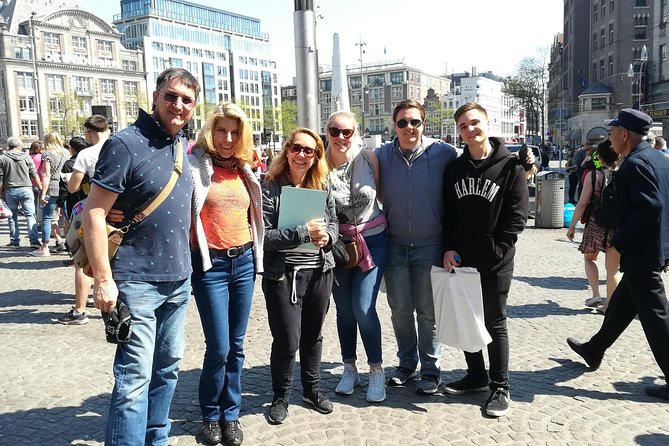
Meet at Loetje on Stationsplein, close to Amsterdam Centraal Station, for a 2 p.m. start. This is a useful place to begin because the station puts you immediately in the middle of Amsterdam’s story, not just at a transport hub.
Your guide explains the station, the nearby Victoria Hotel, and the changes that came with Amsterdam’s growth. The opening section helps you get your bearings quickly. You are not simply walking away from the station toward the center. You are learning why this edge of the old city became such an important gateway.
Allow a little time to arrive before the start. The meeting point is near public transportation, but Centraal Station can feel confusing if you are rushing through it with luggage or a large group. The tour ends at Dam Square, so you can plan the rest of your afternoon from there without returning to the start.
More Walking Tours in the world:
- Lecce: Baroque Architecture and Underground Walking Tour
★ 4.6 · 1,248 reviews - Chicago in a Day: Food, History & Architecture Walking Tour
★ 5.0 · 1,153 reviews - Ramblas, Old Town, Gothic and Gaudi Architecture Walking Tour
★ 5.0 · 723 reviews
St. Nicholas Basilica and Amsterdam’s Catholic past
The next stop is St. Nicholas Basilica, one of the few active Catholic churches in Amsterdam. Its presence gives the walk an important twist, since Amsterdam is often presented mainly through its Protestant, commercial, and liberal traditions.
Here, Diana explains Dutch beliefs and the place of Catholicism in the city. The stop lasts about 15 minutes and does not require an admission ticket. You should expect a short outside explanation or a brief look around, depending on what is open and practical that day, rather than a long church visit.
This is a good early stop because it shows that Amsterdam’s identity has never been as simple as its postcard image. The city’s religious story includes tension, accommodation, and change. If you enjoy learning how buildings reflect social life, this part gives the tour useful depth.
Nieuwmarkt and the medieval city
At Nieuwmarkt, the route reaches one of Amsterdam’s oldest meeting places. The stop focuses on Amsterdam since the Middle Ages, when the city was still taking shape as a center of trade and civic life.
You spend about 10 minutes here, enough for a concise explanation and a chance to look around. The square connects well with the tour’s larger theme: Amsterdam grew through commerce, movement, and people gathering in shared spaces.
Nieuwmarkt is also a practical photo stop. Keep your camera ready, but do not expect a long break. The guide uses the square as a piece of the city’s story rather than treating it as a standalone attraction.
Trippenhuis and the city’s leaning houses
Trippenhuis brings you into Amsterdam’s architectural character, including the famous dancing houses. These narrow buildings, often leaning at noticeable angles, can look playful in photographs. Their shapes also reflect the limits of building on Amsterdam’s soft ground and the city’s long tradition of compact canal-side construction.
The stop lasts about 10 minutes. That makes it short, but the subject is visually strong. You will want to look up, since much of the interest is above street level.
This is one reason a walking guide adds value. A quick solo walk can send you past unusual facades without any explanation. Here, you get a story attached to the buildings, which makes the view easier to remember after the tour.
More History Walks in the world:
- Charleston’s Best Highlights: History, Culture & Architecture
★ 5.0 · 422 reviews - Palm Springs Modernism Architecture & History Bike Tour
★ 5.0 · 359 reviews - Charleston: History and Architecture Guided Walking Tour
★ 4.8 · 349 reviews - Historic Georgetown: History, Gossip, & Architecture Walking Tour
★ 5.0 · 321 reviews
Rembrandt’s Amsterdam at Museum Het Rembrandthuis
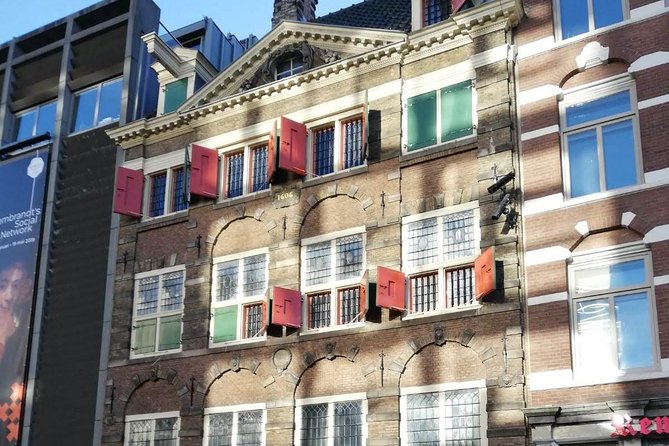
The route continues to Museum Het Rembrandthuis, connected with Rembrandt van Rijn, the Netherlands’ most famous painter. The stop is listed for about 10 minutes, so it is mainly an introduction to the artist and his place in Amsterdam rather than a full museum visit.
Admission to the museum is not included. If you want to go inside, you will need to arrange and pay for that separately. Since the walking tour has a fixed route and limited time, consider returning on another day if Rembrandt is a major reason for your visit.
Even without entering, this stop helps connect Amsterdam’s commercial power with its artistic life. The city’s wealth supported painters, merchants, collectors, and institutions. You will hear more about the people and ideas that made Amsterdam a center for art as well as trade.
Medicine, botany, and free-thinking traditions
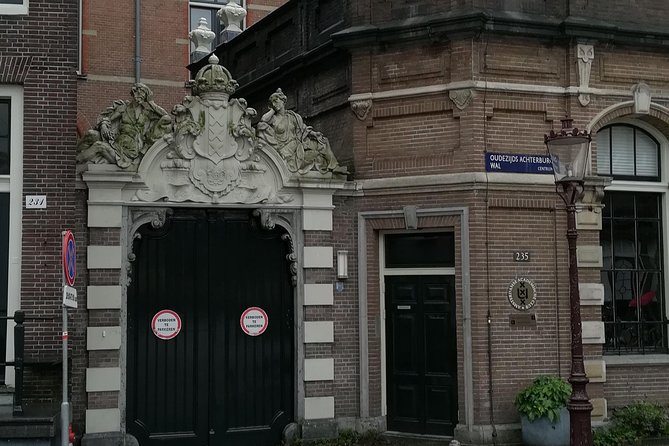
One part of the route turns to medical and botanical thinkers, along with the city’s tradition of freethinking. This is a useful counterpoint to the grand stories of merchants and painters.
Amsterdam’s past includes practical science, plant study, education, and debate. The exact stop is not identified by name in the tour details, so you should think of this as a themed section rather than a separate attraction with a clear admission point.
I like this part because it widens the idea of what Amsterdam has been. You are not only hearing about wealthy traders or famous artists. You are also hearing about the people who studied the natural world and questioned accepted ideas.
The Amstel and the weight of the Second World War
At the Amstel River, the tour shifts from buildings to water. The river is central to Amsterdam’s name, growth, and power. It helped connect the city to trade routes and shaped the way goods and people moved through the capital.
This is one of the longer stops, at about 15 minutes. Diana also discusses what the Second World War meant for Amsterdam. That change in subject matters. The route does not present the city as a pretty collection of canals and old houses. It makes room for a darker period and the effects of war on Dutch life.
The Amstel is also a natural pause in the walk. You can take photographs and let the city open up around you after several close streets and courtyards. Bring comfortable shoes, since the tour keeps moving after the stop.
A photo pause at Staalmeestersbrug
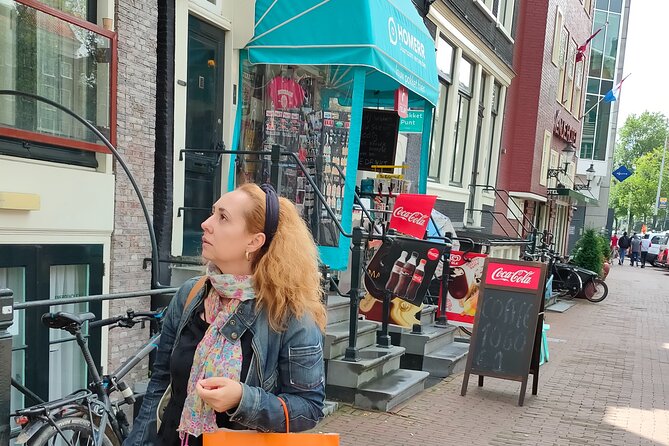
Staalmeestersbrug is specifically included as a photo moment. You get about five minutes here, so it is a quick stop rather than a long story session.
That short pause can be welcome. A three-hour walking tour works better when you have a few minutes to take photographs without slowing the entire group. Since this is a private experience, your party may have more flexibility than a large shared group, but the guide still has a planned route to cover.
Keep your phone or camera ready before you arrive. The stop is brief, and the bridge is part of the walk rather than a separate sightseeing block.
Oudemanhuispoort and Amsterdam’s major institutions
Oudemanhuispoort brings the tour back to the city’s institutional life. The stop covers an important Dutch company and the education system, showing how business and learning shaped Amsterdam alongside religion and art.
You spend about 15 minutes here. That gives Diana time to connect the location with larger national themes while keeping the pace moving toward the center.
This is a particularly useful section if you like city stories that explain how institutions work. Amsterdam was not built only by individual heroes. Companies, schools, and public spaces also helped create the city you see today.
Begijnhof, one of the calmest stops
Begijnhof is likely to be one of the tour’s most memorable places. This enclosed historic courtyard feels removed from the streets around it, even though it sits in the center of Amsterdam.
The stop lasts about 15 minutes and focuses on the site’s beauty and history. You should keep your voice low and follow any posted rules, since this is a quiet residential and historic space rather than a normal public square.
I especially like the contrast here. After stations, markets, bridges, and busy commercial streets, Begijnhof gives you a pause. It is the kind of place that is easy to miss if you follow only the biggest avenues, and it rewards a guide who knows how to place it in the route.
Finishing at Dam Square
The tour ends at Dam Square, Amsterdam’s main meeting point and the place connected with the city’s beginnings. After three hours of walking, this is a practical finish. You are near major sights, shops, restaurants, and public transportation, though the tour does not include food or drinks.
Dam Square also brings the route full circle. You begin with the modern transport gateway of Centraal Station and finish at one of the city’s oldest central spaces. Along the way, you have followed Amsterdam through religion, trade, art, science, war, education, and everyday urban life.
The final stop is about 15 minutes. Expect a closing explanation rather than a formal farewell event or included meal.
Is $208.23 a fair price?
The price is $208.23 per group, with up to 15 people included. That works out to about $14 per person for a group of 15, about $21 per person for 10, or roughly $52 per person for four. For a family or small group, that can be a fair way to get a private introduction to the city.
For one or two people, the calculation changes. You are paying for a private guide, not a low-cost public walking tour, and the price may feel high beside Amsterdam’s many self-guided options.
The value comes from the route and the personal attention. You get a guide who can answer questions, explain the odd details above street level, and offer suggestions for bars, restaurants, and cafes after the walk. You do not get entrance tickets, coffee, tea, or a meal, so budget for those separately.
The tour is booked about 12 days ahead on average. That suggests planning early if your Amsterdam dates are fixed, especially because the private format limits availability.
What the guide adds to the experience
Diana is named as the guide, and the strongest praise centers on her friendly approach, flexibility, and ability to make the city’s past interesting for different ages. One family experience also combined the city walk with a fishermen’s village, windmills, and cheese tasting, but those additions should not be assumed to be part of this three-hour walking tour.
That distinction matters. The advertised experience is a city walking tour. If you want a wider day trip, ask the provider about separate arrangements rather than assuming the extra countryside visits are included.
The private setup gives Diana room to adjust explanations for your group. You can ask about architecture, art, religion, or wartime history as you go. A private guide also makes it easier to pause for photographs without worrying about keeping up with strangers.
Who should book this Amsterdam walk?
I would recommend it to first-time visitors who want an organized introduction without spending a full day inside museums. It also suits families, since the guide’s style has worked well across age groups, including with a teenage child.
It is a good match for small groups that care about value. The fixed price becomes much more attractive when shared among several people, and the private format can be especially useful when your group has mixed interests.
You may want another option if you prefer a slow museum-focused day, a food tour, or a tour with included tastings. You should also think twice if you dislike three hours of walking or want extensive time inside the Basilica or Rembrandthuis. The route shows you many places, but most stops are short.
Practical details before you go
Wear comfortable shoes and dress for changing weather. The tour is outdoors for much of its three hours, and Amsterdam’s streets can be uneven or wet.
You receive confirmation when booking, and a mobile ticket is provided. Service animals are allowed, most travelers can participate, and the route is near public transportation.
Free cancellation is available up to 24 hours before the local start time. Cancellations or changes made less than 24 hours before 2 p.m. are not refundable.
Should you book this private Amsterdam walking tour?
Book it if you want a private orientation to central Amsterdam with history, architecture, local stories, and practical suggestions in one afternoon. The route is well chosen, Diana brings a personal touch, and the price makes sense for a family or group of friends.
Skip it if you are traveling alone on a tight budget, need extensive interior visits, or would rather spend three hours on food, museums, or a countryside excursion. For the right group, this is a useful first look at Amsterdam that leaves you at Dam Square with a better sense of where to explore next.
FAQ
How long is the Amsterdam walking tour?
The tour lasts approximately three hours.
What time does the tour begin?
The tour starts at 2 p.m. local time.
Where does the tour begin?
The meeting point is Loetje, Stationsplein 10, 1012 AB Amsterdam, near Centraal Station.
Where does the tour end?
The tour ends at Dam Square in central Amsterdam.
Is this a private tour?
Yes. Only your group participates, with up to 15 people covered by the group price.
Are admission tickets included?
Outdoor stops do not require admission tickets, but admission to Museum Het Rembrandthuis is not included.
Are food and drinks included?
No. Coffee, tea, food, and other drinks are not included.
Can I cancel for a full refund?
Yes, if you cancel at least 24 hours before the experience start time. Cancellations made less than 24 hours before the start are not refundable.
Newly added in the world
- Barcelona: Guided tour e-bike Barcelona historical and modernist Barcelona★ 4.5 · 5 reviews
- Barcelona Architecture Walking Tour With Casa Batlló Upgrade★ 4.8 · 11 reviews
- Barcelona Beyond Gaudí: Modernism, Rooftops, and Hidden Gems★ 5.0 · 2 reviews
- Astana: Old City Tour, Imperialistic and Soviet Architecture★ 5.0 · 4 reviews
- An Architect’s Tour of Downtown Santiago★ 5.0 · 7 reviews
- Architecture Tour: Old Historic Madrid with an architect★ 4.3 · 3 reviews
- London: Architecture Tour of Benjamin Franklin House★ 5.0 · 5 reviews
- Architectural Wonders of KAFD, An Iconic Destination★ 5.0 · 3 reviews
Walking Tours, compared.

The Official Art Deco Walking Tour by The Miami Design Preservation League
Read our review →
Baroque Architecture and Underground Walking Tour
Read our review →
Chicago in a Day: Food, History & Architecture Walking Tour
Read our review →

Ramblas, Old Town, Gothic and Gaudi Architecture Walking Tour
Read our review →
Chicago’s Secret Interiors Architectural Walking Tour
Read our review →
Browse the lists this tour appears in