
Review · HISTORICAL TOURS
The Hipster Chandigarh Architecture History Tour
Chandigarh makes far more sense when you see it as a working city, not just a collection of striking concrete buildings. Rusty, a third-generation resident and longtime journalist, connects Le Corbusier’s grand plans with daily life in the sectors, markets, schools, housing blocks, and offices. I like the local point of view and the rare access to places most visitors would miss.
I also like the practical setup: air-conditioned transport, pickup, parking, photography fees, and admissions are included. Rusty adjusts the pace, makes room for food stops, and keeps the talk lively without turning every building into a lecture. The main consideration is time. Two full days is a serious commitment, and a group of up to 41 people may feel less personal than a private tour.
Key points at a glance
- A third-generation Chandigarh guide: Rusty grew up in Corbusier-designed public housing and brings personal knowledge to the city’s planning story.
- Rare access to major sites: The tour includes the Capitol Complex, Pierre Jeanneret’s former home, public housing, Panjab University, and Lake Club.
- Architecture with daily context: You see how modernist ideas shaped government, education, shopping, recreation, and ordinary homes.
- A useful two-day pace: The first day focuses heavily on major architectural works, while the second adds lakeside, market, museum, and social history.
- Strong value at $71.02: Transport and nearly all admission costs are covered, which matters in a city spread across many sectors.
- Good for curious non-specialists: You do not need an architecture background, though anyone wanting only a quick city overview may find it too detailed.
Why Chandigarh needs a guide like Rusty
Chandigarh was planned as a new capital after Partition, and its identity is tied to modern city planning as much as to individual buildings. Le Corbusier’s name gets most of the attention, but the city also reflects the work of Pierre Jeanneret, Maxwell Fry, Jane Drew, Indian architects, administrators, and the residents who made the plan function.
Rusty is especially suited to this subject because his connection is personal. He spent 24 years living in Corbusier-designed public social housing, attended schools designed by Jeanneret, and worked in offices associated with Maxwell Fry. That gives his explanations a useful human scale. You are not only looking at raw concrete and geometric forms. You are hearing how buildings were intended to work, and how people have used them over time.
The tone also matters. The tour is designed for architects and urban planners, but it is not limited to specialists. Rusty uses humor, keeps political jokes neutral for official visitors, and adjusts his explanations for families, couples, children, students, and backpackers. That flexibility is one reason the experience can work for a mixed group.
More History Walks in the world:
- Chicago in a Day: Food, History & Architecture Walking Tour
★ 5.0 · 1,153 reviews - Charleston’s Best Highlights: History, Culture & Architecture
★ 5.0 · 422 reviews - Palm Springs Modernism Architecture & History Bike Tour
★ 5.0 · 359 reviews
Day one: the Capitol Complex and the city’s design language
The first morning begins at 9:00 am, with pickup offered and transport provided in an air-conditioned vehicle. The day centers on the grandest parts of Chandigarh, so expect a strong architectural focus from the start.
Capitol Complex: government on a monumental scale
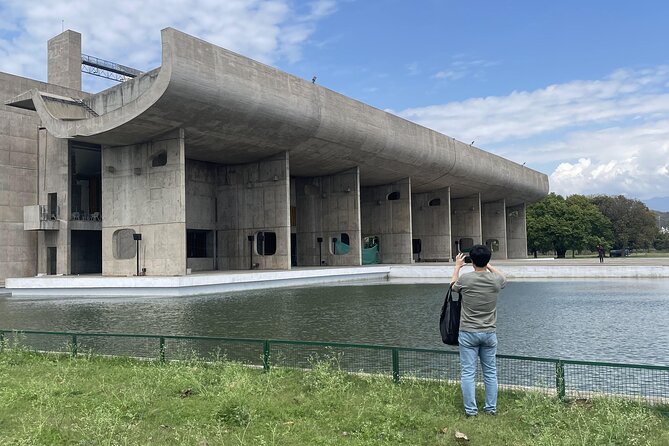
The Capitol Complex is the essential first stop. This UNESCO World Heritage site brings together the Secretariat, Assembly Hall, and Open Hand Monument, all built around Corbusier’s ideas about civic power, light, shadow, and mass.
You receive guided access rather than simply viewing the buildings from a road. That matters because the complex can be hard to read from photographs alone. The scale is immense, and the spaces were designed to express the importance of public institutions.
The scheduled visit is about an hour. Bring patience and a charged phone, since this is one of the places where photographers and architecture students may want extra time. Rusty is used to slowing down for people who want to study details, while still keeping the group moving.
Le Corbusier Centre: the architect behind the city
The Le Corbusier Centre occupies the old architects’ building and serves as a museum and memorial center. The visit lasts around 50 minutes and uses visual demonstrations to explain ideas about natural cooling and early sustainable design.
This stop helps you move beyond the familiar image of Corbusier as a concrete modernist. You can see how ventilation, shade, orientation, and climate were part of the thinking. Chandigarh’s heat is not a minor detail, and the building’s design choices make more sense when you consider the local weather.
Admission is included. This is also a useful stop for anyone who finds pure architectural theory dry, since the demonstrations give you something practical to observe.
A few more architecture walks in the world worth a look
- Chicago Architecture River Cruise
★ 5.0 · 15,756 reviews - Chicago River 90-Minute Architecture Tour
★ 4.5 · 9,629 reviews - Chicago River: 1.5-Hour Guided Architecture Cruise
★ 4.8 · 8,046 reviews - Chicago Architecture Center River Cruise aboard First Lady
★ 5.0 · 5,536 reviews
Gandhi Bhawan and Panjab University
Gandhi Bhawan is one of Chandigarh’s most recognizable buildings. Designed by Pierre Jeanneret, it sits within Panjab University and is known for its distinctive spinning lotus-shaped roof.
The guided visit lasts about 30 minutes. It is short, but the building gives you a valuable counterpoint to the Capitol Complex. Instead of government authority, you are looking at a place associated with learning and reflection. The unusual roof is the obvious visual hook, but the real value comes from understanding how Jeanneret shaped campus buildings for climate, movement, and identity.
The wider Panjab University visit lasts about 40 minutes. You see another side of Chandigarh’s planning, where academic buildings form a larger social setting. If you are interested in how a city works day to day, this is more useful than visiting only famous monuments.
Chandigarh Architecture Museum
The Chandigarh Architecture Museum is housed in a raw concrete structure inspired by Corbusier’s 1965 Zurich Pavilion. Its tubular stairway and three levels of exhibits provide a clear account of the city’s modernist development.
Plan on one hour here. The museum is especially helpful if you are new to Chandigarh, because it gives the city a timeline and shows how plans became buildings. Exhibits include rare material, so this is not just a place for taking pictures of concrete surfaces.
I would pay attention to how the museum changes your reading of the sites visited earlier. After seeing models, drawings, and historical material, the broad roads, sector planning, and monumental forms begin to connect.
Open Hand Monument, Geometric Hill, and the Tower of Shadows
The Open Hand Monument is Chandigarh’s best-known symbol and part of the UNESCO-listed Capitol Complex. It represents peace and unity, and Rusty takes you close enough to appreciate its structure rather than treating it as a distant photo stop.
The visit takes about 25 minutes. If the wind is working, the monument’s moving element adds a small bit of drama. The stop is brief, but it gives the city’s official symbol a clearer meaning.
Geometric Hill follows with about 20 minutes of guided access. Its grid-like earth mounds and concrete forms are part of Corbusier’s larger Capitol Complex design. This is an easy place to rush through, so the guide’s explanation helps you notice how the shaped ground is part of the architecture.
The Tower of Shadows takes about 15 minutes. Corbusier designed it as a demonstration structure for studying the movement of the sun. The open concrete form shows that Chandigarh’s architecture was not only about monumental appearance. It was also a place to test shade, orientation, and solar control.
Museum Maison Jeanneret
The first house built in Chandigarh became the home of Pierre Jeanneret for 11 years and is now Museum Maison Jeanneret. The 30-minute visit gives you a more domestic view of the city’s design.
This may be one of the most revealing stops for anyone who wants to understand how the architects lived with their own ideas. Public buildings can feel distant and official. A house shows proportion, circulation, furniture, shade, and daily use in a more intimate way.
Access is described as rare, so local conditions may affect what you can see. That is worth keeping in mind when planning your expectations.
Day two: water, commerce, housing, and memory
The second day broadens the subject. You move from famous modernist structures to the systems and ordinary spaces that make Chandigarh a city. This is where the tour becomes more than an architecture checklist.
Sukhna Lake and the city’s northern edge
Sukhna Lake is a manmade reservoir associated with Corbusier’s planning for Chandigarh. The 30-minute walk explains its role in groundwater renewal and in cooling the northern sectors.
The stop is gentler than the Capitol Complex, which makes it a good reset after the first day’s concrete-heavy schedule. You are looking at planning on a larger environmental scale, not just at a single building.
Do not expect a long lakeside outing. The listed time is about half an hour, so think of it as a guided walk and explanation rather than a relaxed morning at the water.
Sector 17 Market: Corbusier’s commercial city
Sector 17 Market is one of the most useful stops for understanding how Chandigarh was intended to function for ordinary daily needs. The one-hour walk follows shaded, tree-lined paths through the city’s main commercial center.
This part of the plan often gets less attention than the monumental buildings, yet it may tell you more about urban life. Commerce, public space, shade, and pedestrian movement come together here. You can watch the city being used rather than simply admire it.
The stop has no admission charge. It is also a natural point for people watching and for taking a break, although snacks and drinks are not included in the tour price.
Chandigarh War Memorial
The War Memorial is set within Bougainvillea Garden in Sector 3. The 30-minute visit is quieter and more reflective than the modernist sites.
Its design was conceived by Lieutenant General J. F. R. Jacob and brings a different historical layer into the tour. Chandigarh is often presented through Corbusier, but this stop reminds you that the city also carries military memory and the stories of people connected with the region.
The park setting gives the visit a calmer pace. It is a good contrast to the formal scale of the Capitol Complex.
Pierre Jeanneret’s public housing
The walking visit through Pierre Jeanneret’s public socialist housing is one of the tour’s most distinctive elements. The housing remains functional in its original setting, and access is described as rare and subject to local conditions.
This is where architectural ideals meet everyday life most directly. Instead of seeing a preserved monument, you walk through housing that still serves its original purpose. Rusty’s own experience of living in Corbusier-designed public housing adds useful context here.
Allow for some uncertainty. Local conditions can affect access, and this is not a standard museum visit. If you care most about how planned cities work for residents, this stop may be more valuable than another famous monument.
Government Museum and Art Gallery
The Government Museum and Art Gallery occupies a 1960s heritage building designed by Le Corbusier. The one-hour guided visit covers artifacts from the pre-Partition era, including material from Pakistan, and a major collection of Greco-Buddhist art.
This is an important change of subject. Chandigarh’s modern architecture is only one part of the city’s story. The museum connects the new capital to older artistic and cultural traditions from across the region.
The collection gives you an indoor break and a chance to see objects rather than only buildings. Admission is included, as it is at the other major stops.
Lake Club: recreation in Corbusier’s later work
The final stop is Lake Club, a private yacht club designed by Corbusier about a year before his death. It was created for boating and social activity, and the guided visit explores a less familiar part of his work.
The 30-minute stop is useful because it shows Corbusier designing for leisure rather than government, education, or housing. You see how his ideas carried into a recreational setting.
Access to a private club can depend on local arrangements, so the exact experience may vary. Still, it gives the second day a fitting ending by returning to Sukhna Lake and to the question of how planned public spaces shape social life.
What the $71.02 price includes
At $71.02 per person, this tour is priced as a full two-day experience rather than a short sightseeing outing. The value is strongest if you use the transport and visit most of the included sites.
The price covers:
- Pickup and drop charges
- Parking
- An air-conditioned vehicle
- Driving, waiting, and taxi costs
- Entrance fees
- Photography tickets and fees
- Admission at the listed sites
That package removes several small costs that can add up across two days. Chandigarh’s sites are spread across different sectors, so having transport matters, particularly during hot weather or between timed visits.
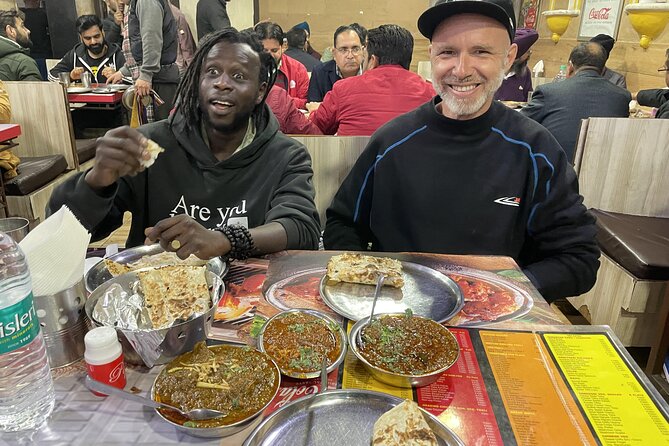
Snacks and frequent food stops cost extra. The stops are intended to remain inexpensive, with choices suited to students and backpackers, but you should carry some spending money. Gratuities are optional.
One point to weigh is group size. The maximum is 41 people. Rusty’s ability to adjust the pace and respond to individual interests is a real benefit, but a large departure group can make rare-access stops feel less intimate.
Who will get the most from this tour
I would choose this experience if you want to understand why Chandigarh looks and works the way it does. It suits architecture students, urban planners, photographers, design fans, and curious visitors who want more than a quick collection of photo stops.
It also works for people who know little about modern architecture. Rusty’s humor and personal connection keep the subject approachable, and the mix of museums, markets, housing, water, and public buildings prevents the two days from feeling like one long lecture.
Families can benefit from the varied pacing, though younger children may tire during the longer architecture-focused sections. Couples and independent visitors who enjoy conversation should find the format rewarding.
I would think twice if you have only a few hours in Chandigarh, dislike structured sightseeing, or want a tour focused mainly on food and shopping. This is a serious look at the city, with snacks and local stops added around the main subject.
Practical details before you book
The start time is 9:00 am. Pickup is offered, and the vehicle is air-conditioned. The experience is near public transportation, service animals are allowed, and most people can participate.
Weather matters. The tour requires good conditions, and poor weather can lead to a new date or a full refund. Cancellation terms are strict close to departure: cancel at least six full days ahead for a full refund, two to six days ahead for a 50 percent refund, and less than two full days ahead for no refund.
A public holiday or an unexpected closure can also affect access to major sites. Rusty has shown flexibility in reshaping a day when key places close, but you should accept that some visits may change if local conditions intervene.
Should you book The Hipster Chandigarh Architecture History Tour?
Book it if you want the city explained by someone who has lived inside its architecture, not just studied it from a guidebook. Rusty’s strongest qualities are his personal connection, clear storytelling, humor, and willingness to adjust the pace. The rare housing and Jeanneret visits add something that a standard city tour may not offer.
The main tradeoffs are the two-day commitment, possible group size, extra snack costs, and the fact that access can depend on local conditions. For a short Chandigarh stop, choose a shorter outing. For a serious look at planning, architecture, memory, and daily life, the $71.02 package offers strong value.
FAQ
How long is The Hipster Chandigarh Architecture History Tour?
The experience lasts approximately two days. Day one focuses on the Capitol Complex, museums, Panjab University, and major Corbusier and Jeanneret sites. Day two includes Sukhna Lake, Sector 17 Market, public housing, the War Memorial, the Government Museum and Art Gallery, and Lake Club.
What time does the tour start?
The tour starts at 9:00 am.
Is pickup included?
Yes. Pickup and drop charges are included, along with parking, driving, waiting, and taxi costs.
Are admission and photography fees included?
Yes. Entrance fees, admission fees, and photography tickets and fees are included.
Is food included?
No. The tour makes frequent snack stops, but you pay for your own food and drinks. Gratuities are optional.
What happens if bad weather cancels the tour?
If poor weather causes cancellation, you will be offered a different date or a full refund.
How far in advance can I cancel for a full refund?
You must cancel at least six full days before the experience start time for a full refund. Cancellations two to six full days ahead receive a 50 percent refund, while cancellations less than two full days ahead are not refunded.
Newly added in the world
- Barcelona: Guided tour e-bike Barcelona historical and modernist Barcelona★ 4.5 · 5 reviews
- Barcelona Architecture Walking Tour With Casa Batlló Upgrade★ 4.8 · 11 reviews
- Astana: Old City Tour, Imperialistic and Soviet Architecture★ 5.0 · 4 reviews
- Barcelona Beyond Gaudí: Modernism, Rooftops, and Hidden Gems★ 5.0 · 2 reviews
- An Architect’s Tour of Downtown Santiago★ 5.0 · 7 reviews
- Architecture Tour: Old Historic Madrid with an architect★ 4.3 · 3 reviews
- London: Architecture Tour of Benjamin Franklin House★ 5.0 · 5 reviews
- Architectural Wonders of KAFD, An Iconic Destination★ 5.0 · 3 reviews
Historical Tours, compared.
Chicago in a Day: Food, History & Architecture Walking Tour
Read our review →
Charleston’s Best Highlights: History, Culture & Architecture
Read our review →
Palm Springs Modernism Architecture & History Bike Tour
Read our review →
Historic Georgetown: History, Gossip, & Architecture Walking Tour
Read our review →
Charleston History, Homes, and Architecture Guided Walking Tour
Read our review →

Historical and Architectural Chicago Fireboat River & Lake Cruise
Read our review →Browse the lists this tour appears in