
Review · WALKING TOURS
City Walk with Architect: Private walking tour of Rome
Rome reveals its story through streets, fountains, columns, and facades, and this private architecture walk puts those details in the foreground. You move from Piazza della Minerva to Piazza Venezia, taking in famous sights while your guide explains how Rome’s buildings and public spaces fit together.
I like the flexible route, which lets you focus on architecture, history, photography, or a mix of all three. I also like the personal attention. Guide Bado has been especially patient with questions, photos, late arrival, and practical tips about Rome. The main drawback is simple: this is a long walking tour with limited time at each stop, and it may not include interior visits.
Key points at a glance
- A private route through central Rome: Only your group participates, so you can ask questions without holding up a larger crowd.
- Architecture beyond the obvious sights: The route includes the Trevi Fountain, Spanish Steps, Pantheon, and lesser-known details at places such as the Temple of Hadrian.
- Guide Bado brings an architecture focus: He can adapt the walk to your interests and explain both design and Roman history.
- About 2.5 hours on foot: Plan for at least an hour of walking, with short pauses along the way.
- Outdoor sightseeing with a terrace finish: The route ends at Piazza Venezia and includes the Vittoriano building with access to its terrace.
- Good value for a private experience: At $118.82 per person, the price makes more sense for couples, families, or small groups who want a custom walk rather than a fixed group route.
Why this Rome walk feels different from a standard city tour
Many Rome walks take you from one famous sight to the next with a quick date, name, and photo stop. This experience takes a different approach. The subject is architecture, so you look at how Rome’s public spaces were planned, how monuments frame a piazza, and how different periods of the city sit side by side.
That focus can change the way you see familiar places. The Trevi Fountain is not only a place to toss a coin. The Spanish Steps are not only a grand staircase. Piazza Navona is not only a pretty square for a break. You get a chance to ask why these places look the way they do and how their buildings, monuments, and open spaces work together.
I also like the fact that the walk is private. If you want to stop for a photo, ask about a column, or spend more time on a building that catches your eye, you do not have to follow the pace of a large group. Bado has been praised for taking questions seriously, helping with photos, and offering practical suggestions for the rest of your time in Rome.
The route is not fixed in the same way as a large scheduled group excursion. You can discuss your interests in advance and shape the walk around them. One person might want ancient structures and grand civic buildings. Another might prefer Baroque fountains and urban design. The guide can build the emphasis around your group.
More Walking Tours in Italy
- Lecce: Baroque Architecture and Underground Walking Tour
★ 4.6 · 1,248 reviews - Experience Florence’s Art and Architecture on a Walking Tour
★ 5.0 · 318 reviews - Palermo: Art and Architecture Walking Tour
★ 4.7 · 136 reviews
Piazza della Minerva: a quiet start near the Pantheon
The walk begins in Piazza della Minerva, a small square near the Pantheon. It is a smart starting point because Rome’s layers are close together here, and the square gives you a calmer introduction before the busier sights ahead.
You begin with about five minutes in the piazza. That is not much time, but the purpose is to get oriented and set the tone for the walk. If you have a particular interest, mention it at the start. The private format makes this the right moment to tell Bado what you want to notice.
The opening location is also convenient for public transportation, and the tour ends at Piazza Venezia rather than returning you to the starting point. That matters when planning your day. You can continue sightseeing from there instead of retracing the route.
Trevi Fountain and the Column of the Immaculate Conception
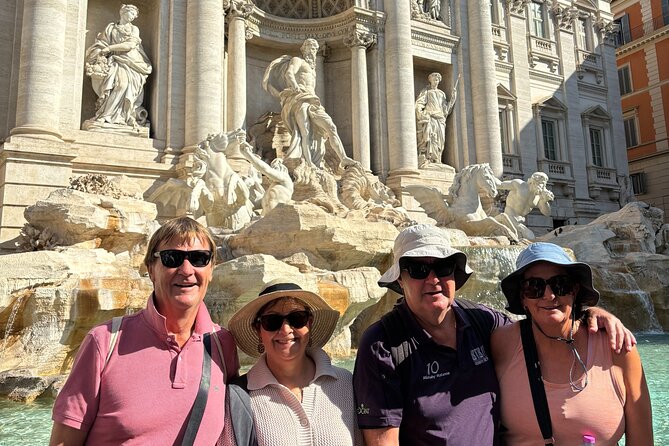
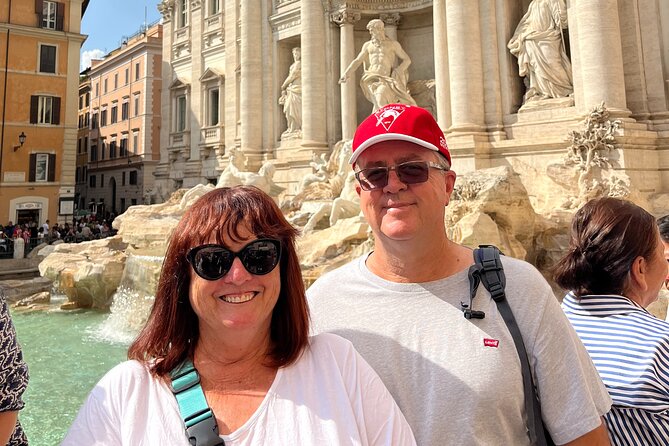
The next section brings you to the Fontana di Trevi for about 15 minutes. The fountain is one of Rome’s most crowded photo stops, so a guide adds value by directing your attention beyond the obvious front view.
Look at the way the water, rock forms, statues, and palace facade are arranged as one grand scene. You can ask about the fountain’s architectural choices instead of spending the whole stop trying to get a clear selfie. Fifteen minutes passes quickly here, especially if the area is busy.
The route then continues to the Column of the Immaculate Conception for another 15-minute stop. This monument gives you a chance to compare a freestanding column with the elaborate fountain design you have just seen.
That comparison is one of the best reasons to take an architecture-focused walk. Rome’s monuments do not all communicate in the same way. Some use water and movement. Others use height, symbols, and a carefully placed viewpoint. A guide can help connect those ideas without turning the stop into a list of dates.
Spanish Steps and Piazza del Popolo
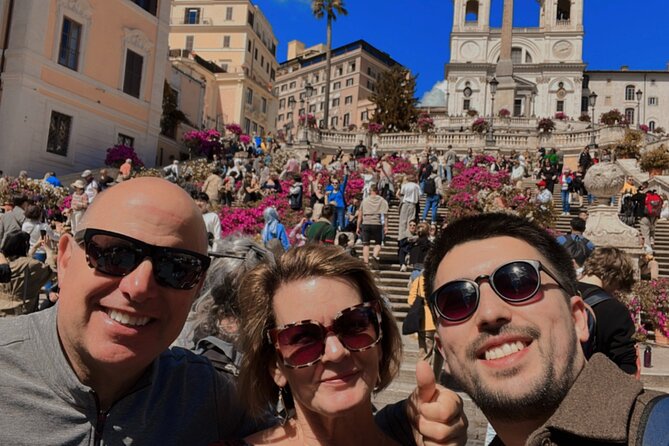
The Spanish Steps receive about 15 minutes. You will see a major urban staircase, a church above, and a square below, all arranged to create a strong visual axis. The stop is brief, so you are more likely to study the overall composition than explore every nearby street.
This is also one of the more physically demanding parts of central Rome. The tour is not a flat stroll, and you should wear comfortable shoes. Small breaks are included, but the activity is not recommended if you cannot walk for at least an hour.
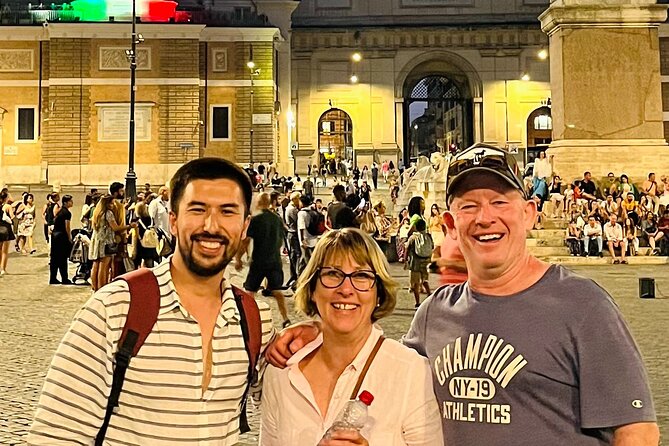
From the Spanish Steps, the route continues to Piazza del Popolo. The piazza gets another 15 minutes and offers a larger civic setting. Its scale gives you a useful contrast with the tighter spaces around Trevi and the Spanish Steps.
Piazza del Popolo is the kind of place where the guide’s perspective matters. You can look at entrances, symmetry, churches, and the way the open space directs movement through the city. If you like photography, this is a good place to ask Bado about framing and viewpoints.
Same city, a different facade:
- Naples: San Gaudioso Catacombs Guided Tour
★ 4.7 · 1,105 reviews - Caprarola: Villa Farnese, masterpiece of Renaissance architecture
★ 4.5 · 28 reviews - Best of Bologna in one day : Food, architecture, art and history
★ 5.0 · 27 reviews - Private Tour: Venice Art and Architecture Walking Tour
★ 4.0 · 22 reviews
Piazza Colonna and the Temple of Hadrian
The stop at Piazza Colonna focuses on the Column of Marcus Aurelius. You have about 15 minutes to examine the column and its reliefs, which present a different kind of architectural and historical statement from the fountains and stairways earlier in the walk.
The column is especially useful for understanding how Rome uses monuments to mark public space. Ask about what you can actually see from ground level. A short stop cannot cover every detail on a tall column, but it can give you a clearer idea of why it was built and how it fits into the surrounding square.
The Temple of Hadrian follows, again with about 15 minutes. The remains are integrated into the modern city, which is part of their appeal. Instead of a fully separate archaeological site, you encounter ancient architectural fragments within the working streets of Rome.
This may be one of the more rewarding stops for people who want something beyond the standard checklist. It is easy to pass by without understanding what you are seeing. With an architecture student as your guide, you can ask how the ancient structure relates to the later buildings around it.
Piazza Navona: Rome’s grand outdoor room
Piazza Navona receives about 15 minutes. The long, open square is one of Rome’s most recognizable public spaces, and it is a good place to discuss how an urban plan can preserve the shape of an earlier structure while giving it a later identity.
You can expect an outdoor explanation rather than a long indoor visit. That distinction matters throughout this experience. The tour is designed around streets, squares, facades, columns, fountains, and views. It is not a substitute for a museum visit or an admission-based tour of Rome’s interiors.
I like Piazza Navona as a midpoint because it gives you room to pause and reset. After several compact stops, the square feels more open. You can ask questions, take photos, and compare its layout with the smaller piazzas earlier in the walk.
The Pantheon and the question of interior access
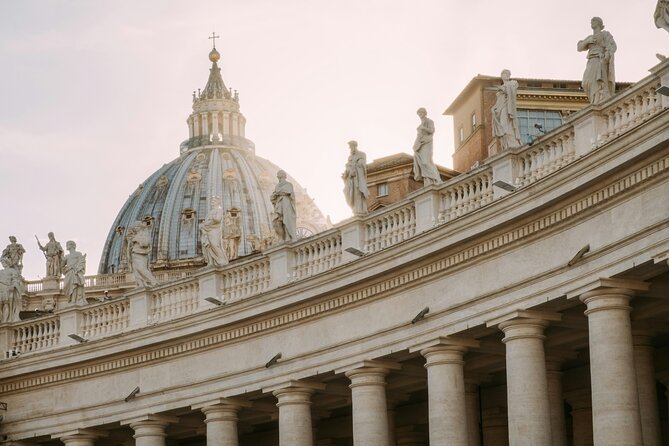
The Pantheon is listed as a 15-minute stop. Its exterior alone offers plenty to discuss: the portico, massive columns, pediment, and the way the ancient structure meets the surrounding streets.
Still, you should clarify your expectations before booking. The experience includes an English-speaking guide, but it does not list private transportation or general admission tickets as included. One person who took the walk wished there had been time to enter some of the sites. That is a fair limitation to keep in mind.
If stepping inside the Pantheon is a priority, plan a separate visit around this tour or ask in advance what the current route allows. The walk’s strength is its broad view of Rome’s architecture, not guaranteed interior access at every stop.
The Pantheon also shows why a private guide can be useful. You can ask focused questions about structure, materials, later changes, or how the building has been used over time. In a large group, those questions may be lost. Here, they can shape the conversation.
Piazza Venezia and the Vittoriano terrace
The final stop is Piazza Venezia, with about 25 minutes at the Vittoriano building and access to its terrace. This is the longest stop listed, and it gives the walk a strong finish after the smaller squares and monuments along the way.
The Vittoriano is hard to miss. Its large scale and bright stone make it one of Rome’s most striking modern-era monuments. From the terrace, you get a broader view of the city, which helps tie together the streets you have just walked.
Ending here is practical. Piazza Venezia is a major central point, so you can continue toward other sights, find food, or use public transportation afterward. Since the tour begins at Piazza della Minerva and does not provide a ride back, you should think of the ending as part of your day’s plan.
The supplied route lists Piazza Venezia as the endpoint, although one account of the walk also included Castel Sant’Angelo and the Tiber River. That suggests the guide may adjust the route according to your interests and available time. Do not assume every possible sight will fit into one 2.5-hour walk. Discuss your priorities before setting out.
What $118.82 per person gets you
The price is $118.82 per person. That is not the cheapest way to see central Rome, but you are paying for a private guide, not simply transportation between sights. The value improves if you are traveling with several people and can take advantage of a group rate.
A private walk also gives you something a standard group tour cannot: control over the conversation. If you are an architecture student, a photographer, a family with mixed interests, or simply someone who dislikes fixed scripts, that flexibility can justify the cost.
The price does not include private transportation. That is not a major concern here because the experience is built around walking and the sights are in central Rome. It does mean you need to arrive at Piazza della Minerva on your own and arrange the rest of your day from Piazza Venezia.
I would consider this a good value for someone who wants interpretation rather than a fast photo circuit. If you only want to see the main landmarks and do not care about design or historical context, a less expensive group walk may suit you better.
Walking pace, group size, and practical planning
The tour lasts about two hours and 30 minutes. The stop times add up quickly, and you also need to account for walking between locations. You will cover a lot of central Rome, so comfortable shoes are essential.
There are small breaks, but you should be able to walk for at least one hour. Most people can participate, and service animals are allowed. The route is near public transportation, but no private vehicle is provided.
Because the tour is private, you can ask for photos and pause for questions. Bado has been especially accommodating with late arrival and picture-taking. Even so, arriving on time is wise, since a late start can force you to choose between stops.
The experience is offered in English. Confirmation arrives at booking, and cancellation is free up to 24 hours before the start time. Within 24 hours, the amount paid is not refunded, and changes are not accepted.
Who should book this architecture walk?
I would recommend it most strongly to:
- People who want to understand Rome’s buildings instead of only collecting photos
- Couples, families, or small groups who prefer a private guide
- Visitors who want to adjust the route around architecture, monuments, or photography
- First-time visitors who want a useful orientation to central Rome
- Repeat visitors looking for details they may have missed on an earlier trip
I would think twice if your main goal is to enter major monuments. This is primarily an outdoor walking experience, and the short stop times do not allow a full visit to every site.
I would also avoid scheduling it immediately after a long walking day. Rome’s center looks compact on a map, but the route includes many stops and plenty of pavement. Treat it as an active sightseeing session, not a relaxed coffee-and-piazza stroll.
Final decision: a strong choice for curious walkers
You should book this tour if you want a private, flexible introduction to Rome’s architecture and like asking questions along the way. The combination of famous sights, less obvious structures, Bado’s personal attention, and the Vittoriano terrace makes it more thoughtful than a basic landmark checklist.
You should choose another experience if interior access, a slower pace, or transportation is your top concern. For everyone else, the $118.82 price is reasonable when shared by a small group, especially if you tell the guide your interests before the walk begins.
FAQ
Where does the tour begin?
The tour begins at Piazza della Minerva, 00186 Rome, in the center of the piazza or at another point depending on the itinerary.
Where does the tour end?
The listed endpoint is Piazza Venezia in central Rome.
How long does the walking tour last?
The tour lasts approximately two hours and 30 minutes.
Is the tour private?
Yes. Only your group participates in the activity.
What language is the tour offered in?
The tour is offered in English with an English-speaking guide.
Is transportation included?
No. Private transportation is not included. The experience takes place as a walking tour.
Can the route be adjusted?
Yes. The tour is designed to allow flexibility rather than following only one predetermined route. You can discuss your interests and itinerary with the guide.
Is the tour suitable for people with limited walking ability?
The tour is not recommended for people who cannot walk for at least one hour. There are small breaks between sections.
Are admission tickets included?
The listed stops have no admission ticket charge, but the experience includes an English-speaking guide rather than a separate package of attraction tickets. Interior access is not guaranteed at every site.
Newly added in Italy
- Venice Art and Architecture Private Walking Tour★ 4.5 · 11 reviews
- Basilica San Marco and the Pala d’Oro with Architect Guide★ 4.5 · 19 reviews
- Walking tour in Venice with an architect★ 5.0 · 16 reviews
- LECCE: AMONG ARCHITECTURAL TREASURES IN THE LECCE BAROQUE★ 4.7 · 3 reviews
- Martina Franca: Baroque and Rococo Architecture Walking Tour★ 5.0 · 4 reviews
- Noto: Sicilian Baroque Architecture Guided Walking Tour★ 4.3 · 6 reviews
- Private Tour: Venice Art and Architecture Walking Tour★ 4.0 · 22 reviews
- Best of Bologna in one day : Food, architecture, art and history★ 5.0 · 27 reviews
Walking Tours, compared.
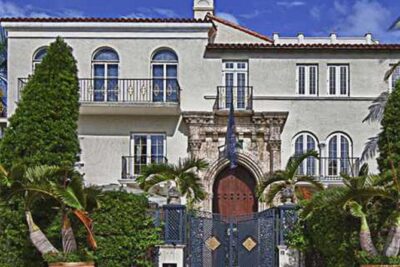
The Official Art Deco Walking Tour by The Miami Design Preservation League
Read our review →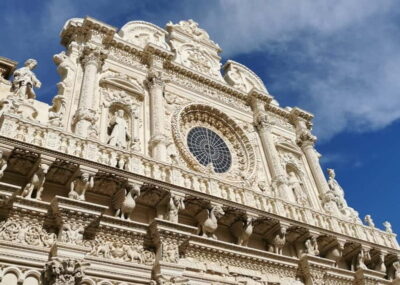
Baroque Architecture and Underground Walking Tour
Read our review →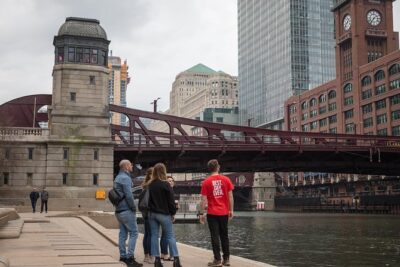
Chicago in a Day: Food, History & Architecture Walking Tour
Read our review →

Ramblas, Old Town, Gothic and Gaudi Architecture Walking Tour
Read our review →
Chicago’s Secret Interiors Architectural Walking Tour
Read our review →
Browse the lists this tour appears in