
Review · WALKING TOURS
Rotterdam Architecture Highlights Walking Tour
Rotterdam’s best story is written in concrete, glass, steel, and sharp angles. This two-hour architecture walk follows the city’s postwar rebirth from Centraal Station to the Maas River, with stops at Timmerhuis, Markthal, Schouwburgplein, and the Cube Houses area.
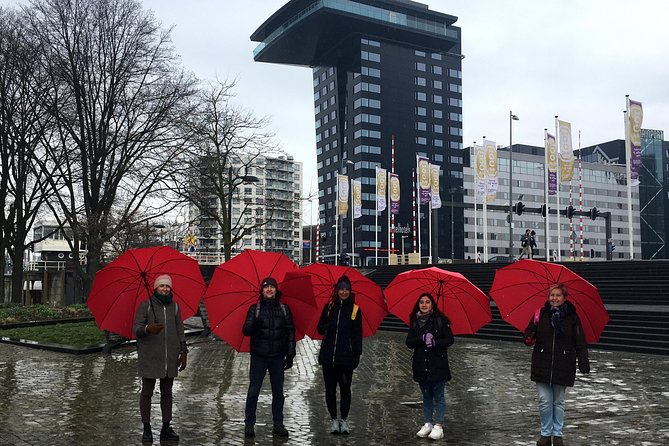
I like the architect guide approach, which gives the buildings more meaning than a quick photo stop. I also like the small-group limit of 15, since guides such as Tania and Silvia can answer questions and adjust the discussion to the group.
The main drawback is that this is a proper city walk, not a gentle stroll. One person counted close to 12,000 steps, and the route may pass the Cube Houses rather than taking you inside them. If you want interiors or a detailed technical study of every structure, check your expectations.
Key points to know before you book
- A guided look at Rotterdam’s rebuilding: The walk explains how the city changed after World War II and how present-day planning affects daily life.
- Five major stops: You visit Centraal Station, Schouwburgplein, Timmerhuis, Markthal, and Boompjeskade, with the Cube Houses included in the wider route.
- Professional architect guides: Tania and Silvia are among the guides praised for clear explanations, patience, and strong knowledge of the city.
- Small groups help: The maximum is 15 people, and some departures may be much smaller.
- Long walking time: Plan for steady movement, city streets, and possibly cold wind near the river.
- Good value for architecture fans: At $54.31 per person, the price pays for an informed, personal explanation rather than admission to paid attractions.
Why Rotterdam makes such a good architecture walk
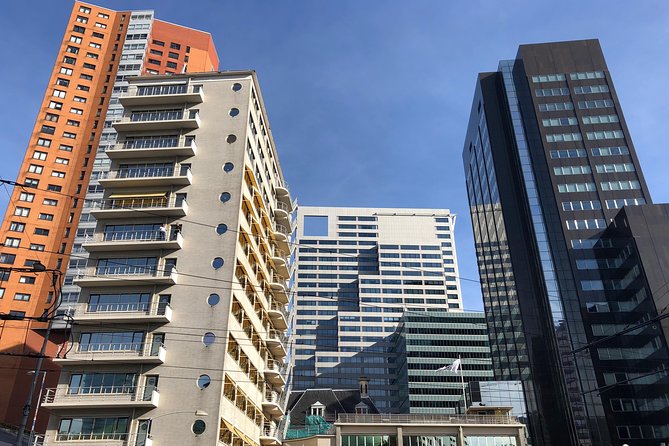
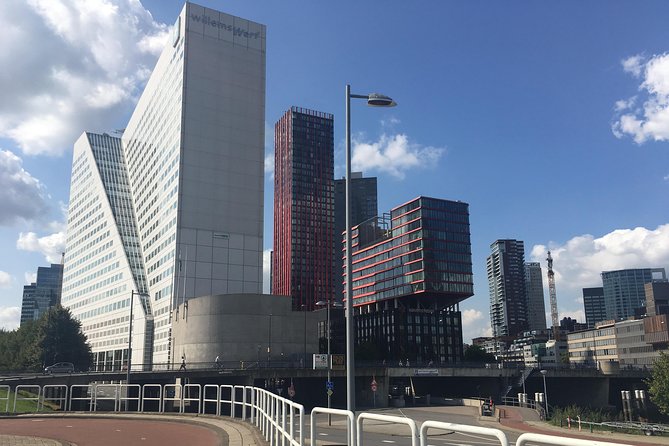
Rotterdam feels unlike most Dutch cities. Instead of one continuous old center, you find broad streets, modern towers, experimental housing, public squares, and new buildings placed beside traces of an older city. The result can feel abrupt at first. A guide helps you read the plan.
The central idea of the walk is Rotterdam’s rebuilding after World War II. You are not simply looking at unusual buildings. You are learning why the city accepted bold designs, how public spaces were shaped, and how architecture connects to politics, housing, commerce, and transport.
That wider view is one reason I would choose this tour early in a Rotterdam visit. You get a framework for understanding the city before exploring it on your own. A building that first looks odd may begin to make sense once you hear about its purpose and the problems it was meant to solve.
The tour is offered in English, though the guide may be multilingual. The architects who lead it, including Tania and Silvia on different departures, bring both professional training and personal familiarity with Rotterdam. Their explanations can move from design choices to city policy and everyday life.
This is not limited to technical talk about materials and construction. That will suit most visitors, especially anyone curious about how a city works. If you are an architect or architecture student hoping for a detailed study of structure, engineering, and building methods, you may find the social and political discussion takes up more time than expected.
More Walking Tours in the world:
- Lecce: Baroque Architecture and Underground Walking Tour
★ 4.6 · 1,248 reviews - Chicago in a Day: Food, History & Architecture Walking Tour
★ 5.0 · 1,153 reviews - Ramblas, Old Town, Gothic and Gaudi Architecture Walking Tour
★ 5.0 · 723 reviews
Starting at Rotterdam Centraal Station
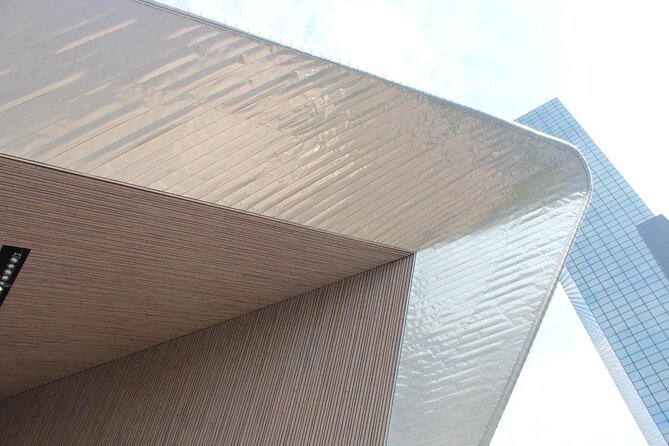
The walk begins at Rotterdam Central Station, a practical meeting point with easy public transport connections. Give yourself time to find the exact meeting place, since the address and map details can be slightly confusing. One person found the meeting instructions less clear than expected, so this is worth checking before you set out.
Centraal Station is a fitting first stop. It is the city’s front door and a clear example of Rotterdam’s modern identity. The tour allows about 10 minutes here, enough to discuss the station’s role as a new entrance to the city and to get your first sense of Rotterdam’s scale.
Do not expect a long indoor visit or a station tour. This is an outdoor architecture stop, with the guide explaining what you are seeing. The useful part is the connection between transport and city planning. The station is not just a place to catch a train. It helps introduce the new Rotterdam and links the center with the rest of the Netherlands.
If you arrive by train from Amsterdam, the tour can work well as a day trip. One person did exactly that and found the experience worthwhile. The two-hour length also leaves time for lunch, more sightseeing, or a return train.
Schouwburgplein and the city as a public stage
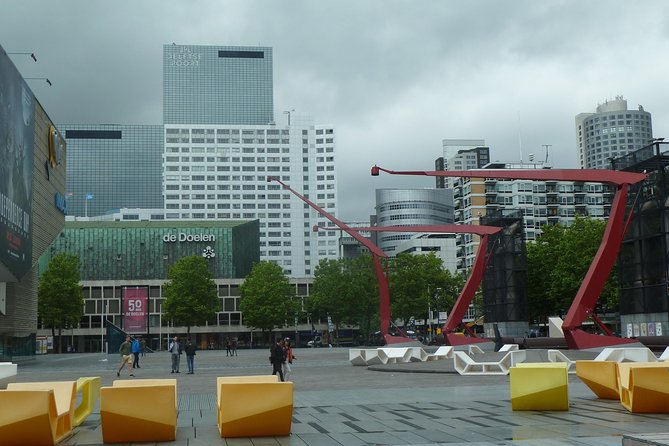
From the station, the route continues to Schouwburgplein, described as Rotterdam’s cultural podium square. This is a good place to think about public space rather than a single building.
The square has an urban, deliberately designed character. Your guide explains how a large open area can serve as a stage for city life, cultural events, gathering, and movement. The discussion here helps you notice the space between buildings, not just the buildings themselves.
The scheduled stop is about 10 minutes, but the actual pace can vary. Guides have sometimes spent extra time answering questions or extending the walk when the group wanted more. That flexibility is useful, especially if you are more interested in city planning than in simply collecting photographs.
There is also a small caution. The tour’s route is centered on modern Rotterdam, so it does not give much attention to the old center. One architecture-focused participant wished the walk had included an older area nearby. If traditional Dutch streets, old facades, and historic interiors are your main goal, pair this with a separate old-town walk.
Timmerhuis, an OMA design in five focused minutes
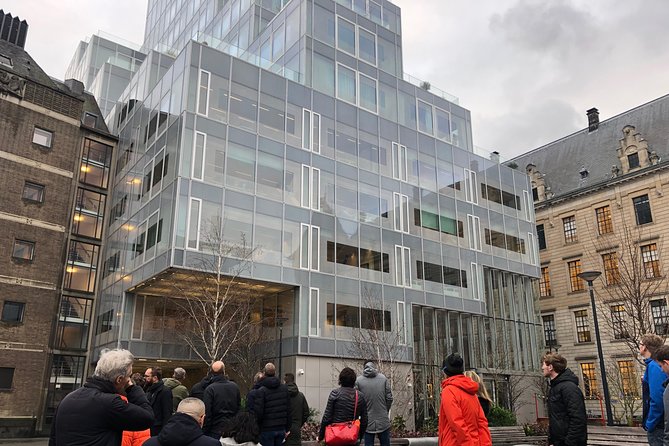
Timmerhuis is one of the tour’s most distinctive modern buildings. It was designed by OMA, the Rotterdam architecture practice, and the guide presents it as an architectural icon.
The planned stop is short, about five minutes. That means you will get an explanation and viewing time rather than a long study of the building. Still, the stop works well in the sequence because it shows how Rotterdam keeps testing new forms in the center.
This is where an architect guide adds real value. You can ask why the building looks the way it does, how its parts relate to the surrounding streets, and what role it plays in the city. The walk does not promise entry inside, so think of Timmerhuis as an exterior interpretation stop.
For a visitor who likes design but does not speak architectural jargon, the guides’ ability to explain ideas in plain language matters. Tania and Silvia are both described as engaging and willing to answer questions. Some groups have received extra time when the discussion ran longer than planned.
A few more architecture walks in the world worth a look
- Chicago Architecture River Cruise
★ 5.0 · 15,756 reviews - Chicago River 90-Minute Architecture Tour
★ 4.5 · 9,629 reviews - Chicago River: 1.5-Hour Guided Architecture Cruise
★ 4.8 · 8,046 reviews - Chicago Architecture Center River Cruise aboard First Lady
★ 5.0 · 5,536 reviews
Markthal, food, color, and daily city life
Markthal gets about 15 minutes, making it one of the longer stops. It is also one of the easiest places for you to enjoy without specialist knowledge. The building combines a market, apartments, and a huge decorative interior, giving the guide plenty to discuss.
The tour presents Markthal as an especially lavish indoor market. You can look at its form, see how it works as a public building, and consider the relationship between food shopping and urban design. This keeps the walk connected to normal city life rather than turning it into a parade of monuments.
The stop is free to enter as part of the walk, according to the tour details. You should not confuse that with included food or shopping. Any purchases are your responsibility.
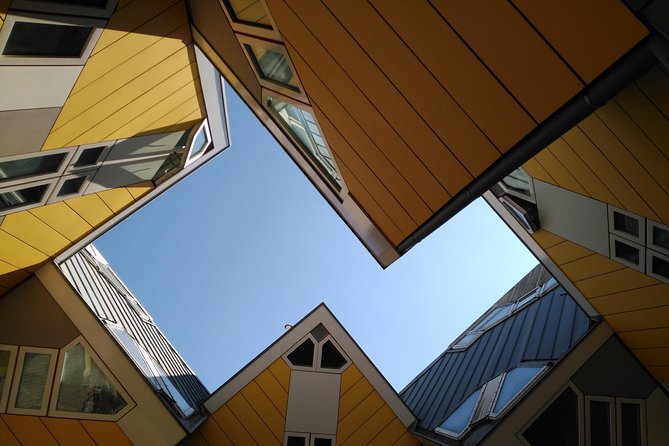
Markthal is also close to the Cube Houses area, one of Rotterdam’s best-known architectural sights. The tour includes the Cube Houses in its coverage, but you may see them from a distance rather than walk through the interiors. This is an important point if the Cube Houses are the main reason you are booking.
If you want to spend time inside a Cube House, plan a separate visit and do not assume this walk includes an interior admission. The tour is about the larger story of Rotterdam’s architecture, not a house museum visit.
Boompjeskade and the Maas River finish
The walk ends at Boompjeskade, beside the Maas River. This final stretch gives you a broad view toward Rotterdam’s South Bank and a chance to see the city from the water’s edge.
I like this ending because it shifts the focus from individual buildings to the relationship between Rotterdam and the river. The view helps explain why the city developed as it did and gives you a natural place to pause after the urban walk.
Allow about 15 minutes here. It is a good photo stop, especially in the evening when the light changes across the river. One group enjoyed a sunset departure, while another found the cold river breeze uncomfortable. Dress for the weather, and remember that Rotterdam can feel colder beside the water than it does at the station.
The tour ends on the riverside rather than returning to Centraal Station. That is convenient if you plan to continue along the river, but you will need to arrange your own way back. The route is near public transport, though the tour does not include hotel pickup or drop-off.
What the guides add to the experience
The guide is the main reason to choose this walk instead of simply following a map. Tania is praised for detailed explanations, friendly conversation, and her clear interest in Rotterdam’s development. Silvia is noted for strong architectural background, humor, communication, and the ability to adjust the content to different nationalities and interests.
The guides do more than point at buildings. They connect the city’s postwar rebuilding with current challenges, social questions, and planning choices. That broader conversation may be exactly what you want, since Rotterdam’s architecture is easier to understand when you know why the city took risks.
The tone also appears flexible. Guides have answered many questions, made restaurant suggestions, and sometimes continued beyond the scheduled two hours. One group received roughly half an hour more. You should not treat extra time as guaranteed, but the small-group format makes a personal conversation more likely.
The tour can also become nearly private if only two people book. One couple found themselves as the only participants and could ask as many questions as they wished. The maximum group size is 15, so the experience should remain manageable even on a fuller departure.
Keep in mind that guides may be multilingual. English is offered, but accents and switching between languages can affect how quickly you follow the discussion. If you have hearing difficulties or prefer very technical explanations, ask questions as you go rather than waiting until the end.
Price, pace, and practical value
The price is $54.31 per person for about two hours. That is not the cheapest way to see Rotterdam’s buildings, since you can walk the route independently for free. The value comes from interpretation, local perspective, and the chance to ask questions as you go.
I would consider the price fair if you are interested in architecture, urban planning, or the city’s postwar rebuilding. It is also useful for a first visit because the guide can point out ideas you might otherwise miss. The value is weaker if you only want quick photo stops or prefer to explore at your own pace.
The pace is more demanding than the short stop times suggest. Moving between several parts of central Rotterdam adds up, and one person estimated nearly 12,000 steps. Wear comfortable shoes and allow enough energy for steady walking.
The minimum age is 12, and at least two people are required per booking. You need moderate physical fitness. The tour is outdoors, so weather affects comfort. If poor weather causes cancellation, you are offered another date or a full refund.
Free cancellation is available up to 24 hours before the start time. Changes or cancellations inside that 24-hour period are not accepted for a refund. The cut-off follows local Rotterdam time.
Who should book this Rotterdam walk
I would recommend it to you if you enjoy seeing how a city was planned, rebuilt, and argued over. It suits architecture fans, design students, curious first-time visitors, and anyone who wants more context than a sightseeing bus can provide.
It also works well for a day trip from Amsterdam. The start at Centraal Station makes arrival simple, and the two-hour route gives you a focused introduction without taking the whole day.
You may want another option if you need a slow, low-effort outing, a tour of old Rotterdam, or guaranteed access inside the Cube Houses. The walk is also less suitable if your interest is limited to construction details. Social policy and city planning form a noticeable part of the discussion.
Should you book the Architecture Highlights Walking Tour?
Book it if you want Rotterdam explained by someone with architectural training and a personal connection to the city. The strongest parts are the postwar story, the thoughtful guides, the small groups, and the final Maas River view.
Before booking, check the meeting-point instructions, wear good shoes, and plan for wind near Boompjeskade. If you want to enter the Cube Houses or explore older streets, add those separately. For a clear first look at Rotterdam’s modern center, this is a useful and well-focused choice.
FAQ
How long does the Rotterdam Architecture Highlights Walking Tour last?
The tour lasts approximately two hours, though the exact length can vary if the guide spends extra time answering questions.
What language is the tour offered in?
The tour is offered in English. The guide may be multilingual.
Where does the tour start and finish?
It starts at Rotterdam Central Station and finishes at Boompjeskade on the riverside.
Which buildings and places are included?
The route includes Rotterdam Centraal Station, Schouwburgplein, Timmerhuis, Markthal, the Cube Houses area, and Boompjeskade by the Maas River.
Is admission included?
The two-hour walking tour and professional architect guide are included. Hotel pickup, hotel drop-off, food, shopping, and any separate paid admissions are not included.
How large is the group?
The tour can have a maximum of 15 people. A minimum of two people is required per booking.
What happens if the weather is poor?
The experience requires good weather. If it is canceled because of poor weather, you will be offered another date or a full refund. You can cancel up to 24 hours before the start time for a full refund.
Newly added in the world
- Barcelona: Guided tour e-bike Barcelona historical and modernist Barcelona★ 4.5 · 5 reviews
- Barcelona Architecture Walking Tour With Casa Batlló Upgrade★ 4.8 · 11 reviews
- Astana: Old City Tour, Imperialistic and Soviet Architecture★ 5.0 · 4 reviews
- Barcelona Beyond Gaudí: Modernism, Rooftops, and Hidden Gems★ 5.0 · 2 reviews
- An Architect’s Tour of Downtown Santiago★ 5.0 · 7 reviews
- Architecture Tour: Old Historic Madrid with an architect★ 4.3 · 3 reviews
- London: Architecture Tour of Benjamin Franklin House★ 5.0 · 5 reviews
- Architectural Wonders of KAFD, An Iconic Destination★ 5.0 · 3 reviews
Walking Tours, compared.
The Official Art Deco Walking Tour by The Miami Design Preservation League
Read our review →
Baroque Architecture and Underground Walking Tour
Read our review →
Chicago in a Day: Food, History & Architecture Walking Tour
Read our review →

Ramblas, Old Town, Gothic and Gaudi Architecture Walking Tour
Read our review →
Chicago’s Secret Interiors Architectural Walking Tour
Read our review →
Browse the lists this tour appears in