
Review · BAUHAUS AND BRUTALIST ARCHITECTURE TOURS
Bishkek : USSR History, Soviet Architects ,Statues & Mosaics
Bishkek’s Soviet story is written across its streets: in broad avenues, monumental squares, concrete apartment blocks, public art, and statues that once taught the values of the Kyrgyz Soviet Socialist Republic. This 4.5-hour walking tour gives you a useful way to read that city, rather than simply pass through it.
I like the focus on Soviet mosaics from the 1960s through the 1980s, which often get overlooked beside grander monuments. I also like the route’s connection between Lenin Square, the old city of Frunze, and Victory Square, since it shows how political ideas shaped Bishkek’s buildings and open spaces. The drawback is simple: this is a long walk, and the experience will be less comfortable if you are not prepared for several hours outdoors.
Key points to know before you book
- Soviet Bishkek in one walk: Follow the city’s transformation from the Russian Empire and early Soviet period through the later decades of the USSR.
- Public art is central: Look closely at mosaics placed on civic and residential buildings from the 1960s to the 1980s.
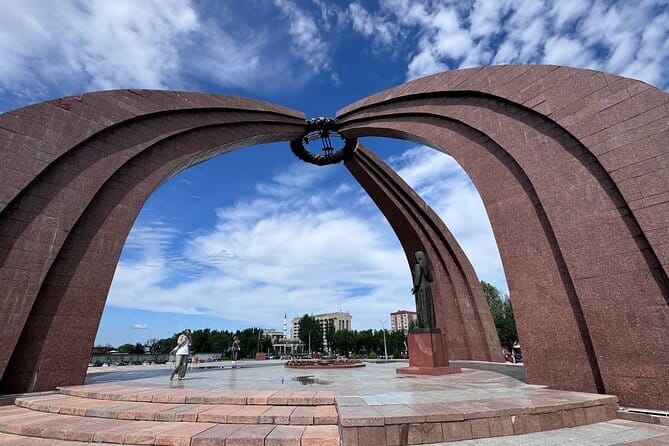
- Major symbolic spaces: Visit Lenin Square and Victory Square, including the eternal flame and soldier statues.
- Several guide languages: Tours may be led in English, Hindi, Pashto, Pushto, Urdu, Punjabi, or Russian.
- Useful local advice: The guide also provides recommendations for special places and local food in Kyrgyzstan.
- Good planning flexibility: You can cancel up to 24 hours before the tour for a full refund, and reserve now while paying later.
Why Soviet Bishkek is best understood on foot
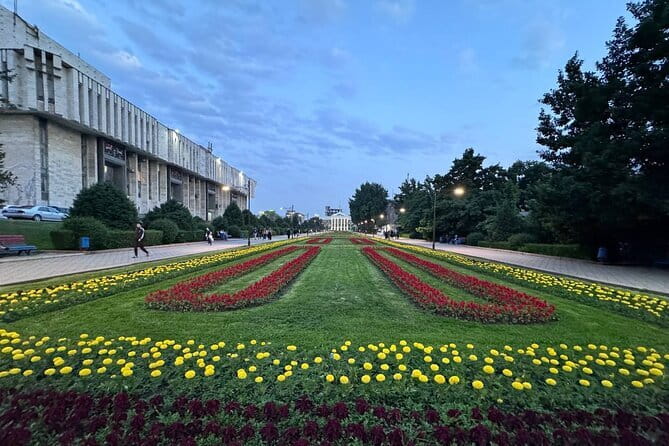
Bishkek can look calm and spacious at first glance, but its central streets were carefully shaped by state planning. The avenues, civic buildings, parks, statues, and apartment blocks all formed part of a larger public message. A walking tour lets you connect those pieces at street level.
The city was known as Frunze for more than sixty years during the Soviet period, named for Bolshevik military leader Mikhail Frunze, who was born in Bishkek. That name is not just a historical footnote. It points to the way the city was remade as part of Soviet Kyrgyzstan, with new public institutions, planned residential areas, broad roads, and monumental civic spaces.
You will not be looking only at famous buildings. The point is to notice how ordinary parts of the city were designed. A residential block, a public office, or a wall beside a busy avenue could carry a large mosaic or a political image. The route helps you see Bishkek as a working Soviet city, not just a collection of monuments.
I find this kind of tour useful early in a stay. It gives you a basic map of the central precinct and explains why certain squares and avenues feel much larger than the city’s day-to-day traffic seems to require.
More Bauhaus and Brutalist Tours in the world:
- London: Brutalist Architecture & History Walking Tour
★ 4.8 · 42 reviews - Le Corbusier’s Chandigarh : A Complete Architecture Tour
★ 4.7 · 25 reviews - Architecture of New Belgrade – Brutalism Decoded
★ 4.5 · 24 reviews
Meeting beneath the Kyrgyz flag
The tour begins at the Kyrgyz Republic flag, listed as the starting and finishing point. The exact meeting arrangements are handled through WhatsApp, which matters in a city where a clear message can make the first meeting much easier.
From there, expect to walk through central Bishkek for about 3.75 hours, with the full activity lasting roughly 4.5 hours. The walking portion is the heart of the experience, so comfortable shoes are not a minor suggestion. You should also bring outdoor clothing and sunglasses, since much of the route takes place in open public spaces.
The supplied information lists the tour as wheelchair accessible. Still, you should discuss the precise route and walking conditions when arranging the meeting, because accessibility on a long city walk can depend on pavement, crossings, and the time spent standing at each stop.
The tour does not include food or drinks. That is not a major issue, but you should plan accordingly before setting out. The guide does provide local food recommendations, so you can use the walk as a way to decide what to try later.
Lenin Square and the political center of the city
Lenin Square is one of the route’s main historical points. Its importance comes from more than the statue of Lenin. The square shows how Soviet cities used open space to put political life at the center of the urban plan.
Large squares allowed public ceremonies, gatherings, parades, and official events. They also created a strong visual relationship between government buildings, monuments, and the people moving through the space. Your guide can explain how Lenin’s image fit into that system and how the square connected with Soviet ideas about power and public life.
The tour also includes Lenin-associated museum and literary references. The wording of the experience groups these with Lenin Square and the statue, so the exact amount of interior museum time should be confirmed before booking. Do not assume that this is mainly a museum visit. The tour is presented as a city walk, with the historical sights understood as part of the route.
This stop will suit you if you like political history and urban design. If you prefer only natural scenery or food-based sightseeing, Lenin Square may feel formal and ideological. That is also its value: it shows the Soviet system in its own visual language.
Mosaics that turned public walls into art
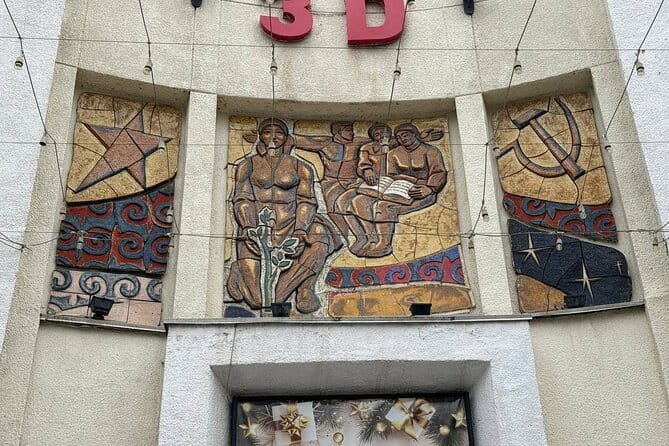
The mosaics are among the most appealing reasons to choose this experience. During the 1960s through the 1980s, public buildings in Soviet Kyrgyzstan were decorated with large mosaic panels. Some carried ideological themes, while others were meant to make daily surroundings more attractive and inspiring.
These works are easy to miss if you rush between major monuments. They may appear on apartment blocks, workplaces, public buildings, and other parts of the city. A guide who knows where to look can point out details that would otherwise seem like colorful decoration on a passing wall.
The mosaics also complicate the usual picture of Soviet public art. They were not only political posters made permanent. They were part of the visual life of neighborhoods, and they brought color, craft, and narrative into places where people lived and worked.
Pay attention to the materials, figures, and layout rather than trying to photograph everything quickly. The experience promises different parts of Bishkek’s main mosaics, but it does not provide a fixed list of panels. That flexibility can be useful, since the guide may choose examples that fit the day and the walking route.
For me, this is where the tour offers its most distinctive value. Lenin statues and grand squares exist in many former Soviet cities. Bishkek’s mosaic art gives you something more specific to look for and remember.
More History Walks in the world:
- Chicago in a Day: Food, History & Architecture Walking Tour
★ 5.0 · 1,153 reviews - Charleston’s Best Highlights: History, Culture & Architecture
★ 5.0 · 422 reviews - Palm Springs Modernism Architecture & History Bike Tour
★ 5.0 · 359 reviews - Charleston: History and Architecture Guided Walking Tour
★ 4.8 · 349 reviews
Soviet architecture along Bishkek’s main avenues
The route follows important avenues and examines buildings created during the Soviet period. You will see how civic architecture favored scale, repetition, open forecourts, and strong geometric forms. These buildings were designed to express order and public purpose, not private comfort or historical charm.
The experience also connects Soviet construction with the city’s earlier Russian imperial development. That comparison matters. Bishkek did not begin as a fully planned Soviet capital, but its streets and institutions changed sharply under Soviet rule. The tour presents that physical transformation through buildings still used by the Kyrgyz government and through residential structures that remain part of daily life.
Look at the relationship between a building and the street in front of it. Wide avenues and open spaces can make a building appear more powerful. Repeated apartment blocks can show how housing was organized for a growing urban population. A statue or mosaic then adds the official story that the city wanted residents to see.
The route is not described as an interior architecture tour, so expect to view the buildings from outside. That is generally enough for the main lesson, but it means the experience depends heavily on the guide’s explanations and your willingness to stop, look up, and ask questions.
Statues, ideology, and public memory
The walk includes statues associated with the Soviet story, including Lenin and references to Karl Marx and Friedrich Engels. These figures were central to communist ideology and appeared throughout public life in the USSR.
A statue is never just a statue in this setting. Its position, scale, and relationship to a square all helped establish what the state considered important. The guide can help you understand how these figures were presented to citizens and how their place in the city has changed over time.
You may find the political material more interesting if you approach it with questions rather than expecting a simple list of dates. Ask how the monuments fit into Kyrgyzstan’s own national story, how Soviet symbols remain visible, and how buildings continue to serve government and public functions after independence.
The supplied details do not promise a broad survey of every statue in Bishkek, so keep your expectations focused. This is a route through key examples, not a complete catalogue. Its strength is the connection between statues, architecture, and the city’s planning.
Victory Square and the eternal flame
Victory Square gives the tour a different emotional tone. Lenin Square represents political ideology and state power. Victory Square focuses on wartime sacrifice, remembrance, and the human cost behind military history.
The stop includes the eternal flame and statues of soldiers. These elements create a memorial space rather than a purely ceremonial one. The flame is a familiar feature in former Soviet cities, but its meaning becomes clearer when placed within the wider story of Kyrgyzstan as part of the Soviet Union.
Expect the guide to explain the symbolism of the memorial and the soldiers’ figures. You may want to allow a little extra time here for quiet observation. The square is not just another photograph on a walking route, and rushing through it would miss the reason it was built.
This is also a useful counterpoint to the tour’s architectural material. Soviet Bishkek was not only about concrete, planning, and ideology. It was also about memory, mourning, and the state’s effort to shape how wartime history was remembered in public.
What the guide adds to the experience
The tour is available with live guides in English, Hindi, Pashto, Pushto, Urdu, Punjabi, and Russian. English-speaking guides named for this experience include Anna, Alex, Sophia, and Axel. You should confirm the available language and guide when booking.
The strongest guide style for this route is explanatory rather than rushed. You need someone who can connect a mosaic to Soviet public art, a square to political planning, and a statue to the period that produced it. The experience is much less useful if each stop becomes only a name and a date.
Anna has led early morning tours, including one beginning at 8am after a very early arrival in Bishkek. That makes the experience a possible first activity if your schedule brings you into the city before breakfast, though you should decide for yourself whether you will have enough energy for nearly four hours on foot.
The guide also offers recommendations for other special places in Kyrgyzstan and local food. That can be especially helpful at the beginning of your visit, when you are still deciding how to use your time beyond the central streets.
Is $45 a fair price?
At $45 per person, this is not the cheapest way to take a city walk. The value depends on how much you want interpretation rather than simple orientation.
You are paying for about 4.5 hours, a live guide, a route focused on a specialized subject, and help understanding buildings and public art that can be difficult to interpret alone. If Soviet architecture, mosaics, political history, or memorials interest you, the price is reasonable for a half-day private or small-group style experience, though the group size is not specified and should be checked.
The value is weaker if you only want a quick introduction to Bishkek’s main sights. You could see some central squares independently, but you would miss much of the context behind the mosaics and planning. You would also need to locate the less obvious art yourself.
Free cancellation up to 24 hours before the start gives you some protection, and the reserve now, pay later option helps if your plans are still shifting. Those are practical benefits, but the main reason to book should be the subject matter and the guide’s ability to explain it.
Who should choose this Bishkek walk?
I would recommend it most strongly to you if you enjoy:
- Soviet-era architecture and urban planning
- Public art, especially large mosaics
- Political history and memorials
- Walking tours with a clear theme
- Getting local food and sightseeing advice early in a trip
- Seeing how an existing city was reshaped by government planning
It can also work well as an introduction to Bishkek. The central route helps you understand the city before you head farther into Kyrgyzstan.
You may want a different activity if you dislike long walks, prefer indoor museums, or want a tour centered on markets, nature, or traditional Kyrgyz culture. The focus here is specifically Soviet and urban. The tour also lists altitude sickness as a concern and says it is not suitable for people over 95, so take those limits seriously when deciding.
Bring comfortable shoes, sunglasses, and clothing suitable for time outdoors. Binoculars and goggles are listed among the suggested items, though they are not essential to the main walking format. Pets are not allowed, except assistance dogs.
Should you book it?
Book this tour if you want Bishkek to make more sense as a planned Soviet city, not just a starting point for mountain trips. The mosaics, Lenin Square, government buildings, broad avenues, and Victory Square form a clear subject, and the long route gives the guide time to connect them.
I would especially choose it near the start of a stay, when the city’s central area is still unfamiliar. The combination of history, architecture, public art, and practical local suggestions can help shape the rest of your visit.
Skip it if your priority is a short, relaxed introduction with little walking. At $45, the tour earns its price through detail and interpretation, not through a long list of attractions. Your decision should come down to one question: do you want to understand why Bishkek looks the way it does?
FAQ
Where does the tour begin and end?
The tour begins and ends at the Paramount Kyrgyz Republic Flag. Meeting arrangements are usually coordinated through WhatsApp.
How long does the Bishkek Soviet history tour last?
The full activity lasts about 4.5 hours. The central guided walking portion is listed as approximately 3.75 hours.
What sights are included?
The route includes Soviet-era avenues and buildings, public mosaics, statues, Lenin Square, a Lenin statue, Lenin-associated museum and literary references, Victory Square, the eternal flame, and soldier statues.
What languages are available?
Live guides may lead the tour in English, Hindi, Pashto, Pushto, Urdu, Punjabi, or Russian. Confirm your preferred language when booking.
Is food included?
No. Food and drinks are not included, but the guide provides recommendations for local food and other special places in Kyrgyzstan.
What should I bring?
Bring comfortable walking shoes, sunglasses, and outdoor clothing. Binoculars and goggles are also listed among the suggested items.
Can I cancel or pay later?
You can cancel up to 24 hours in advance for a full refund. The reserve now, pay later option lets you hold a place without paying immediately.
Newly added in the world
- Barcelona: Guided tour e-bike Barcelona historical and modernist Barcelona★ 4.5 · 5 reviews
- Barcelona Architecture Walking Tour With Casa Batlló Upgrade★ 4.8 · 11 reviews
- Astana: Old City Tour, Imperialistic and Soviet Architecture★ 5.0 · 4 reviews
- Barcelona Beyond Gaudí: Modernism, Rooftops, and Hidden Gems★ 5.0 · 2 reviews
- An Architect’s Tour of Downtown Santiago★ 5.0 · 7 reviews
- Architecture Tour: Old Historic Madrid with an architect★ 4.3 · 3 reviews
- Architectural Wonders of KAFD, An Iconic Destination★ 5.0 · 3 reviews
- London: Architecture Tour of Benjamin Franklin House★ 5.0 · 5 reviews
Bauhaus and Brutalist Architecture Tours, compared.
Brutalist Tbilisi: Urban exploration and untold stories
Read our review →
Le Corbusier’s Chandigarh : A Complete Architecture Tour
Read our review →
Architecture of New Belgrade – Brutalism Decoded
Read our review →
Brutal Tbilisi — Night Edition: Dark Side of Soviet Architecture
Read our review →
USSR History , Soviet Architects , Statues & Mosaics
Read our review →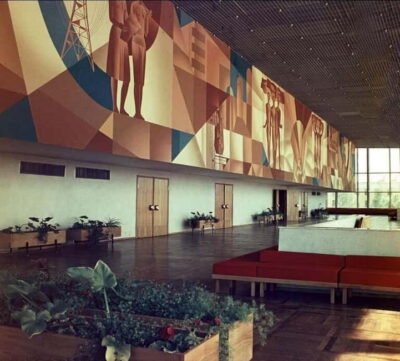
Astana: Old City Tour, Imperialistic and Soviet Architecture
Read our review →Browse the lists this tour appears in