
Review · BAUHAUS AND BRUTALIST ARCHITECTURE TOURS
London: Brutalist Architecture & History Walking Tour
London’s post-war buildings can look like concrete fortresses, and this tour helps you understand why they were built that way. Over 2.5 hours, you’ll examine major Brutalist works in central London, including the National Theatre and Institute of Education, while connecting their hard-edged forms to post-war politics, engineering, economics, and social change. Evan, the guide, is the main attraction, bringing obvious enthusiasm for the built environment and adjusting his explanations to suit the group.
I like the small group, limited to six people, because it gives you a better chance to ask questions and study details without being lost in a crowd. I also like the honest focus on buildings that remain controversial: you are encouraged to admire them, dislike them, and think about what should happen to them next. The main drawback is that you only see exteriors, and one short Tube ride requires a separate Zone 1 fare.
Key points
- National Theatre photography: Examine one of London’s best-known Brutalist buildings from the outside and consider why its rough concrete form remains so divisive.
- A wider story than architecture: Connect post-war design to global events, public policy, economics, and the social effects of rebuilding.
- A very small group: With no more than six participants, you can ask detailed questions and follow up on points that interest you.
- One Tube journey included in the route: Bring enough credit or a valid public transport ticket for one Zone 1 trip.
- Brunswick detail: The tour includes close attention to the Brunswick, a stop where Evan’s eye for architectural detail is especially useful.
- A serious walking experience: The route is aimed at people aged 16 and over and is not suitable for those with mobility impairments.
Why London’s concrete deserves a closer look
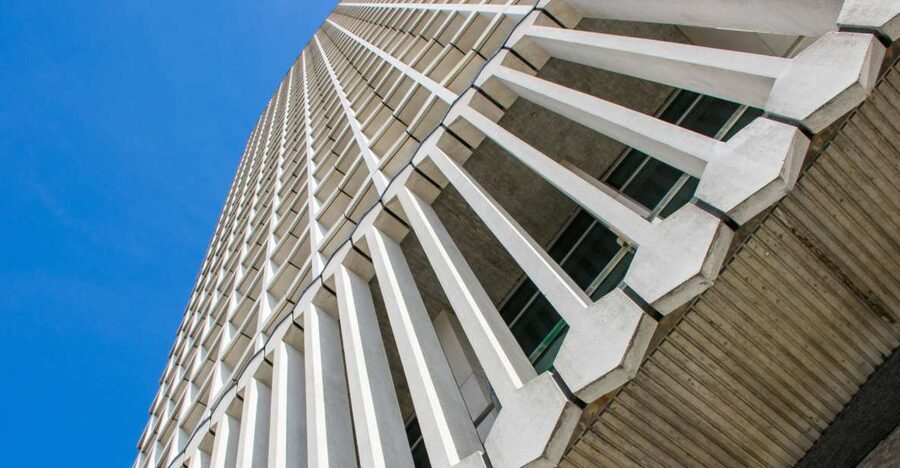
Brutalism is often reduced to a quick opinion: ugly or important. This tour gives you more useful ground between those two reactions. You’ll look at concrete not just as a surface, but as an engineering material and a design choice shaped by the years after the Second World War.
That period brought a strong desire to rebuild, expand public services, and create new kinds of civic buildings. Modernist architects worked with monumental forms, exposed materials, and large structural elements. In London, the result was a collection of buildings that could feel severe, confident, practical, or imposing, depending on your point of view.
I like this approach because it changes the question. Instead of asking only if a building is beautiful, you start asking who commissioned it, what problem it was meant to solve, how people received it, and why some examples are now protected while others remain threatened.
The tour also considers concrete’s wider effects. Its use raised questions about construction, the environment, maintenance, and the long-term future of large public buildings. You will not simply collect photographs of grey walls. You’ll get a framework for reading them.
More Bauhaus and Brutalist Tours in the world:
- Le Corbusier’s Chandigarh : A Complete Architecture Tour
★ 4.7 · 25 reviews - Architecture of New Belgrade – Brutalism Decoded
★ 4.5 · 24 reviews - Bishkek : USSR History, Soviet Architects ,Statues & Mosaics
★ 4.9 · 14 reviews
Meeting Evan at Russell Square
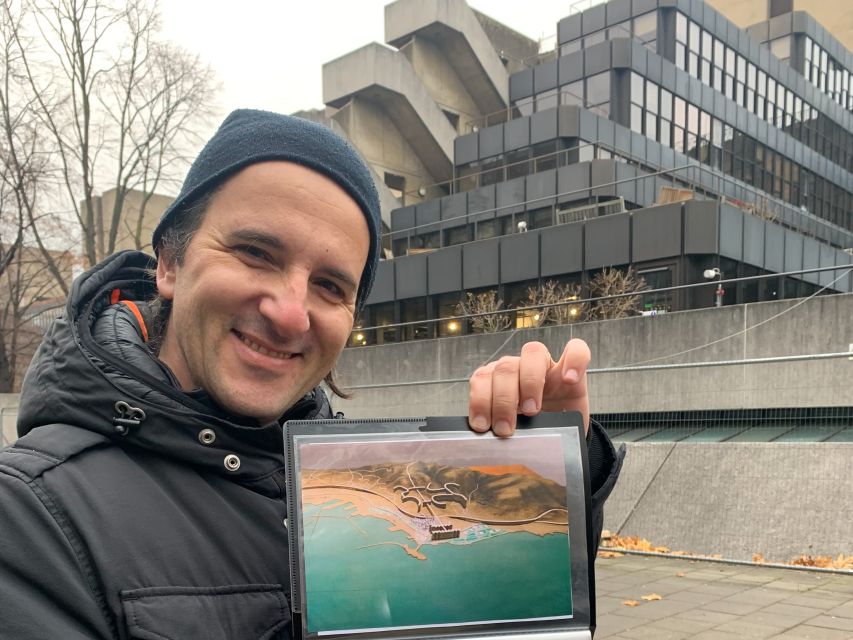
The tour begins outside Russell Square Underground Station on the Piccadilly Line. This is a practical meeting point in central London, with easy access by Tube, but give yourself enough time to find the correct station exit and meet the group before the start.
Evan leads the walk in English. His style, based on the feedback attached to this experience, is informal but detailed. He is particularly good at connecting buildings to the social, political, and economic conditions that produced them. That matters here, since Brutalist architecture makes little sense when separated from the public ambitions and pressures of the post-war period.
You should expect a discussion rather than a polished sightseeing performance. Evan has adapted explanations to suit different levels of background knowledge, so you do not need to be an architecture student. At the same time, people already familiar with Modernism and Brutalism may want to ask specific questions about materials, construction, preservation, or design decisions.
The group limit of six is a real advantage. You can hear clearly, stop to study a facade, and ask why a particular feature was used. A larger group would make this kind of close observation harder, especially on busy central streets.
Reading the Institute of Education
The Institute of Education is one of the important Brutalist buildings included on the route. You’ll examine it from outside and consider how its structure, scale, and concrete surfaces fit the ideals of Modernist public architecture.
This is the sort of stop where a guide adds real value. From the street, a building can appear to be a huge block with little invitation to look closer. With Evan’s help, you’ll be encouraged to notice design decisions rather than react to the whole structure at once.
Expect attention to the relationship between function and form. Brutalist buildings often express their purpose through mass, repetition, and visible structural elements. They can appear direct and honest, but they can also feel unwelcoming. That tension is part of the subject, not a problem the tour tries to hide.
The Institute of Education also helps place Brutalism in a public setting. This was not architecture created only for private display. Many such projects were linked to education, government, cultural life, and public services. Their design carried a belief that important civic work deserved an equally bold physical setting.
You will not go inside, so this stop is best for people who enjoy exterior details and architectural discussion. If you want access to interiors, working spaces, or private areas, this is not the right format.
Studying the National Theatre from the outside
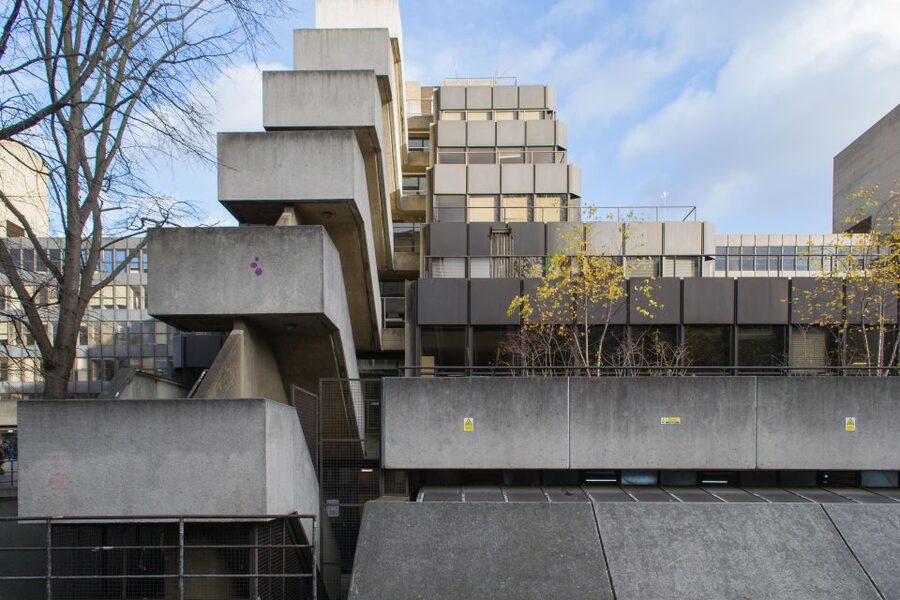
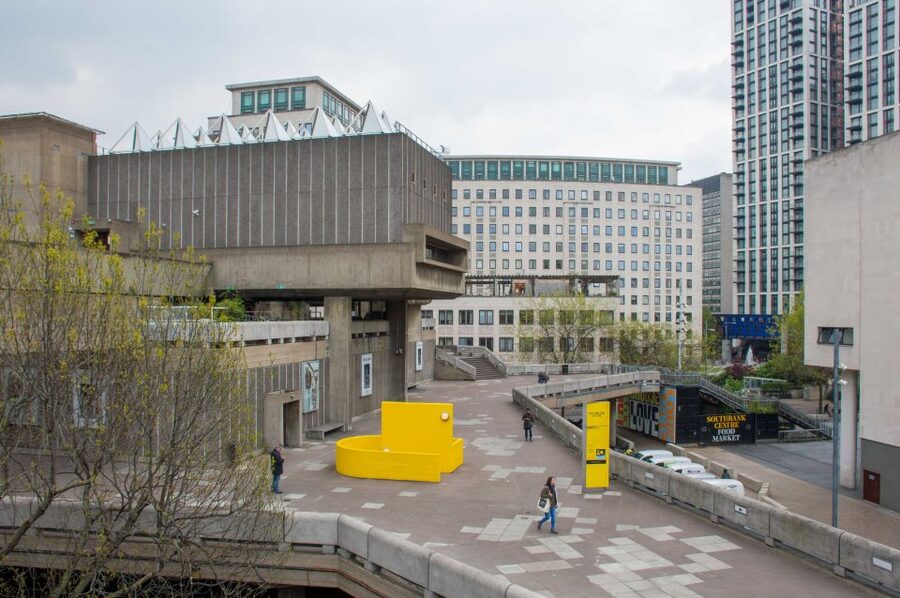
The National Theatre is likely to be the most familiar building on the walk. Its layered concrete terraces and broad horizontal forms make it one of London’s most recognizable examples of Brutalism, and it is an excellent place to take photographs.
Photography is not just an extra here. The National Theatre rewards you for looking from different angles, since its shape changes as you move around it. The building’s size, repeated forms, and stepped arrangement can look imposing in one view and surprisingly theatrical in another.
Evan places the building in its historical setting rather than treating it as an isolated design object. You’ll discuss the forces behind major post-war cultural projects and the public arguments that shaped them. This helps explain why a theatre might be given such a monumental exterior, and why the building has attracted both strong dislike and serious admiration.
The stop also introduces the question of preservation. Some people see Brutalist buildings as costly, harsh, or outdated. Others see them as important works that represent a particular moment in architecture and public life. Local authorities, preservation groups, and residents do not always agree about the best future for these structures.
That debate gives the National Theatre extra interest. You are looking at a building, but also at a decision that London continues to make: which parts of the recent past deserve protection, and which should be changed or removed?
More Walking Tours in the world:
- Lecce: Baroque Architecture and Underground Walking Tour
★ 4.6 · 1,248 reviews - Chicago in a Day: Food, History & Architecture Walking Tour
★ 5.0 · 1,153 reviews - Ramblas, Old Town, Gothic and Gaudi Architecture Walking Tour
★ 5.0 · 723 reviews - Chicago’s Secret Interiors Architectural Walking Tour
★ 5.0 · 635 reviews
The Brunswick and the value of close observation
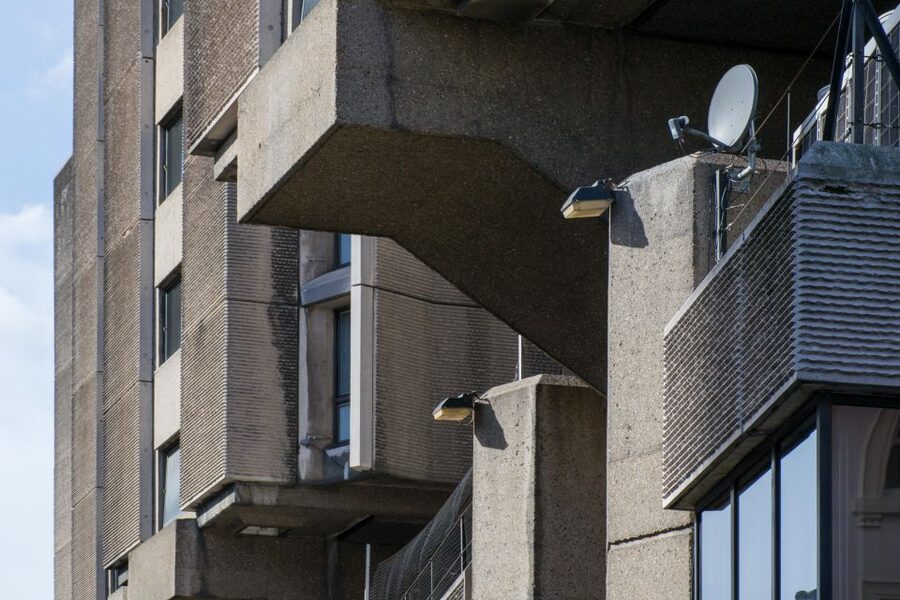
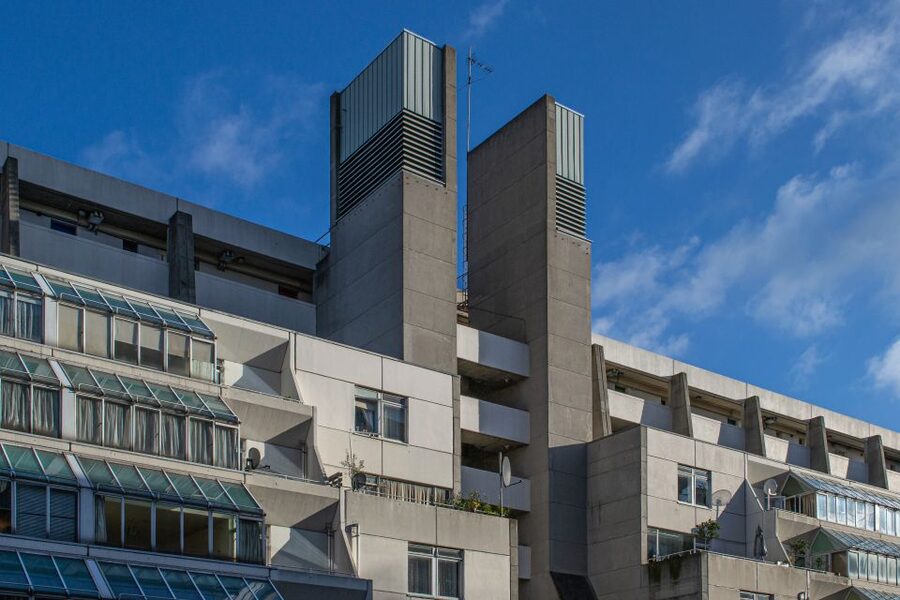
The Brunswick receives special attention during the walk, and this appears to be one of the places where Evan’s eye for detail is particularly useful. You may find that the building makes more sense when examined in smaller parts rather than viewed as one large object.
This is an important distinction. A general introduction to Brutalism can leave you with broad ideas about concrete and Modernism, but close observation shows how architects handled scale, repetition, openings, circulation, and the relationship between structure and daily use.
The Brunswick also helps bring the subject closer to ordinary urban life. Brutalist architecture was not limited to grand cultural buildings. It could shape housing, shopping, education, transport, and other parts of the city. That makes the debate more personal. These buildings are not only things to photograph. They can be places where people live, work, shop, study, or pass through every day.
You may want to bring a camera or phone, but do not spend the entire walk looking at a screen. The point of this stop is to notice details that a quick photograph may not explain. Look at how the building meets the street, how its repeated forms create rhythm, and how the scale affects your sense of comfort or distance.
From concrete surfaces to world events
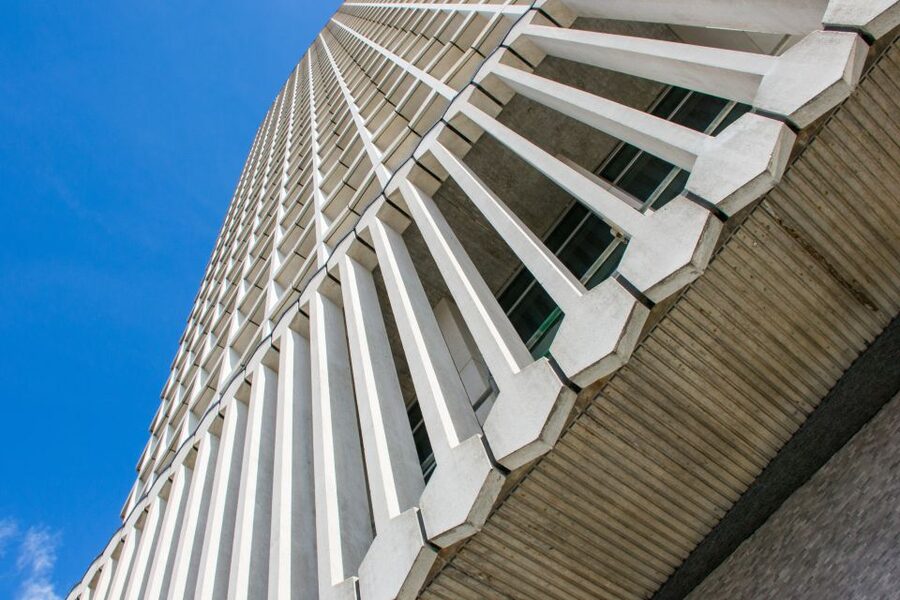
The strongest part of this experience is its attempt to connect London’s buildings with events beyond London. The tour covers key figures in European Modernism and the international forces that shaped post-war architecture.
That wider view is useful because Brutalism did not appear in a vacuum. Architects, planners, politicians, engineers, and public institutions were responding to a period of major change. New building methods, shifting social expectations, and the need for reconstruction all helped create the conditions for large Modernist projects.
You’ll also hear about the use of concrete in engineering and architecture. The material allowed architects to create heavy-looking forms, broad spans, dramatic terraces, and strong geometric compositions. It could suggest permanence and public purpose, but it also brought questions about upkeep and weathering.
The guide’s role is to connect those technical choices to human consequences. A building may be structurally clever, but that does not automatically make it pleasant to use. A bold public project may express optimism, yet still divide the people who encounter it each day.
One useful caution: this is a live walking tour, not a university seminar. One participant felt that some explanations stayed too general and wanted more detailed discussion of construction methods, materials, compromises, and practical solutions. If those technical points are your main interest, ask direct questions during the walk. Evan is most effective when the conversation becomes specific.
The short Tube ride and central London walking
The route uses the Tube once for a short journey. Your tour price does not cover public transportation, so bring a valid ticket or enough credit for one Zone 1 trip.
This is a small practical detail, but it is worth handling before you arrive. You do not want to be sorting out payment while the group is moving between stops. Comfortable walking shoes are sensible, since the experience is primarily on foot and lasts 2.5 hours.
The route through central London adds value because you are not studying Brutalist buildings in an isolated architectural park. You see them in relation to older streets, established neighborhoods, public institutions, and the ordinary movement of the city.
That contrast is part of the experience. A block of exposed concrete looks different when it sits beside older London architecture than it does in a photograph. You can better understand why some people see these buildings as a bold break with tradition, while others see them as an unwelcome intrusion.
The exact pace can vary with the group and weather. Wear clothing suited to changing conditions, since the walk may be postponed or canceled if the weather is unfavorable. Interiors are not visited, so poor weather can affect the experience more than it would on a museum tour.
What the $47 price buys you
At $47 per person, this is not a cheap way to fill a morning, but it is a fair price if you want a specialist guide and a small group. You are paying for interpretation, not admission tickets. The price includes the walking tour and guide, but not the Tube fare.
The group limit makes the cost easier to justify. A six-person maximum allows for conversation and closer attention than a standard city walk with dozens of people. You also avoid spending time on general London facts that you may already know.
The value is strongest for people who would otherwise pass these buildings without understanding them. If you already have a strong background in Brutalism, you may want to test the tour by asking about construction methods, building compromises, and preservation decisions. If you are new to the subject, Evan’s historical framing should give you plenty to think about.
The experience has an overall rating of 4.8 from 42 reviews, and the repeated praise centers on Evan’s enthusiasm, warmth, and command of the subject. One person described the tour as comparable to much more expensive specialist walks, while another returned to book again. Those comments fit the price: this is a focused architectural discussion rather than a basic orientation tour.
Still, the value depends on your expectations. You will not enter the National Theatre, Institute of Education, Brunswick, or other buildings. You will not receive public transport as part of the fee. You are buying access to Evan’s explanations and a carefully chosen outdoor route.
Who should book this walk
I would recommend this tour to anyone who already likes Modernist architecture, urban planning, public buildings, or photography. It also suits curious visitors who want to see a less familiar side of London beyond royal landmarks, museums, and historic squares.
It is especially useful if you enjoy arguments with no simple answer. Brutalist buildings can be powerful and awkward at the same time. The tour gives you enough context to form your own view instead of telling you what to admire.
The experience is for people aged 16 and over. It is not suitable for people with mobility impairments, and the outdoor format means you should be comfortable walking for 2.5 hours with a short Tube transfer.
I would be more cautious about booking if you want interiors, hands-on construction demonstrations, or a technically detailed architecture lecture. The walk examines buildings from the outside and explains their cultural and historical setting. One participant wanted more discussion of building materials and construction workarounds, so that is worth bearing in mind.
Should you book the Brutalist Architecture and History Walking Tour?
Book it if you want a small, focused walk led by Evan, especially if the National Theatre, the Institute of Education, the Brunswick, and post-war London interest you. The best reason to go is the chance to connect striking concrete buildings with the political, social, economic, and engineering choices behind them.
Skip it if you dislike outdoor walks, need step-free access, or expect to tour interiors. For everyone else, $47 buys a thoughtful way to see central London differently, with enough room to admire the concrete, question it, and perhaps change your mind about it.
FAQ
Where does the tour meet?
The meeting point is outside Russell Square Underground Station on the Piccadilly Line.
How long does the tour last?
The walking tour lasts 2.5 hours.
What language is the tour in?
The tour is conducted in English with a live guide.
Who guides the experience?
The guide is Evan, who focuses on Brutalist architecture, Modernism, post-war history, and the social and political forces behind London’s buildings.
Is public transportation included?
No. The tour uses the Tube once for a short journey, so you need enough credit or a valid public transport ticket for one Zone 1 trip.
Are the building interiors visited?
No. The tour examines the buildings from the outside.
Is the tour suitable for children?
No. It is not suitable for children under 16.
What happens if the weather is poor?
The walk may be postponed or canceled if weather conditions are unfavorable. You can cancel up to 24 hours in advance for a full refund, and the reserve now, pay later option keeps payment flexible.
More History Walks in the world
- Charleston’s Best Highlights: History, Culture & Architecture
★ 5.0 · 422 reviews - Palm Springs Modernism Architecture & History Bike Tour
★ 5.0 · 359 reviews - Charleston: History and Architecture Guided Walking Tour
★ 4.8 · 349 reviews - Historic Georgetown: History, Gossip, & Architecture Walking Tour
★ 5.0 · 321 reviews
Newly added in the world
- Barcelona: Guided tour e-bike Barcelona historical and modernist Barcelona★ 4.5 · 5 reviews
- Barcelona Architecture Walking Tour With Casa Batlló Upgrade★ 4.8 · 11 reviews
- Astana: Old City Tour, Imperialistic and Soviet Architecture★ 5.0 · 4 reviews
- Barcelona Beyond Gaudí: Modernism, Rooftops, and Hidden Gems★ 5.0 · 2 reviews
- An Architect’s Tour of Downtown Santiago★ 5.0 · 7 reviews
- Architecture Tour: Old Historic Madrid with an architect★ 4.3 · 3 reviews
- London: Architecture Tour of Benjamin Franklin House★ 5.0 · 5 reviews
- Architectural Wonders of KAFD, An Iconic Destination★ 5.0 · 3 reviews
Bauhaus and Brutalist Architecture Tours, compared.
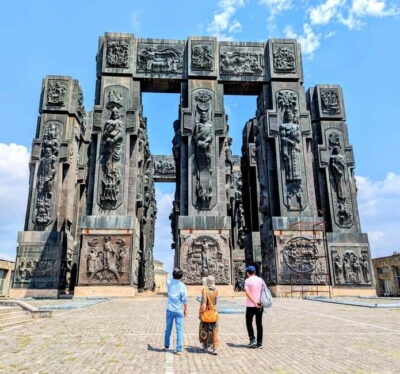
Brutalist Tbilisi: Urban exploration and untold stories
Read our review →
Le Corbusier’s Chandigarh : A Complete Architecture Tour
Read our review →
Architecture of New Belgrade – Brutalism Decoded
Read our review →
USSR History, Soviet Architects ,Statues & Mosaics
Read our review →
Brutal Tbilisi — Night Edition: Dark Side of Soviet Architecture
Read our review →USSR History , Soviet Architects , Statues & Mosaics
Read our review →
Astana: Old City Tour, Imperialistic and Soviet Architecture
Read our review →Browse the lists this tour appears in